
The group is suspected of being involved in more than a dozen migrant smuggling incidents. The EU has strengthened its border control operations through increased patrols and a crackdown on smuggling networks. However, experts say that these measures have conversely led people to rely more on smugglers to cross borders.
Seven people have been arrested across three countries in a coordinated police operation to crack down on migrant smuggling, the European Union Agency for Law Enforcement Cooperation (Europol) announced yesterday (July 21).
In a statement, Europol said that five suspects were arrested in Greece, one in Bulgaria and one in the Netherlands on Thursday (16 July). The suspected criminal network allegedly smuggles migrants through the Balkans using rented, stolen, and fraudulently registered vehicles.
Europol has linked the group to at least 12 migrant smuggling incidents between February and July 2026. Another four incidents believed to be connected to the same smuggling network are under investigation.
The suspected criminal gang is reported to be composed mainly of Syrian and Egyptian nationals who facilitated irregular border movements of mostly Egyptian, Iraqi, and Syrian nationals from Greece through Bulgaria and Romania for a final onward journey to Italy.
Read AlsoBalkans: Europol arrests five suspected migrant smugglers
Sophisticated transport network
According to Europol, the suspects used a cross-country land route to transport migrants across borders first in small vehicles going through Greece, Bulgaria and Romania. They would then be transferred to larger transport, such as lorries, which would take them towards Italy.

The vehicles were acquired through various means, both legal and illegal, stated Europol. Stolen vehicles were mostly sourced from Greece and cars were registered or purchased through third parties or front companies. Meanwhile, rented vehicles, hired using genuine and forged identity documents were also deployed, the gang then failed to return them to the rental companies.
Authorities claim that the network operated through dedicated cells in Greece, Bulgaria and Romania. Members purportedly traveled frequently across the Balkans to coordinate the smuggling routes.
Read AlsoMigration management measures reinforced in Bosnia Herzegovina and Croatia
A shifting and growing threat
The latest Europol report describes criminal networks as decentralized but also structured, scalable and increasingly global.
"Criminal networks are now more agile and better connected than ever, exploiting both vulnerable people and systemic vulnerabilities," the report noted, describing criminal activity across Europe as a "shifting and growing threat".
The smuggling networks reportedly employ an organizational structure where each part of the smuggling route is managed by different field actors. Key figures are said to be based outside of the EU to avoid detection and arrest. This important 'business feature' allows the networks to maintain their operations despite police crackdowns and arrests.
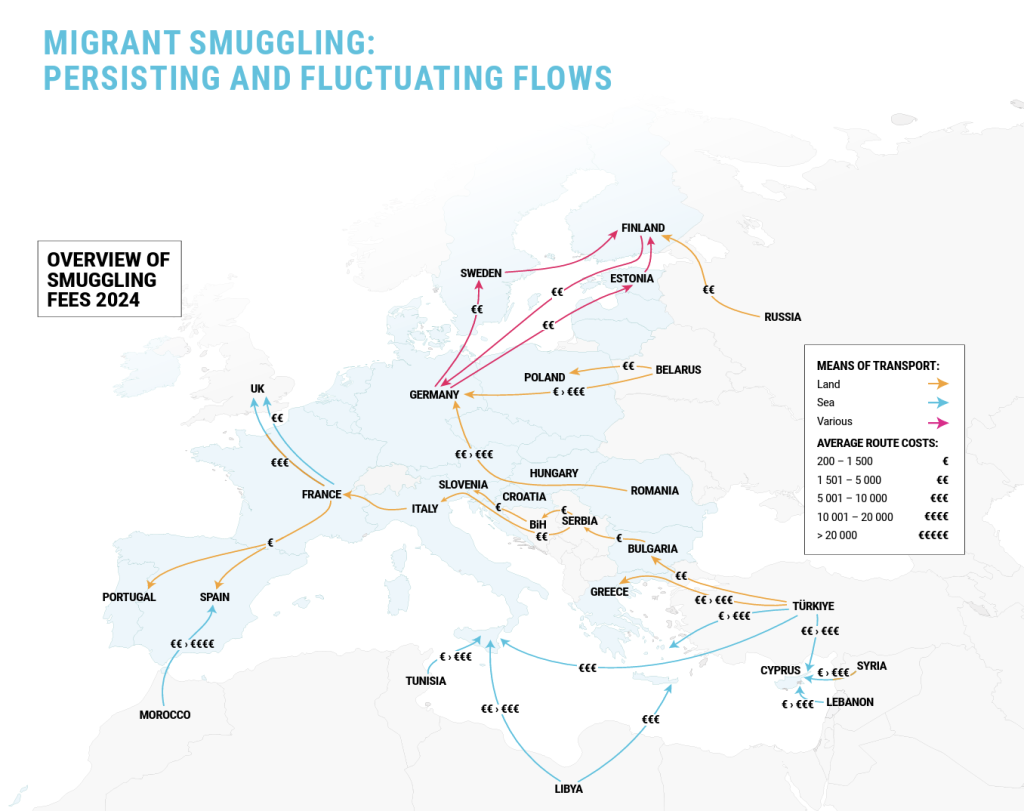
Decentralization of operations is evident in how criminal groups recruit people and move illicit profits across borders, turning the digital domain into a borderless space for crime and money laundering that remains difficult for law enforcement to police.
Criminal networks approach prospective victims through social media platforms and messaging apps, offering employment and "travel assistance". Once an exchange has been established, the smugglers maintain digital surveillance to restrict their movement. According to the report, smuggling networks are also upskilling themselves in the use of digital marketing.
"There are cases where criminals have drawn inspiration from social media influencers or content creator academies to teach other criminals how to lure and control victims online," stated the report.
Criminal networks employ a layered financial trail where they use informal systems such as crypto currencies and cash couriers to launder profits but also employ legitimate businesses such as travel agencies and estate agents, to mask illicit earnings.
Read AlsoEU Parliament greenlights stronger Europol powers to combat smuggling, raising privacy concerns
Tighter borders, higher risks
Research by the Mixed Migration Centre suggests that tighter controls in the Western Balkans frequently displace routes and increase migrants' dependence on smugglers, exposing them to higher costs and greater protection risks.
The research conducted in the Western Balkans in light of increased anti-smuggling efforts and the implementation of broader EU migration policy since early 2023 was based on 17 interviews with refugees and migrants, 24 key informant interviews, and a review of secondary sources.
Syrians and Afghans, remain prominent among refugees and migrants moving along the Western Balkan routes but there was also a steady increase in Turkish nationals aided by visa-free entry to Western Balkan countries. Protracted political pressures in key host and transit countries, such as Turkey, Iran and Lebanon, contribute to the irregular movement across the region.
Those interviewed believed that tighter border controls have resulted in greater reliance of refugees and migrants on smugglers and higher risk of exploitation and extortion by smugglers. Meanwhile, tighter border controls prompted smugglers to shift routes.
Read AlsoEU migration pact set to tighten border controls
Widened law enforcement mandate
In June, the European Commission proposed new measures to strengthen the EU’s response to what it described as an increasingly sophisticated, international and digital criminal landscape. The move saw expanded mandates for Europol in supporting cross-border police investigations, and Eurojust, which coordinates cooperation among prosecutors and judges.
The European Commission proposed doubling Europol’s budget to three billion euros under the next multiannual financial framework (2028-2034). The bigger budget will support staffing capacity and develop more advanced technological capabilities.
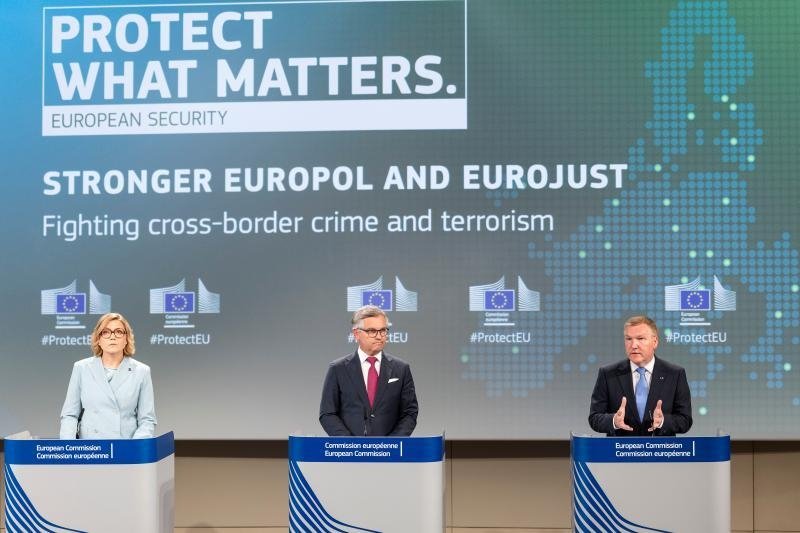
Europol has also launched the European Centre Against Migrant Smuggling, or ECAMS, to focus particularly on the digital activities of smuggling networks. Consolidation of information supplied by EU member states and international partners to map networks, identify their leaders and expose the infrastructure supporting their operations.
To strengthen Europol’s efforts to combat migrant smuggling, Regulation (EU) 2025/2611 was adopted in December 2025. This new EU legislation underscores the importance of addressing migrant smuggling at the EU level through enhanced cooperation, including the establishment of Europol’s European Center Against Migrant Smuggling (ECAMS) in March 2026.
Read AlsoEuropol launches new unit to fight migrant smugglers