
Morocco is working to bring home nationals detained in Libya, who face numerous administrative hurdles. The case also comes against a wider migration picture in which Moroccans make up only a tiny percentage of those transiting through Libya, while African nationalities account for the majority share of those transiting and detained.
Morocco’s consulate in Tripoli is working to facilitate the return of nationals detained in Libya, as officials complete identity checks and issue temporary travel documents for migrants who have lost their passports. A consular source told Moroccan news outlet Hespress that several detainees at Misrata completed legal and administrative procedures and returned to Morocco on July 14, while other groups remain in detention pending verification and exit clearances.
Around a dozen people from a group held east of Tripoli have already left Libya, the source added. Another set of Moroccan cases is still awaiting file processing by Libya’s Interior Ministry, which coordinates with the International Organization for Migration (IOM) to purchase airline tickets for undocumented migrants of various nationalities.
The IOM has repeatedly said Libya cannot be considered a safe port, warning that migrants returned there are often transferred into detention centers under Libyan authorities, where detention is arbitrary and conditions are widely documented as inhumane.
Read AlsoMore bodies washed ashore from migrant shipwreck off Libya
Individual verification and delays
Cases are handled individually, with consular officials first checking whether migrants have passports or identity cards. Where documents are missing, authorities must collect fingerprints and photographs and send them to Morocco for verification, a process that can take weeks and leaves the consulate with little control over timing.
Speaking to Hespress, one consular staffer described cases where migrant families in Morocco paid months of expenses for detained relatives while waiting for fingerprint verification and travel documents -- a process that depends on the availability of records at Moroccan civil registries.
The consular source emphasized that it is impossible to give a precise figure for the numbers of Moroccans in Libya because there are those in known government-run facilities and those in areas run by militias, which lie outside official control. In addition, many Moroccans reached Libya through smuggling networks, complicating tracing and counting efforts.
"Many migrants arrive in Libya only to discover the reality on the ground," the source told Hespress, explaining that undocumented migrants are often detained for entering the country without a valid visa. Conditions in Libyan detention centers are frequently described as severe, with detainees facing overcrowding, poor sanitation, insufficient food and water, limited access to medical care, and in some cases physical and sexual abuse by guards.
Libyan authorities conduct strict security procedures, detailed background checks can take up to a month before exit permits are granted to ensure returnees are not wanted for crimes or other legal matters. During this time, migrants typically remain in administrative detention pending investigation results.
The reason why Moroccans seek to reach Europe is often rooted in economic pressures. A survey published last year showed that one in five Moroccans consider leaving the country. The main reasons Moroccans consider emigration are job opportunities, better business prospects and escaping hardship or poverty, while others cite education, corruption, political reasons or family reunification. Therefore cases like those in Libya are not just about movement, but about the difficult conditions and uncertainty many migrants are trying to leave behind
Read AlsoMore deaths, fewer arrivals: Migration to Europe is becoming increasingly lethal
Routes to Europe increasingly closed
Irregular maritime routes from Libya to Europe have become more risky and less frequent, due to tougher EU security measures, making successful crossings more difficult and leaving many migrants stranded and disillusioned after arriving in Libya. Undocumented migrants often face detention, fines and the confiscation of travel documents -- turning their journeys into prolonged ordeals.
The delays add to the strain on families, who often cover the costs of detention and eventual return. Earlier repatriation operations and IOM-chartered returns for other nationalities, for example from Egypt, illustrate the logistical complexity and the need for coordination among embassies, the Libyan government and international agencies.
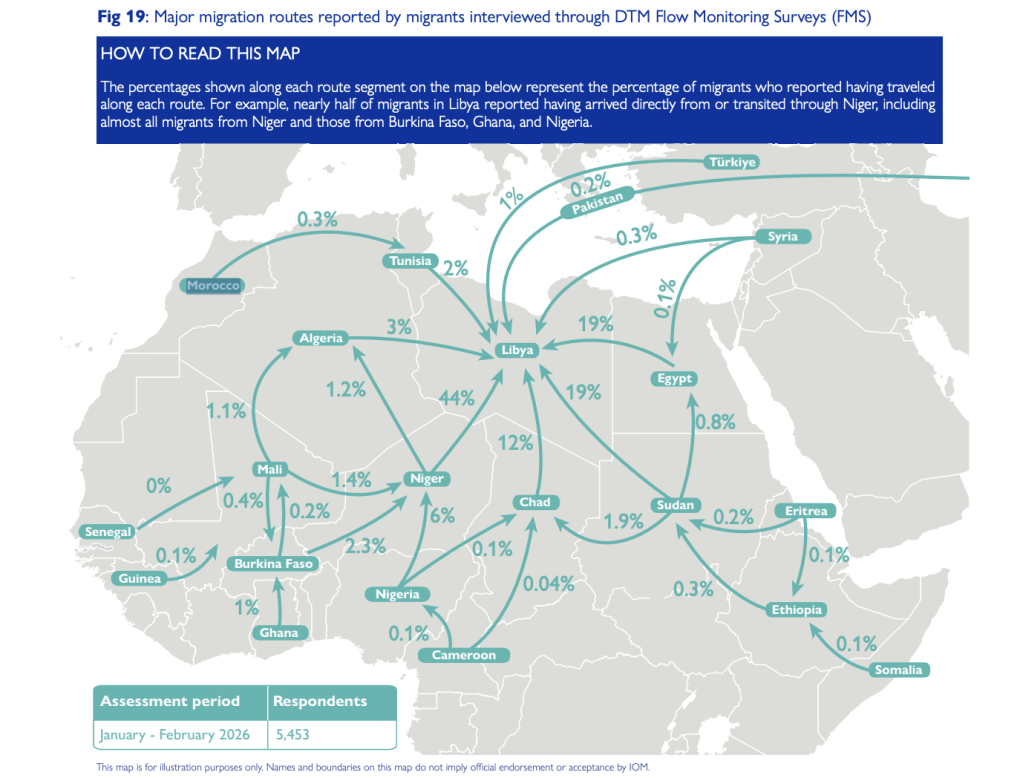
According to a recent IOM report, Moroccans account for just 0.3 percent of migrants transiting through Libya, a fraction compared with the far greater numbers of arrivals from Egypt and from sub-Saharan African countries. The figures show that while the Moroccan case is relatively limited, it still illustrates the bureaucratic and humanitarian challenges of repatriation, especially when migrants have lost their documents and must be verified case by case.
Large numbers of migrants have been held in Libyan detention centers for years, and past repatriation operations show Morocco and other countries have periodically conducted coordinated returns, sometimes after fingerprint and identity verification visits by embassy officials to detention centers. The IOM has previously organized voluntary humanitarian return flights in coordination with Libyan authorities and donor support.
Some migrants though report waiting in detention centers for weeks and months, unable to reach the officials who might be able to signpost them towards voluntary repatriation initiatives.
Read AlsoMigration: Western Mediterranean arrivals increase even as EU arrivals fall