
A recent report in the left-leaning TAZ newspaper in Germany suggested that the German government is planning to deport some Afghans who have not been convicted of a crime in Germany. But is this the case and what might a future German government deportation policy look like for Afghan citizens in Germany?
The TAZ article, published on July 8, found that there were "at least five Afghans in deportation detention who had not been convicted of a crime and were not considered dangerous." The newspaper based its findings on responses from refugee councils in several German states.
The newspaper noted, however, that it was unable to confirm the detentions with the respective state interior ministries. Four of the Afghans were reportedly in detention in Bavaria, and one in Hesse. A sixth person was allegedly in detention in Lower Saxony but was released shortly before the article was published. According to the local refugee council, the man had been detained because of an administrative confusion on the part of the Federal Bureau for Refugees and Migration (BAMF).
The news has unsettled many Afghans in Germany who have been eyeing the increasing contact between the German authorities and Taliban delegations to facilitate returns in general -- and not just of those who have committed crimes -- as a worrying new development. InfoMigrants Dari has been covering the issue closely.
InfoMigrants sent out questions to the German Interior Ministry, the authorities in some German states like Bavaria, which reportedly were detaining some of these people, as well as various refugee councils and lawyers who work in migration, to try and get more information on this issue.
Read AlsoTaliban expands diplomatic presence in Germany to facilitate returns
Classified information?
Although the five Afghans had not been convicted of a crime, they had allegedly come into contact with the police, reported TAZ. Two of them are apparently "Dublin cases", meaning they were sent back to Germany from another EU country, because their asylum claim was first registered in Germany. Another was trying to leave Germany when he was stopped by the police.
German policy in relation to the deportation of certain groups of migrants, in particular Afghans, appears to be more opaque than left-wing parties like Die Linke would like. Their Interior Affairs spokesperson, Clara Bünger, told the TAZ that she has been asking for more information about the government meetings with Taliban officials for several months and has been met with a "wall" and very little information. She was told that the information was "classified" or governed by secrecy.
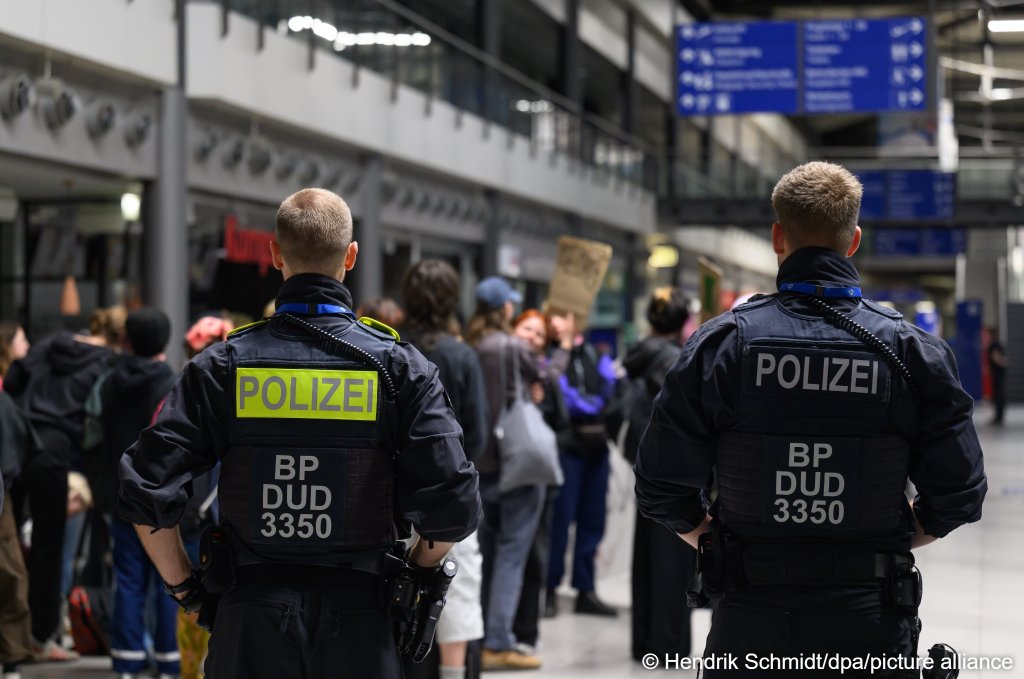
What the government has been more open about is how many people it has sent to Afghanistan so far. According to its latest figures, 10 people were returned on commercial flights, separate from the larger charter deportation operations. The charter flights have so far tended to include people who have been convicted of a crime or are considered a danger to society.
Via the charter flights, reported the TAZ, 77 Afghans were deported home since the beginning of the year. Since Merz took office in May 2025, more than 100 Afghans have been deported on charter flights.
The cost of the last such charter flight in June, on which 92 federal police officers were on duty to make sure the deportation went smoothly, was estimated to be more than 350,000 euros.
Read AlsoEU preparing to meet with Taliban delegates to discuss deportations
Caught at the border
In answer to InfoMigrants’ questions over the last week, we discovered that according to the Bavarian Refugee Council and the Jesuit Refugee Service (JRS), there are currently five Afghans with no actual convictions sitting in deportation detention. One is reportedly in Munich, three are in Eichstätt and one in Hof.
According to JRS and the refugee council, in Eichstätt and Hof, the detainees are all men in their twenties. They left Afghanistan after the Taliban took power and traveled to Germany. They all traveled to Austria and were stopped as they tried to return to Germany, which is against the rules, as they all held a suspended sentence to quit the country, known as a Duldung or tolerated stay, where they have not been granted asylum but also cannot be sent back. Holders of a Duldung are forbidden to travel. It is presumably this rule-breaking that brought them into contact with the police and landed them in detention, facing deportation.
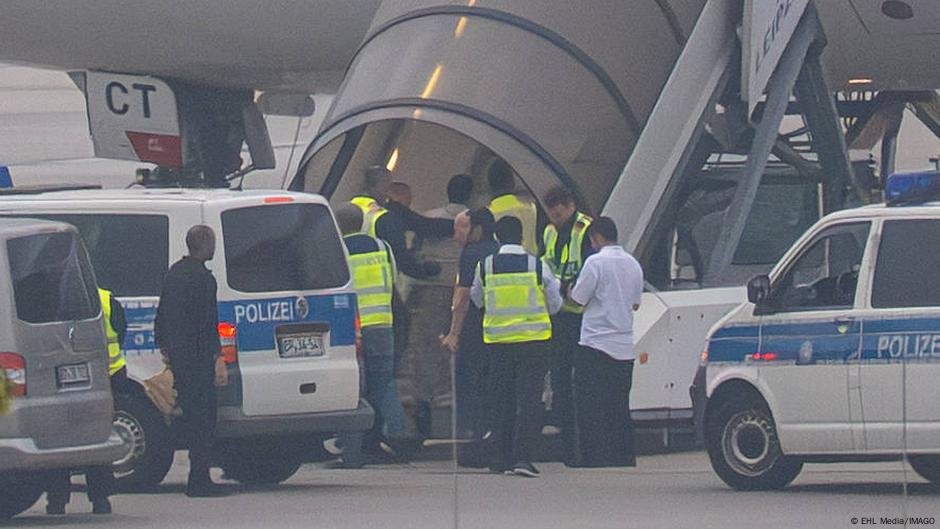
A spokesperson for Germany’s Interior Ministry confirmed to InfoMigrants that Germany’s deportation policy does not only center around convicted criminals.
The statement from the ministry read: "Our stated policy for this government, signed by all coalition parties, CDU, CSU and SPD, underlines that we will start up deportations to Afghanistan and begin with those who hold criminal convictions, but not limiting ourselves to that."
The spokesperson also added that individual states can decide who they might deport and who not.
"According to the Residence Act, foreign nationals must be deported if they are legally obligated to leave the country and a departure deadline has not been granted or has expired. Furthermore, no prohibitions on deportation may exist in an individual case. Besides this, Federal States are responsible for enforcing residence law and are free to decide on returns on a case-by-case basis. Afghan women and girls are generally granted protection in Germany."
Read AlsoUNHCR head condemns deportations to Afghanistan
'Political decisions'?
Lawyer and migration law expert Heiko Habbe at the University of Hamburg told InfoMigrants that deciding to prioritize convicted criminals as a deportation policy was a "political decision" and was not automatically part of a migration policy.
Habbe added that he believed that because of the German government’s general policy to offer protection to Afghan women and families, those in a family situation might be more protected, even when men, than if they were in Germany alone, without their families.
The legal expert said that the latest reports from Afghanistan about the morality police suggested that men too might be at risk of being abused or persecuted if they weren’t seen to abide by certain morality laws in Afghanistan, for instance if they didn’t wear regulation traditional clothes or a beard, or adhere to the social norms of the Taliban enough. Men with tattoos for instance could be discriminated in Afghanistan. Habbe added that some men had even been "killed for wearing Western clothing," therefore, he felt that more attention should be given to protecting at least these categories of Afghan men too.
Read Also Germany sees few Afghans voluntarily return home via state programs
'The word deportation instills fear in many'
A spokesperson for Bavaria’s refugee council told InfoMigrants. "The subject of deportation is worrying a lot of people we come into contact with. These are often people who are not even being threatened with a deportation, but just hearing the word discussed is enough to instill panic in them."
The Refugee Council has tried to make it clear to those they work with that if you are in possession of the correct documents and your asylum claim is underway, you shouldn’t be at risk of deportation. Generally, women and unaccompanied minors are also not at risk of deportation. Also, if you are a man and you are in Germany with your wife and family, then you should generally be less at risk too, they underlined.

If you have a job contract, and you haven’t committed a crime, or you are undergoing medical treatment, even if you are a single male, you should also not be too at risk. But the refugee council advised each person to talk to their lawyers or a refugee counselling service to make sure that they knew all the facts and were following the correct processes.
Read AlsoGermany: More deportations to Afghanistan raise criticism over collaboration with Taliban
Know your rights
The Bavarian Refugee Council also underlined that in relation to deportations to Afghanistan, the recognition rate for Afghan men between 18 and 40 was sinking. Only around 11 percent in that group had been granted protection when you take away the cases of men in that age category who had traveled with their families. The refugee council ties this decrease in protection to the start of the current CDU/CSU, SPD governing coalition and points out that the situation in Afghanistan has not improved, in fact, it has perhaps got worse.
"The current state of affairs in Afghanistan has got worse because of the general regional conflicts, the mass deportations of Afghan nationals from Pakistan and Iran and the humanitarian crisis that is raging in the country, including widespread hunger and the effects of climate change on the general population."
The Refugee Council says it has developed a multilingual information sheet on residence rights in Germany. While the Dari version is currently unavailable due to a technical issue, but the organisation says it hopes to have it up and running again soon.
Research and information gathering for this article was conducted by Mara Bierbach. Words by Emma Wallis.
Read AlsoAustria: Could Uzbekistan become an additional route for deportations of Afghan nationals?