
According to data from the European Commission, Italy blocked 12 attempts in the first three weeks of the new EU Migration and Asylum Pact to return asylum seekers to Italy, even though they had been registered in Italy and Italy should have been responsible for processing their applications.
On July 16, the European Commission published a very early initial assessment of how EU countries are applying new asylum responsibility rules under the new pact on migration and asylum, which entered into force on June 12.
According to the EU analysis, all member states have made "considerable progress in implementing the pact, including their capacity to process responsibility transfers."
The new pact is designed to ease the pressure on EU states with external borders, like Italy, Greece, Cyprus and Spain, but at the same time, it still expects them to take back those whom they have already registered as potential candidates for asylum.
Spain and Cyprus have been adhering to the new rules and can be "considered adequate." EU officials say they are keeping a watch on what happens with Greek cases, reported dpa. The EU said that they had asked Greece for information and hadn’t yet received a response, but the country’s officials still had time before the deadline expired.

Under European laws, asylum seekers who are already registered in one EU country should be returned there to complete their process, rather than attempting to start a new claim in another country. This was already the case under the so-called Dublin regulation, and the process should have been made even easier under the new pact.
However, according to data recently analyzed by the European Commission, Italy is still blocking some attempts to send asylum seekers back there. According to a report in the Brussels Times, Italy made "significant efforts" to prepare for the new system, but further steps are needed to ensure transfers happen in practice.
Read AlsoMigration: Western Mediterranean arrivals increase even as EU arrivals fall
Italy -- more measures need to be taken
Italy has so far blocked 12 attempts to send back asylum seekers registered there in the first three weeks of the pact, reported the German press agency dpa. In December 2022, notes the European Commission in its assessment, Italy suspended the receiving of transfers with the exception of cases of family reunification of unaccompanied minors. The Commission report added that one transfer did take place during the reporting period, but that it was based on a request that was confirmed before June 12.
The Commission added in its conclusion that at present there are "no indications that the Italian authorities have actively engaged with other member states on the practical and logistical steps to resume transfers."

The Commission advised Italy that it needs to remove "all the remaining impediments as a matter of priority, including by discontinuing the practices that have so far prevented transfers from taking place, and to ensure the necessary engagement and operational cooperation with other member states on all practical and logistical arrangements."
However, in a hearing on this decision at the Court of Justice of the European Union (ECJ), the court ruled that member states cannot unilaterally discharge themselves of that responsibility. The European Commission noted that "the operation cooperation between Greece and other member states, as well as between Italy and other member states regarding the application of the responsibility rules requires more in-depth analysis."
The Commission’s assessment of the situation in Italy highlights several areas which need to be looked at. One of them is waiting on the passing of a decree law which was designed to introduce urgent measures to facilitate the application of key pact provisions.
Italy too told the Commission it has hired additional long-term staff to operate the transfer units at the air, sea and land locations.
Read AlsoSpain: First large-scale return case under EU asylum pact sparks concerns in the Canary Islands
Greece -- making progress
The EU report shows that Greece had already accepted taking back asylum seekers in the eight cases put to them since the implementation of the new rules. A full analysis of the data will be released in October, a spokesperson for the EU Commission told dpa.
The EU analysis also highlights that Greece has established a New Dublin Unit, and since June 2, 2026, it has employed 15 additional interim staff to help operate that unit, bringing staffing levels to 69 employees, 834 interim, 21 fixed-term and 14 permanent staff. Digitally, Greece has also completed all the technical tasks needed to connect its systems to the Eurodac systems.
At the end of last year, Germany’s Interior Minister Alexander Dobrindt was in talks with both Greek and Italian officials about returning asylum seekers who were attempting to start a second process in Germany.
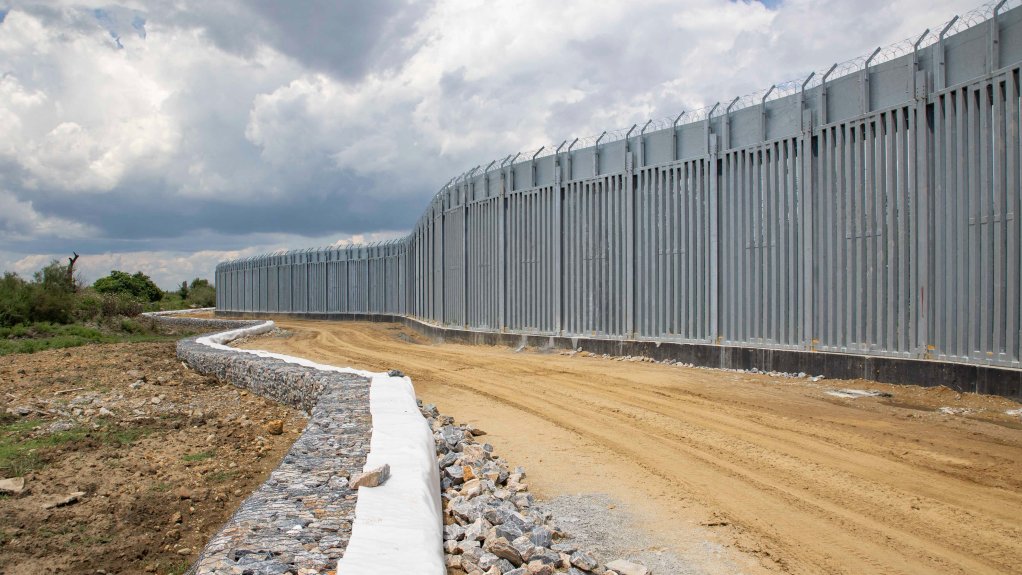
However, the Greek Interior Ministry reportedly told dpa that the agreement also stipulated that anyone traveling to Germany from Greece before the implementation of the new pact (June 12) this year would not be accepted by Greece, only those who travel after the implementation of the pact.
The returns processes prior to the pact often hit problems and only very few each year are successfully returned from Germany. It was partly in answer to this that Germany, along with many of its European neighbors, decided to introduce stricter border controls, something that is actually against the free travel and customs zone in place under the Schengen regulation.
Germany recently renewed many of its border controls, but long-term, both the German government and the European Commission are keen that the free travel and trade zone can return.
European Home Affairs and Migration Commissioner Magnus Brunner recently told the European Newsroom in Brussels (enr) that he hoped the controls could be reduced step-by-step.
Brunner added that he believed the increased strength of the EU’s external borders should also be a factor in allowing for more free movement within the bloc. According to the EU border agency Frontex, in the first half of this year, the number of irregular migrant entries recorded at the EU’s external borders had reduced by about a third compared to the same period last year.
Read AlsoGermany: Berlin airport ready to operate under new EU asylum rules