
British Home Office data, published on Thursday (July 16), show that more asylum seekers arrived in Britain from France than were sent back under the so-called "one in, one out" scheme between August 2025 and June 2026. The first month saw zero returns.
According to Home Office data, around 1,117 asylum seekers arrived in the UK from France under the auspices of the "one in, one out deal," and 1,087 were deported back to France. That was between August 2025 and June 2026, as the scheme was being piloted.
The deal was conceived last summer to try and offer a safe legal route to legitimate asylum seekers in France, who might already have a claim to be in the UK, perhaps through a family reunification route, and to send back people who arrived in the UK with no legitimate claim to asylum.
This is the first time all of the official figures have been published since the deal started. The data confirms that in the first month of the deal (August 6 - September 6, 2025), no migrants were returned or arrived, reports the German press agency dpa.
Read AlsoUK: Government explores plans to ask asylum seekers to pay back costs of asylum
'Making progress'
A family of three, including a young child were the first migrants to arrive in the UK in September under the immigration deal. The dpa agency reports that they were granted three-month visas with no right to work and no recourse to public funds.
Over the year, at least two migrants have tried to return to Britain after being deported, but they were detained and due to be sent back to France once again. The program has been extended until at least October 2026.
Although the Border Security Command says that the UK-France returns pilot is "too early to see significant impacts" about whether or not the deterrence is really working and they say they are still "scaling it up." However, they do say that the "pilot creates the opportunity to remove people from the UK who have historically been very difficult to return to their countries of origin." They say that under this scheme, "small boat arrivals returned to France under the pilot were removed over four times faster than similar cases from the same period in 2024-25."

Other Home Office data, released at the end of last month, shows that in the financial year 2024-2025 (financial years in Britain run from April to April), total asylum costs amounted to more than four billion pounds (4.757,226,306 pounds which is around 5.53 billion euros). These costs had slightly reduced from the previous cycle 2023-2024, when they topped 5.3 billion pounds.
In the Border Security Commander’s Annual Report, published on July 16, British Home Secretary Shabana Mahmood said she believed the UK was "making progress" in its crackdown on migrants crossing the Channel in small boats.
Read AlsoUK: Plans for safe and humanitarian routes for refugees, based on community sponsors
'Arrests and disruptions increased'
Mahmood wrote that in the years before her government took office, in July 2024, "the United Kingdom’s borders were left exposed. The most visible manifestation of this failure was seen in the Channel, where small boat crossings soared."
This, added Mahmood, "put lives at risk, undermined our security and enriched criminal gangs." The Border Security Command (BSC), which was set up under the current Labour government, has been working alongside the National Crime Agency (NCA) to ramp up law enforcement action against organized immigration crime.
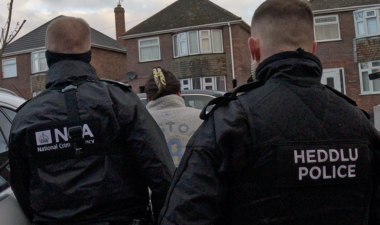
According to Mahmood, "arrests and disruptions are up, while hundreds of boats and engines have been seized."
The Home Secretary said that Britain had strengthened their cooperation with partners around the world, but that "no partnership in this arena matters more than that between the United Kingdom and France. Working with French law enforcement, we have prevented tens of thousands of small boat arrivals."
Mahmood also underlined the newest deal she signed with France in April this year, which she says helps "step up patrols and intelligence operations in France." This deal, said Mahmood, included the introduction for the first time of a model of funding that links payment to performance.
The politician added that Britain had also worked hard to reduce the "pull factors that draw people here illegally. That includes changes to refugee protection, tackling illegal working, ending the use of asylum hotels this parliament, and a significant increase of removals of those with no right to be here."
Read AlsoFrance: Despite inflation, migrants keep sending money home to support their families
Channel crossings
According to British government statistics, small boat crossings in the Channel "have started to fall but remain a persistent and adaptive threat." In the financial year 2025-2026, they rose by three percent compared to the previous financial year. However, the number of crossings in the second half of the year began to decline and that trend continued in the first half of this year. Arrivals in April and May 2026 were 42 percent lower than last year.
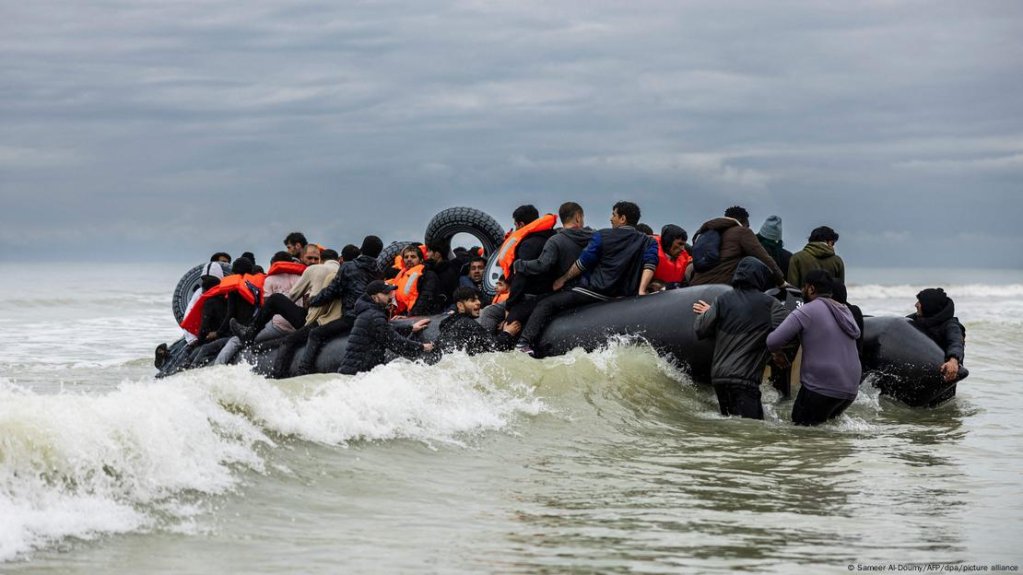
In its report, the Border Security Command states that they have increased disruptions of criminal smuggling gangs by 46 percent and registered a 29 percent increase in "major disruptions." With their French partners, they have stopped more than 20,000 crossing attempts.
They also say they have sped up return arrangements for three nationalities. All in all, they say they have returned 2,750 of small boat arrivals in the financial year 2025-2026. According to BSC data, Eritreans are the most common nationality arriving on small boats across the Channel, followed by people from Afghanistan, Sudan, Iran, Somalia, Iraq, Ethiopia and Syria.
The BSC report concludes that they have made "excellent progress, but there is far more to do." They say they are confident "that our strategy remains the correct one…and that through our collective efforts… we will drive down small boat arrivals, while remaining alert and responsive to broader threats." Since the beginning of the year until July 15, 12, 469 migrants arrived from across the Channel.
A new Labour Prime Minister, in the guise of Andy Burnham, is expected to enter Number Ten Downing Street on Monday (July 20), and so the cabinet will be reshuffled and new ministers, perhaps with different policies and priorities, may be in charge in the coming weeks or months.