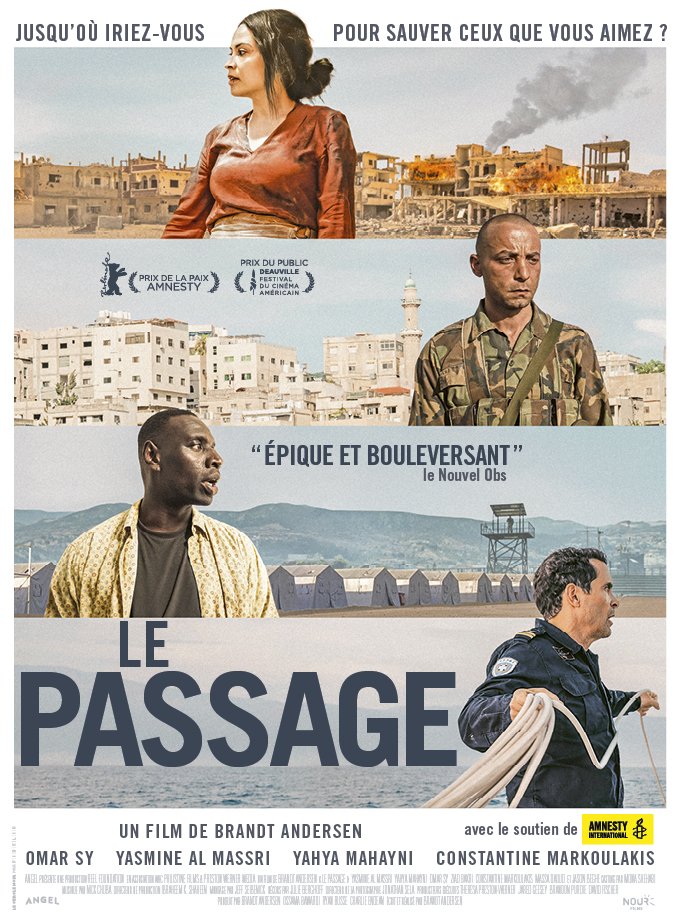
The film "I was a Stranger" by Brandt Andersen was released in French cinemas this month. The five-part story explores the complexity of human nature through characters confronted by moral dilemmas along the Mediterranean route to Europe.
"I was a Stranger" begins with a plea on behalf of immigrants by Shakespeare: "Imagine that you see the wretched strangers; Their babies at their backs and their poor luggage; Plodding to the ports and coasts for transportation [. . .]; What would you think to be thus used?"
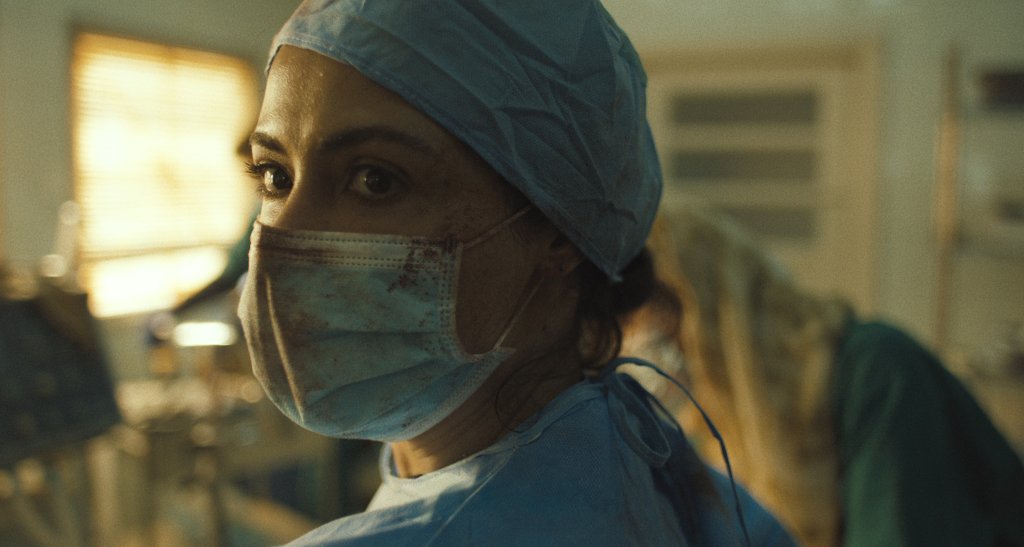
The 2024 movie by the director Brandt Andersen was inspired by the true stories of refugees he met while volunteering in camps in Greece and Turkey. Leading up to "I was a Stranger", Brandt made a short version of the film known as “Refugee”, about a Syrian pediatric surgeon Amira (Lebanese actress Yasmine Al Massr) who tries to escape the civil war in her homeland with her daughter Rasha (Massa Daoud). The film was shortlisted for an Academy Award for Best Live Action Short in 2020.
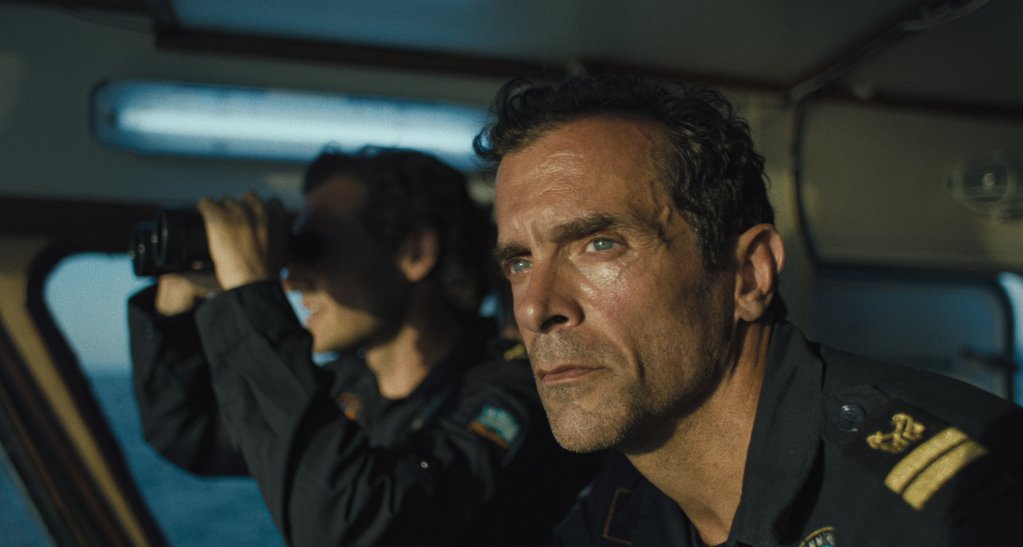
The short film evolved into a longer version, which continues delving into the characters of individuals along the deadly Mediterranean route to Europe. Whether it’s through the eyes of a soldier who deserts the Syrian army, the refugees themselves, a smuggler, or a Greek coastguard, there are many ways to look at the phenomenon of migration.
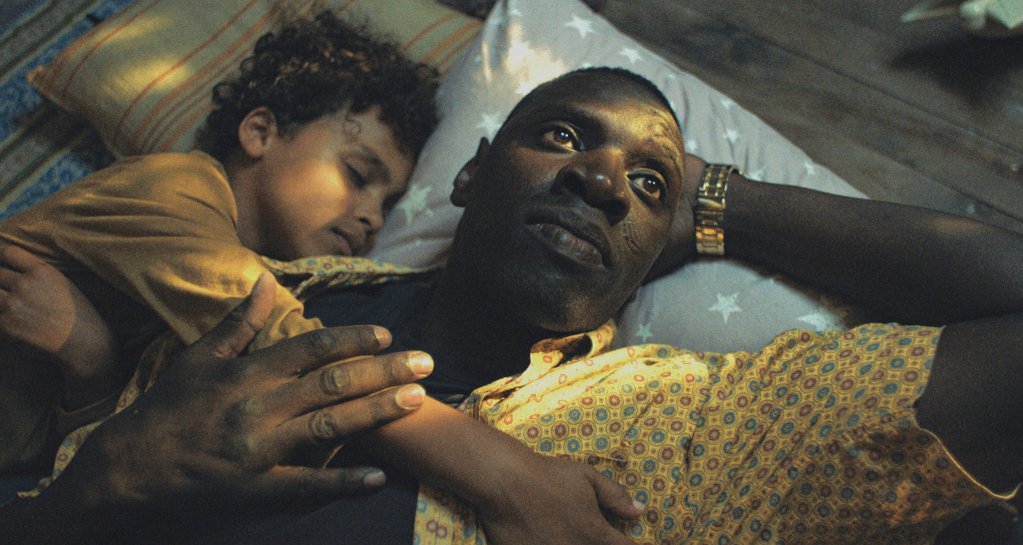
Brandt’s writing, though engaged, doesn't take sides with his characters. He prefers to explore the gray zone of human nature. Omar Sy, who plays a ruthless smuggler who takes care of his sick son at home, is a perfect example of the blurring of the lines between good and evil. With closeups, one can read into an extraordinary variety of his emotions as he calculates his next step.
Amira, the doctor, crosses paths with the other characters of the film as she and her daughter undertake their odyssey from war-torn Syria to Europe. By miracle, they survive the journey, but Amira has to contend with the grim reality of starting life over in their new country on the bottom rung of the ladder. InfoMigrants spoke with Andersen for more about the film and his artistic choices while making it.
What made you decide to make a film about exile?
Brandt Andersen: I was traveling back and forth to different countries that were housing refugees. I went to Greece and Turkey probably over 20 times. I visited Sicily where there were refugees coming from Libya and Jordan. There was something about the story that just touched me and made me feel like this was the story that I needed to tell. Film is my medium of art and so it was the natural selection for me.
The characters in the film cross paths by pure chance, creating a small world effect. Why did you choose to use this cinematic device?
As I was writing this, one of the main themes that was coming through for me was that the world is very small and that we are all interconnected. I would travel to these different places and hear people’s stories. The stories were similar and interconnected in themselves. It just felt to me like the most authentic way to tell this story.
I went into Syria after I did the short version of the film, through a city in Turkey called Gaziantep. I went almost all the way to Aleppo. While there, I interviewed a neonatal nurse who was very much like the doctor [Amira] in the film. She had a connection to one of the actors in the film, the guy who plays the father of the doctor in the story.
This neonatal nurse had a connection to that actor. That’s just one example. While I was in Syria, I got him on a video chat to talk to her. They were both Syrian of course, and they had not had a conversation in a very long time. There are many people in the film who have been through this experience before. It felt like the truest way to write the film was to connect the people, because all the stories in the movie are true stories.
That same neonatal nurse told me the story in the very beginning when we jump into Syria, where the rebel soldier and the regime soldier are both holding guns at each other in the operating room.
Read Also'My people need support': An exiled Iranian artist and activist's fight from France
That sequence felt like something that would be invented.
It does, but it came from her mouth. I had already written the feature at that time, but I wrote it into the feature after she told me the story. I felt like this was a very powerful way to start this sequence of events. It just felt like all the way through – the stories, the casting, the way we were doing things had a greater purpose than just plain make-believe, which is normally what a film is. We were doing things for a reason that was greater than us all, which gave us reasons to work longer and harder and better, to really try to make this story authentic and true to the people who experienced this.
Were the actors refugees themselves?
Yes, virtually all of the extras [background actors] were real refugees. For example, there is a long scene where the captain is rescuing the refugees in the boat during the day. We shot that as a single sequence, and we did it in one take. Everyone in that boat was a Syrian refugee except for the Turkish rescue divers, who we had in the boat just in case of an accident. As we were coming back from shooting that scene, I spoke to one of the women on the boat who had a couple of kids with her, and she said she had tried that exact crossing eight times to try to make it to Greece without ever being successful.
People who shot with us in the hospital were refugees who had never been to a movie theater, which was interesting because they were complicated scenes to shot. It provided some challenges, but also real authenticity in what we were doing.
Speaking of authenticity, how did you create the scenes in Syria that look so real?
It was tricky but we were able to get some really great locations in Jordan. At one point, I discussed seeing if we could find a way to shoot it somewhere in Syria, but it was just obviously not safe enough to do that when we were shooting.
I would credit the actors for how they gave it a very realistic feel and brought a lot of life to the story. As a director, you can write great words, but if you don’t have great acting, it doesn’t matter. The actors were all bought into what we were trying to do.
Why was it important for you to show the impact of migration on children?
I feel like there certainly can be debate among people about the reasons for migration or the justification for it, and who should be able to seek asylum or leave a place. Yet there really is no debate about that when it relates to kids.
As I was writing this, I had young kids. As I would go over to these places, and I would see these kids, I couldn’t even imagine the things they had gone through. We did a film camp in Jordan where we let the kids tell their stories, and a young girl told us in her movie how her grandfather was shot right in front of her. There were these unimaginable traumas. I felt like this relationship between parents and children, and also the trauma experienced by kids because of what’s taking place in the world would be a way to show the story in a very non-political way.
Does everyone have the same survival instinct that Amira displays as she tries to make it out of Syria?
Most parents would do virtually anything to help their kids or save their kids’ lives. There are amazing stories throughout history of that taking place. Parents have this instinct to protect their kids in different ways and sometimes it’s misguided. Even in this story, you see how the soldier’s father is upset with him because he followed the same path he did. On survival instinct – especially for parents who have younger kids – it’s one of the things we have bred into us as humans. Frankly, animals have the same thing. It’s very natural.
Why did you choose to show characters acting as both as heroes and villains in different moments of the film?
I don’t believe that people are ever one-sided. You’re probably speaking about the smuggler where that aspect is the most prevalent. What the smuggler is doing is detestable. I met with a West African smuggler on the banks of the Aegean Sea. We sat and ate pizza together. I told him that I totally disagreed with the way that he was putting people’s lives in danger.
He was very cold in his reaction to me. He just said, “If I’m not doing it, someone else will.” I found him incredibly cold until we talked about our sons who were a similar age. He loved his son and felt like everything he was doing was for him. I didn’t let him off the hook; I just asked him: “Is it really worth risking other kids’ lives to protect your son?” It was interesting that he seemingly was a very good dad even though by other standards, he was not a good human being. Although that’s highly accentuated, it was cinematically interesting to look at; the idea that those lines are blended. No one is a hero all the time, and no one is a villain all the time.
Amira survives the migration route but ends up working as a janitor in a hospital in Chicago. It’s a far cry away from her previous life as a respected doctor in Syria. Does this reflect the reality of most migrants?
I think it is the reality of many refugees, particularly those who come to the United States (US). In fact, I heard this story from the editor of the short film [Refugee]. His aunt was a doctor from Syria who was working as a janitor. It made me think this is a powerful way to show we should just take another look at things.
I like the idea of not telling people what they should do, but just suggesting that we should all take an additional look. Sometimes what we think is going on is not actually what’s going on. In this situation with Amira, I think this happens a lot. If you look at America, we are essentially all refugees or immigrants in some way. We have a very short history. Some of our greatest people have been immigrants from other countries.
Rather than saying to someone, you must be this or you have to be this, we should give them more attention, and understand that they bring a culture to us that enriches us. If you look at this country, it is a place that was built by immigrants. There’s a lot of movement here and in Europe to drown that out. I felt like [this film] would be a way to show people this is something worth looking at again.
What kind of impact do you hope this film can have?
My hope is that people will discover the film and then feel very strongly about. It would be a witness to what took place in Syria and open people’s eyes to the fact that this has been happening for a long time and that the only way to stop it is us. I’m excited it’s being released in France. I grew up in Bordeaux, I love France and I feel like it’s a place that has received a lot of refugees. I visited Calais while the camp was still open. The refugee issue in Europe is even larger than in the US.
The French people are such good people. I can speak from personal experience: I was welcomed into France, I went to a French school, I was treated very well by the French, and it made a huge difference in my life. I hope that it will be something that can help inspire people to make changes. Only time will tell on that one.