
An experimental study by Statistics Poland has found that around 1.1 million migrants were employed in Poland as of August 31, 2025. This was highlighted in a recent EU overview of initiatives Poland has undertaken for migrant integration.
The European Commission’s Directorate General for Migration and Home Affairs published an overview of research, legal acts and initiatives to encourage migrant integration in Poland. The research was released on July 13.
While much of Poland's integration policy has focused on Ukrainians, who make up the largest migrant group in the country, the research roundup also highlighted migrants' growing role in the labor market. It cited an experimental study from Poland's central statistics office, Statistics Poland, estimating that around 1.1 million third-country nationals were employed in Poland as of August 31, 2025.
According to the study, this corresponds to a 5.6 percent increase over two years and represents 6.7 percent of Poland's workforce. The EU Commission noted that this highlighted the "growing role of migrant labor market integration in Poland’s economy."
Read AlsoCan Pakistanis find their European dream in Belarus?
Demographics of migrant workers
As with other migrant groups in Poland, Ukrainian nationals form the largest group of those employed in the country, accounting for 67 percent. However, workers from Belarus, Georgia, India, Colombia and the Philippines also make up some of those employed in Poland.
Migrant men account for the slight majority of those employed in Poland (59.7 percent). The data was gathered from Polish administrative sources, and also underlined the fact that around 38.5 percent of migrant workers had what is known as "civil-law mandate contracts" rather than a standard employment contract, which the EU Commission said, "may affect job security and integration outcomes."
Civil law mandates that contracts are flexible agreements regulated by the Polish civil code rather than the stricter labor code. It doesn’t provide employment protection, which means there are no guaranteed paid holidays, sick pay or mandatory notice periods.
According to the Polish statistics office, compared to the number of migrant men and women working in Poland in August 2024, a year previously, the number of women increased by 5.8 percent and the number of men by 5.4 percent. However, there was a slight decrease (0.3 percent) overall in the number of migrants working in Poland at the end of August 2025, compared to the end of July 2025, perhaps indicating that some migrant workers tend to work seasonally or in certain roles, for instance, harvesting.
Read AlsoNetherlands: Employers can still deduct housing costs from migrant workers' wages
Migrant labor in Poland
In 2023, the UN Migration Agency (IOM) produced a document exploring the labor market conditions and skill shortages in Poland for Indian migrants. It was based on stakeholder consultations conducted in India and Poland between November 2021 and March 2022.
At that time, the IOM stated that although the dominant migrant sending countries supplying labor to Poland were Ukraine and Belarus, some migrants were also coming from Moldova, Georgia and Russia.
From Asia, migrants were mostly coming from China, Vietnam, Nepal, India and Bangladesh. Some Filipinos also see Poland as a way into Europe. Some start by working in jobs in Poland, and others arrive in Poland with a view to moving to states perhaps offering higher wages like Germany, the Netherlands or Britain.
Read AlsoPoland rocked by anti-immigration protests as demographics evolve
Indian migrants
According to the IOM policy paper, Indian migrants had "strong roots in both business (wholesale and hospitality) as well as the education sector. They also play an important role in retail, businesses, restaurants and catering, and sectors like IT."
In 2023, semi-skilled and temporary positions were also attracting Indian migrants, in sectors like manufacturing, construction and administrative services. The number of permits issued to Indians in that sector had "sharply increased over the last three years [prior to 2023]."
Student migration is also an important route for Indians to Poland, given, stated the report, the availability of English education and the relaxation of regulations around part-time work for students.
The majority of migrants congregate around the big Polish cities, Warsaw, Krakow, Wroclaw and Gdansk. In other parts of the country, Indian migrants complained about a lack of a comprehensive integration policy for migrant communities.
Another problem for Poland, noted the IOM and the migrant communities that arrive, is that many see Poland as a stepping stone to migrating further into Europe. So, until now, the challenges of longer-term integration had not been so much of a problem.
Read AlsoFact-check: Migrants are not irregularly entering Poland while citizens are asleep
Skills shortages
In 2022, according to the IOM, Poland was most in need of migrant labor in construction, electrical mechanics and electrical assemblers, medical doctors, nurses and midwives, truck drivers and welders.

There was also a need for brick layers and plasterers, social work professionals, such as caring for the elderly and disabled, stock clerks, teacher of vocational subjects, as well as bus drivers, construction joiners and carpenters, and finishing work technologists for the building trade.
The need in some of these trades and professions, was to replace the young Polish workers, who may have trained in these professions and then moved further west in Europe to start their own careers.
Read AlsoNew project launches to improve refugee and migrant integration in the Baltic states
New legislation
In 2024, the Polish Ministry of Family, Labor, and Social Policy prepared a bill that was adopted by the Council of Ministers to improve conditions for migrant labor in Poland. The ministry press release at the time noted that in the last 20 years, since the previous act on the promotion of employment and labor market institutions had been implemented, the number of foreign workers in Poland had "increased significantly."
The act, stated the Polish government at the time, was designed to reduce the number of fraudulent work permits used to enter the Schengen area. As well as increasing the speed and efficiency of administrative proceedings for the employment of foreigners.
The new laws would, stated the government, protect foreign workers from dishonest employers and counteract the creation of a 'parallel' labor market for foreigners. It was also intended to create greater integration of foreigners working in Poland by offering them more stable and secure employment conditions, and thus increase tax and social security revenues.
The act introduced full electronic processing of work permits and declarations to reduce case processing times, as well as stricter penalties for the illegal employment of foreigners.
Read AlsoMigrants fuel Poland's economy, while politicians vow to crack down on them
Bilateral agreements: India-Poland
Soon after this bill was introduced, in November 2024, India and Poland signed a social security agreement designed to protect Indian citizens working in Poland and Polish nationals employed in India. The agreement allowed for the full portability of social security and pension-related benefits.
The two countries also have a strategic partnership and an action plan covering 2024-2028. In January this year, a meeting between India and the EU was concluded in Delhi. Poland is India’s largest trading and investment partner in central and eastern Europe, states the Indian Embassy website in Warsaw. Over the period 2013-2025, bilateral trade with Poland increased by 192 percent, stated the Indian government website.
Indian investment in Poland has also been steadily growing over the years; in January this year, it was estimated as being worth over three billion US dollars (around 2.6 billion euros). There are also, stated the Indian embassy, around 11 Indian IT companies in Poland, employing more than 10,000 professionals. These companies operate their European operations from Poland, stated the website.
The Indian community in Poland is estimated to stand at around 30,000, and mainly consists of traders (textiles, garments and electronics) as well as professionals working with multinational Indian companies and in the software / IT business. This year, the government estimates around 5,000 Indian students are present in Poland, and there are around 100 Indian restaurants operating in Poland.
Read AlsoWhy are Nepalese shunning Gulf and Asia to work in the EU?
Poland and the Philippines
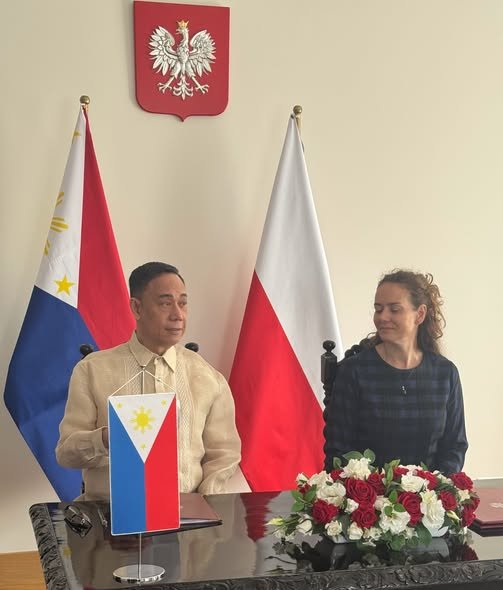
On June 8, 2026, the Filipino Embassy in Warsaw posted pictures on its Facebook site to celebrate the signing of the latest agreement between the two countries. This was to agree on the transfer of persons sentenced to crimes in Poland back to the Philippines to serve their sentence.
A blog from the European Migration Policy Center highlighted some of the pitfalls for Filipino migrant workers in Poland. These included exploitation and deception experienced by some Filipinos who had thought they were headed to Poland for a better life.
The Philippine Overseas Employment Administration POEA, which regulates the sending of migrant workers abroad for the Philippine state, said that there were rogue and unregulated recruitment agencies that had been offering better-paying jobs in countries like Poland, as well as permanent residency in Europe.
Read AlsoPoland: New government, new year, but is there a new migration policy?
Pitfalls facing Filipino migrants
Once they arrived, the workers who had believed these promises and paid exorbitant fees to the recruitment agency found that the promises were not kept.
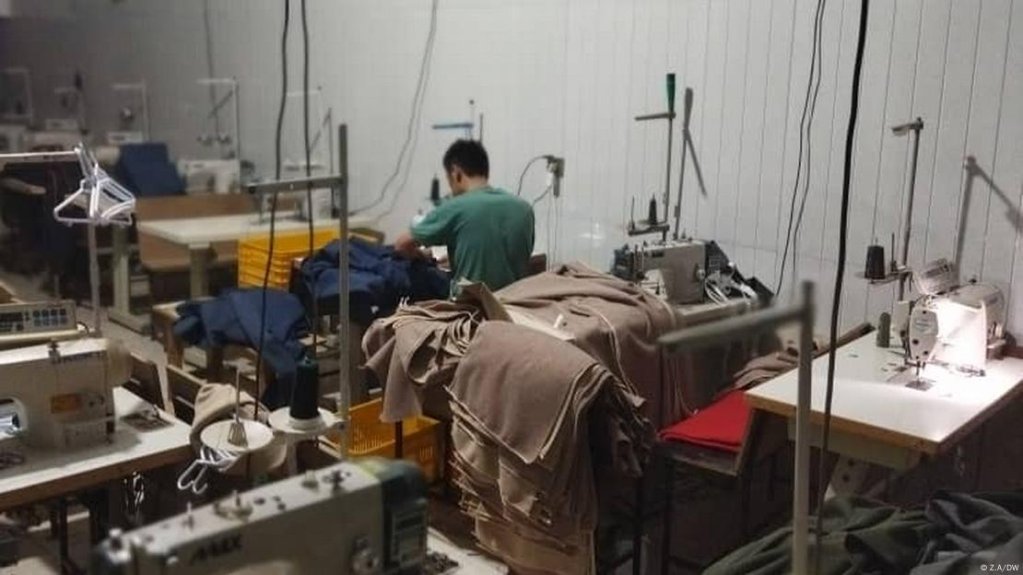
According to the study by the Migration Policy Center, some Filipino workers had their passports confiscated, were forced to work in factories under harsh conditions, with deductions from their wages, and were given unsuitable living conditions on arrival.
Once they were in Poland, many of these migrant workers discovered they didn’t in fact have the correct documents to work in Europe and then were forced into an irregular situation, either staying in Poland and fearing being deported, or moving to another place in Europe with similar risks.
Finally, new restrictions on short-term employment for citizens from East Asia meant that a new type of work permit was on offer to all third-country nationals. This was easier and cheaper to obtain than a traditional work permit and streamlined visa processes.
It allowed migrant labor to enter Poland more easily, states the Migration Policy Center, but still fell foul of Phillipine government rules, so the migrant laborer might have permission to enter Poland, but if recruited from a third country, and not directly from the Philippines, they could be considered irregular with respect to the POEA rules, making it difficult when they might need Filippino consular services, or want to return to their own country.