
Hostilities in Iran and Sudan continue, displacing thousands of citizens internally and forcing others to flee to neighboring countries. A new European Parliament briefing assesses whether the EU is prepared for the arrival of large numbers of refugees, similar to the movements seen during the 2015 migration crisis.
The protracted hostilities in Iran and in Sudan have raised concerns about the European Union’s preparedness to manage a potential exodus of people seeking international protection.
In 2015, the bloc scrambled to manage the estimated more than one million asylum seekers fleeing conflict and violence in Syria, Afghanistan, and Iraq. The situation tested the EU’s existing migration and asylum policies and exposed its limitations, with Greece and Italy serving as the main entry points and struggling to process large numbers of arrivals. As many migrants continued their journeys to other EU countries, Germany and Sweden ultimately received significantly more refugees than most other member states.
Read AlsoSyria: Millions return to poor infrastructure
Existing asylum policies
A June 2026 briefing by the European Parliamentary Research Service (EPRS), the European Parliament’s in-house research service, reviewed the bloc's migration and asylum preparedness, taking stock of its migration policies, cross-country partnerships, border management capacity, as well as its returns policies to plan for a possible response and "ensure the necessary level of preparedness".
Some of the responses that it outlined included continued regional partnerships to manage the movement of people. In April 2026, the leaders of Cyprus, Greece, Italy and Malta issued a joint declaration calling for an EU-wide contingency plan to prepare for a possible migration wave.
The briefing cites the Asylum Report 2025, the European Agency for Asylum (EUAA), as saying that many EU+ countries (all EU countries plus Iceland, Norway, Liechtenstein and Switzerland) have reviewed their reception systems and incorporated measures to help reduce pressure on the asylum system, Some countries such as Ireland and the Benelux countries still experienced problems with their reception systems. Lengthy asylum procedures continued to be reported in Austria, Cyprus, France, Germany, Greece, Ireland, Italy, the Netherlands, Poland and Spain.
Although asylum applications have declined since late 2023, the number of pending cases in the EU continued to grow, rising from 733,335 in January 2021 to 1.22 million by the end of 2025 (an increase of 66 percent), Eurostat figures show. This suggests that many national asylum systems have struggled to process claims quickly enough to reduce backlogs.
Read AlsoThe EU Pact on Migration and Asylum: Questions answered
Preparation to be considered
Other factors shaping what a planned response could look like include:
- How many are displaced in Iran, Sudan, and their neighboring countries?
According to UNHCR, 66 percent of refugees and other people in need of international protection are hosted by a country neighboring their own.
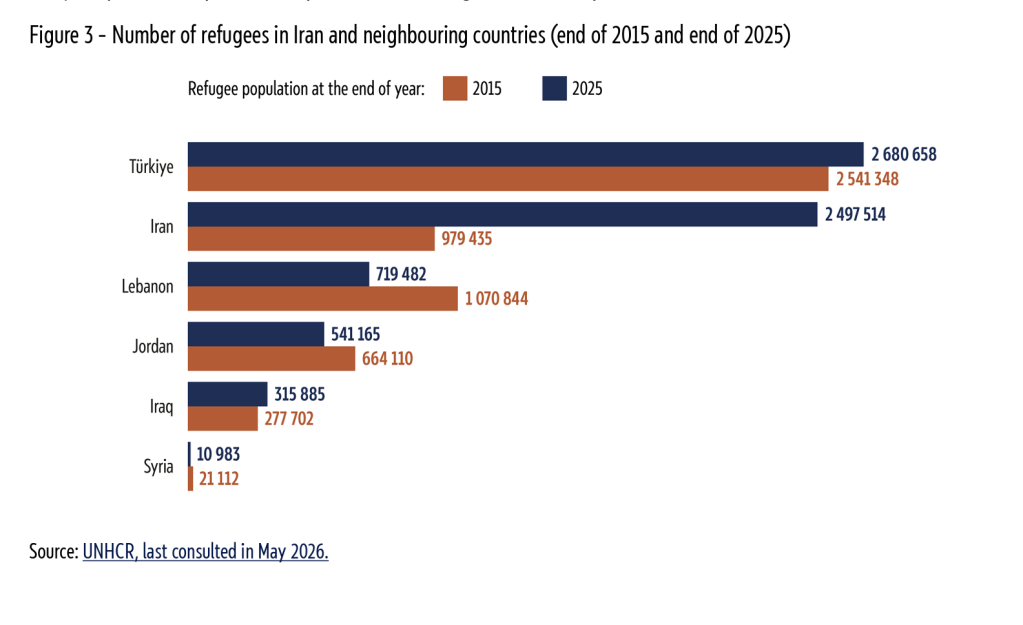
Iran: Assuming its population of 90 million people, even a minimal displacement would cause a significant exodus of people. Any movement out of Iran would be tied to and affect Turkey, as a host and transit country. Up to 3.2 million Iranians are already temporarily displaced due to the war, according to the UN Refugee Agency (UNHCR).
Sudan: The ongoing civil war in Sudan has triggered a displacement of 7.2 million people within the country and an estimated 4.2 million seeking protection abroad.
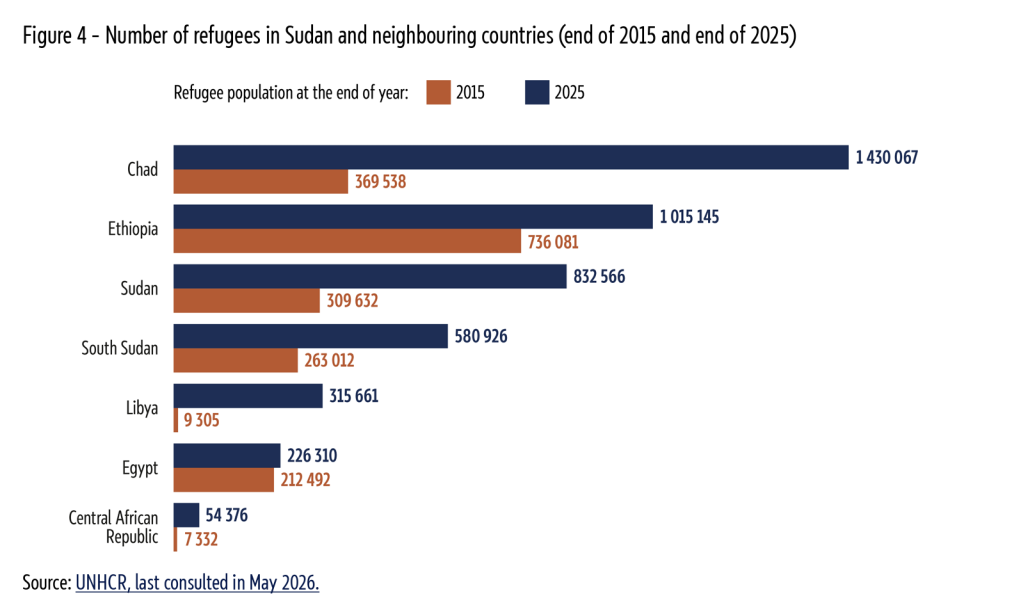
However, neighboring African countries are also hosting a large number of refugees. Chad is estimated to be hosting 1.4 million people, nearly five times more than it hosted in 2015. Meanwhile, Ethiopia is hosting more than 1 million people.
Read AlsoAs Sudan's war worsens, more displacement is likely
Which refugees are likely to come?
As of early May 2026, the conflict in the Middle East and the civil war in Sudan have not triggered a higher influx of asylum applicants in Europe.
Predicting when or even if asylum seekers may arrive is difficult and depends on the many developments in Iran and Sudan. Citing Syria as a point of reference, the EPRS reported that while the war in Syria started in 2011, large numbers of Syrians only started arriving in Europe in 2015. “More people decide to leave their country of origin once the violence of conflicts intensifies,” the report noted.
The EPRS noted that the capacity of countries near Iran and Sudan to take in refugees will affect who and how many will seek refuge in Europe.
- Iran: hosts 2.6 million Afghans, of whom 750,000 are recognized as refugees. An estimated 500,000 undocumented Afghans also live in the country
- Lebanon: More than 1 million Lebanese are internally displaced, while more than 50,000 have sought refuge in Syria, according to the UNHCR. Lebanon also hosts nearly 500,000 Palestine refugees. According to the United Nations, more than 230 000 Palestinians live in Lebanon.
- Syria: 5.5 million Syrians are internally displaced
- Sudan: An estimated 4.4 million Sudanese have sought refuge in other countries.
"On the basis of the lessons learned from the 2015 migration crisis and to avoid a similar situation, the EU is ready to fully mobilize its diplomatic, legal, operational and financial tools to prevent uncontrolled migratory movements to the EU and preserve security in Europe," the document read.
Read AlsoRefugees and migration: Is Europe closing its doors?