
A total of 7,860 irregular border crossings were detected on the Western Mediterranean route between January and June, representing a 17 percent increase compared to the same period last year. In contrast, irregular border crossings across the bloc were down by 37 percent this year, according to the EU border agency Frontex.
While irregular migration into the European Union (EU) has generally dropped, arrivals via the Western Mediterranean have emerged as bucking the downward trend, according to figures released by Frontex, the European Border and Coast Guard Agency, on July 10.
In the first half of the year, Frontex recorded 7,860 irregular border crossings through the Western Mediterranean route, representing a 17 percent increase compared to the same period last year. The arrivals were said to be driven mainly by departures from Algeria.
In contrast, irregular border crossings into the European Union overall -- tracked at 49,000 -- were down by 37 percent this year. The Western African route towards the Canary Islands saw the steepest decline at 67 percent. The Eastern Mediterranean and the Central Mediterranean were the busiest routes, together accounting for more than 60 percent of all irregular entries into the EU.
Frontex data refers to the number of detections of irregular border crossings at the external borders of the European Union. The same person may cross the border several times in different locations at the external border.
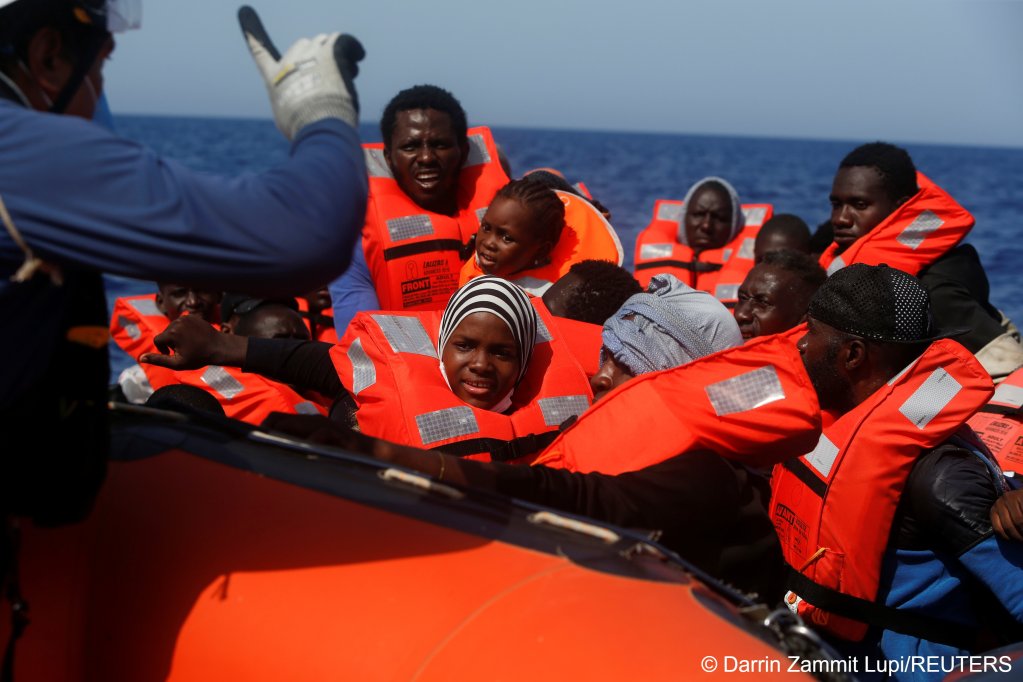
- Eastern Mediterranean: 16,643 detections, equal to a 20 percent decline
- Central Mediterranean: 14,340 detections, equal to a reduction of 52 percent
A combination of inter-country efforts to strengthen border control and last month's enactment of the EU Pact on Migration and Asylum, which standardized the screening processes across the bloc, is seen as contributing to the declining number of arrivals.
"Fewer boats are setting out towards Europe, and that is the result of sustained cooperation with our partners in the region. But behind every number is a person, and people are still dying at sea. Our officers remain on the ground at the external borders, supporting member states and helping to save lives," Frontex Executive Director Hans Leijtens said in a statement.
Read AlsoThe EU Pact on Migration and Asylum: Questions answered
Western Mediterranean Route
The European Council defines the Western Mediterranean route as irregular arrivals in Spain, both via the Mediterranean Sea to mainland Spain and by land to the Spanish enclaves of Ceuta and Melilla in Northern Africa. Migrants reportedly transit through Morocco and Algeria to reach Spain.
The Spanish news agency EFE reported that the sustained irregular arrivals to Spain were mostly coming via the Strait of Gibraltar. At its narrowest point, the strait separates Africa from Europe by a mere 13-14 kilometers.
Starting today (July 15), the border fence separating Spain from Gibraltar -- once marked as a British territory -- has been taken down after the signing of an agreement between the two countries following Brexit. The closing of the checkpoint has been hailed as "the fall of Europe's last wall."
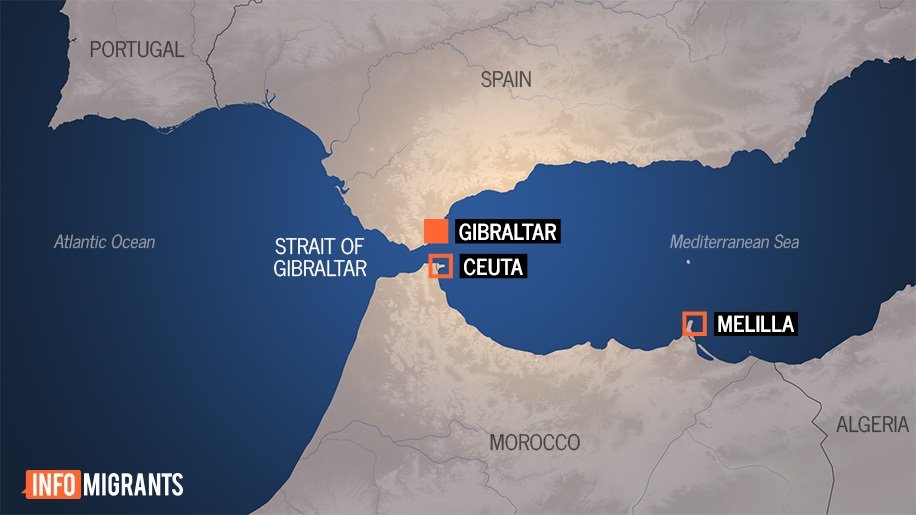
Spain has two exclaves in North Africa: Ceuta and Melilla. Both are bordered by Morocco.
Last year, 54 minors were reported to have reached Ceuta by swimming there from Morocco. Spanish media identified the minors as mostly being young Moroccan nationals.
Unaccompanied minors are typically allowed to stay on Spanish soil until they turn 18. The time lapse allows them time to lodge detailed asylum claims. However, as Moroccan nationals, their claims are likely to be rejected.
Adult migrants who reach Ceuta by swimming there meanwhile are increasingly sent back to Morocco quickly under various existing agreements between the Spanish and Moroccan governments.
Read AlsoCeuta: 6 arrested in operation against migrant smuggling network
Overall decline in irregular arrivals
According to Frontex, the downward trend of irregular arrivals across Europe marked by region indicates:
- Western Balkans: 4,009 cases or a decrease of 24 percent
- Eastern land border (bordering Belarus and Ukraine): 2,633 cases of irregular entries, translating to a 39 percent dip
Attempts to cross the English Channel: 18,367 cases, or a 44 percent drop
The most frequent nationalities of origin vary by region. In the Eastern Mediterranean, Afghans, Sudanese and Bangladeshis were most recorded, while in the Western Mediterranean, the main arrivals were from Algeria, Mali and Morocco.
Read AlsoAt least 50 migrants feared lost in Mediterranean, ten survive