
A recent global survey, carried out by the polling company Ipsos on behalf of UNHCR, has found that 51 percent of those surveyed in Germany were in favor of a full closure of the German borders, although they also agreed that it was important to offer protection to recognized refugees.
The polling company Ipsos UK just carried out a global survey to mark the 75th anniversary of the 1951 Refugee Convention. The survey found that although there are historically high levels of displacement, across the world and economic pressures, the public attitude towards refugees "has remained remarkably stable."
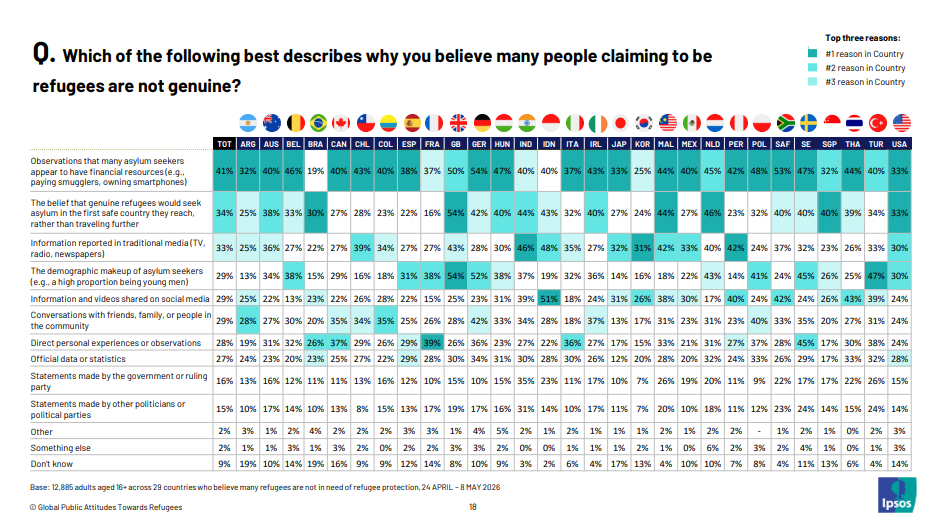
The picture from respondents in Germany slightly differed from the broad global conclusions. Although overall two-thirds of people surveyed agree that people should be able to take refuge in another country to escape war or persecution, almost as many people, 61 percent, believe that many of those people claiming refugee status are not genuinely in need of protection. This figure rose to 62 percent in Germany, while 51 percent of those surveyed in Germany are in favor of closing the borders entirely, against 49 percent of those surveyed overall.
In Germany, the reasons for thinking this, according to the survey, were:
- 54 percent observed that many asylum seekers appear to have more financial resources than they claim, for instance, they can pay smugglers and own smartphones.
- 42 percent explained their doubt about the genuine nature of protection claimants, saying that they felt if they were really in need of protection, they would seek refuge in the first safe country.
Germany is surrounded by safe countries and therefore, many see the arrival of people in Germany as a form of 'asylum shopping' or seeking out better benefits and support.
Read AlsoGermany: Study suggests migrants who leave the country are often put off by bureaucracy
Reasons for doubting refugee claims
- 52 percent of German respondents said that their doubt about refugee claims was because of the disproportionate numbers of young men among the claimants.
- 42 percent said that conversations with friends and family and the wider community had helped inform their doubts.
- 28 percent added that their doubts had come from reports read in traditional media, including TV, radio and newspapers
- 23 percent had formed their views after seeing videos and information shared on social media.
- 36 percent of German respondents said they had formed doubts about the genuine nature of refugee claims based on direct personal experience or observations and 34 percent based on official data or statistics.
- 17 percent said their views and doubts had come from statements made by other politicians or parties not in government and
- 10 percent from statements made by the ruling parties.
Read AlsoGermany: Police raid asylum accommodation on suspicion of welfare fraud
Do refugees bring something positive to your country?
Views on integration remain mixed, and in Germany, the picture was more pessimistic than the overall results. In Germany, just 30 percent of people believe that refugees can successfully integrate into society, whereas overall, 44 percent of respondents thought that successful integration is possible. However, the German response was still more positive than France, where just 27 percent of respondents felt that most refugees could integrate successfully.
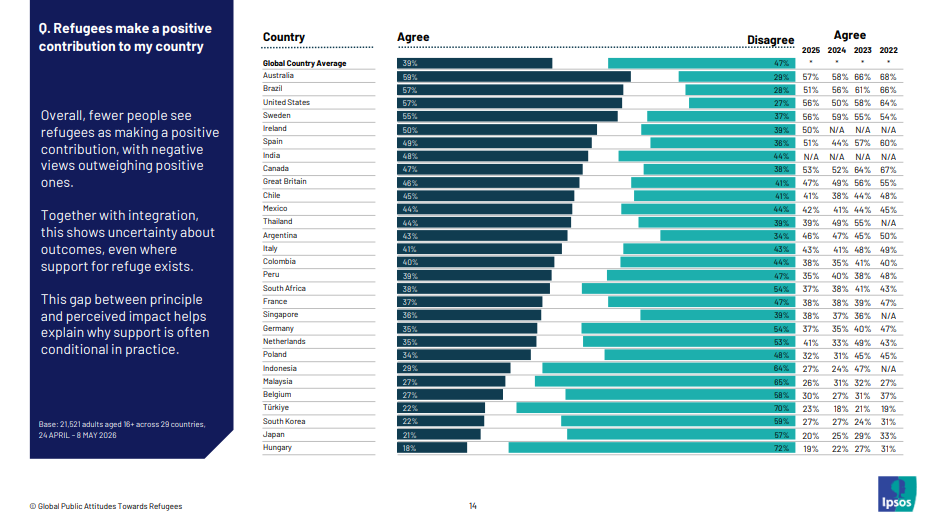
Just 35 percent of respondents in Germany believed that refugees bring something positive to their country, compared to 39 percent overall. Beliefs differ depending on age. Internationally, younger people remain more optimistic; 49 percent of Generation Z (those born between 1997 and 2012) think that refugees can integrate, whereas just 39 percent of Baby Boomers (those born between 1946 and 1964) agree with that statement.
The survey was carried out between the end of April and the beginning of May this year and put questions to 21,521 adults in 29 different countries, including around 1,000 in Germany.
Read AlsoGermany: Asylum seeker denied protected status for repeated criminal violations
Support rising for refugees in some countries
In France, enthusiasm for offering support to refugees has risen since 2019, from 43 percent to 68 percent. In the Netherlands and Great Britain, support for refugees coexists, found the survey, with "uncertainty about who qualifies for refugee protection."
In Germany, 30 percent of respondents believed that governments of other wealthy nations should help with the current funding challenges for refugee support, with 25 percent highlighting international organizations like the UN and the World Bank as possible funders, and 16 percent thinking the German government could contribute.
Ipsos notes that the data from each country is weighted to best reflect the composition of each country’s sample and reflect the demographic profile of the adult population according to the most recent census data. This allows the polling company to produce what they call a "representative survey."
Read AlsoGerman asylum benefits cuts violate EU law, top court rules