
According to the United Nations High Commissioner for Refugees (UNHCR), support for taking in refugees in host nations remains strong — despite growing conflicts, economic pressures, and heated debates on migration. However, many respondents taking part in the poll also expressed doubt.
A survey by UNHCR highlights that fundamental support for refugees in host countries remains high despite ongoing public discussions on the effects of migration.
According to the poll, which was conducted by Ipsos on behalf of the UN body, two-thirds of all respondents in 29 countries surveyed believe that people who have been victims of war or persecution should be able to seek protection in another country.
Compared to last year, this means that support for refugees had fallen by only one percentage point.
At the same time, however, six in ten believe many people claiming refugee status may not genuinely be in need of protection.
According to the UN, a total of 21,521 adults took part in the survey, which was conducted in the weeks between April 24 and May 8, 2026.
Read AlsoGermany: Protection revoked in 1 in 6 reviews of Syrian asylum cases
Many believe refugees won't integrate
According to the data analyzed by UNHCR, support for accepting refugees was strongest in Sweden and the Netherlands, with each citing an overall support rate of 78 percent.
This was followed by Spain, with 76 percent, and by Germany and France where, according to the report, where 69 and 68 percent of respondents expressed approval, respectively.
At the same time however, 45 percent of respondents across all countries that participated in the survey said they did not believe that refugees integrate successfully, with older participants more likely to harbor negative views than younger generations.
Only 39 percent of the participants agreed with the statement that refugees generally make a positive contribution to society, while 47 percent disagreed with that sentiment, according to the survey.
Read AlsoGermany cuts funding for integration of refugees
Finding reveal mixed messages
Trinh Tu, the UK Managing Director for Public Affairs at Ipsos, said that the findings show that "[p]eople continue to support protecting those forced to flee. That hasn't changed much."
"But many question how refugee protection works in practice and whether systems are fair," she added.
UNHCR meanwhile referred to the findings as a broad spectrum that was "shaped by local conditions, media coverage, political debate, and national experiences," stressing that ongoing funding cuts do not allow the agency to do as much to help people in their home countries as they used to be able to.
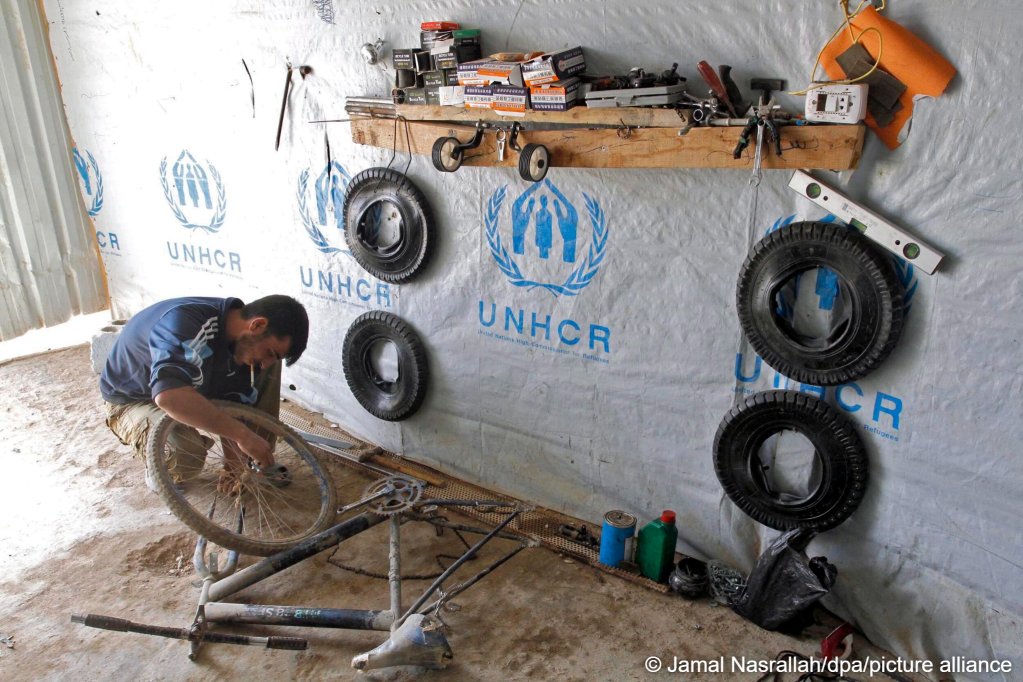
Read AlsoMore than 11 million people will be affected by UNHCR funding gaps, UN warns
Little support for welcoming more refugees
The findings of the survey come against a backdrop of historically high levels of displacement globally. According to UNHCR, an estimated 117.8 million people were forcibly displaced at the end of 2025 worldwide.
Though this number marks the first decline in global displacement figures in over a decade, the overall number is found to remain exceptionally high.
The findings of the survey are also important against this backdrop, as opinions on displacement seem to vary when it comes to some contemporary conflicts.
The poll found that views on displacement caused by ongoing conflict in Iran and Lebanon were less receptive towards granting protection to those affected.
Responses to the survey imply that many favor humanitarian aid (28 percent) and diplomatic action (24 percent) over granting temporary asylum (19 percent); at the same time, the idea of affording those affected by these conflicts permanent protection only attracted 6 percent support.
Read AlsoIran war: Refugees may look to Germany as hostilities continue