
The European Union claims that Guinea has been showing a certain lack of cooperation when it comes to taking back migrants who have been living in Europe without permission. In response, the EU has announced that it will be introducing new restrictions on issuing visas to people from Guinea as a penalty.
According to an EU announcement last week, requests for Guinean authorities to receive migrants returning from the bloc either go unanswered or are not followed up on sufficiently.
Furthermore, the EU has reported facing difficulties in organizing the readmission of deported migrants being sent back to the West African country by airplane.
In response, Brussels decided to change its visa regimen for nationals of Guinea until greater cooperation can be proven.
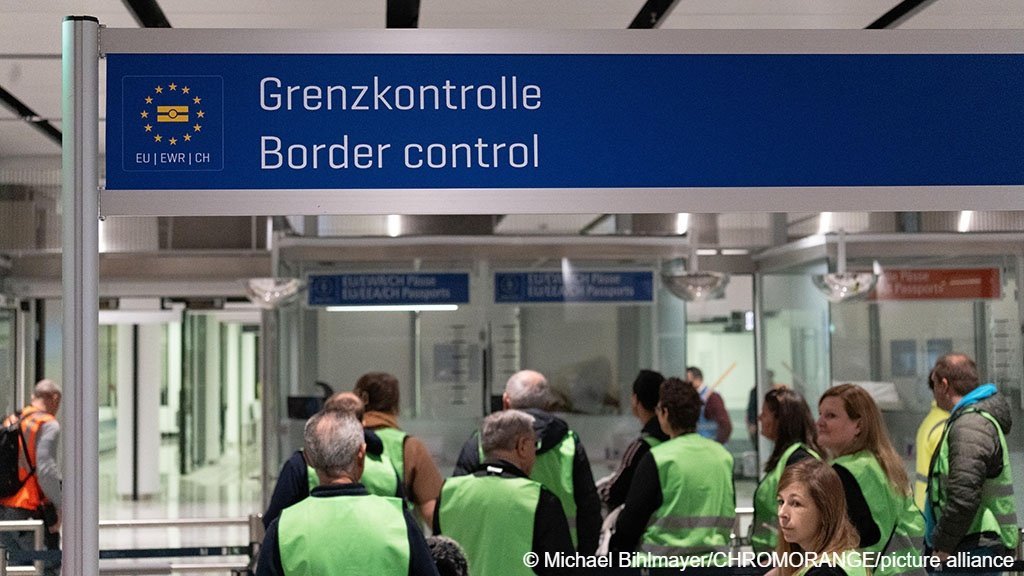
Heavy restrictions on visa procedures
The new measures will allow EU members to refuse issuing multiple-entry visas to Guinean nationals, and will also include concrete changes to the application process.
Guinean visa applicants will now have to submit additional documents to support their visa requests, and the standard processing period for visas will be extended to 45 calendar days. Until now, most visa applications by Guineans would be issued within 15 days of receipt.
With more and more European countries relying on African talent to work in the EU, such delays can significantly affect both regular migrants hoping to focus on their careers in Europe and the operations of the companies hiring them in a bid to fill major skills shortages.
Read AlsoGermany trains immigrant teachers to fill gaps in schools
Guinea remains one of the poorest countries in the world, but it ranks high in terms of stability and peace. People who reach Europe from the West African nation are typically regarded as economic migrants and only manage to achieve protection status in rare instances.
In recent years, Guinea has emerged as a new departure point on the West African migration route to Spain's Canary Islands, located more than 2,000 kilometers to the north. However, countless people have died on the Atlantic route, which is widely regarded as one of the most dangerous routes for irregular crossings in the world.

Read AlsoGuinea emerges as new irregular migrant departure point towards Europe
This ultimately means that many Guineans who reach Europe using irregular means will ultimately be rejected and pegged to be sent back to their country.
However, such deportations rely heavily on the country of origin showing a high level of cooperation and coordination with EU states to ensure that returns are fully in line with legal requirements.
Refusal to work with the EU can easily result in people remaining in Europe in limbo, with an ultimate goal of deportation, but no feasible plan on how to carry out such returns.
Return hubs in third countries
In order to minimize the number of migrants who get to remain in Europe in this legal no-man 's-land, the EU recently backed plans that would allow member states to establish so-called return hubs outside the bloc.
Under the proposal, people who have received a deportation order could be transferred to these centers while authorities arrange their returns either to the migrant's country of origin or to another third country, which agrees to host them legally.
Human rights groups warn that the hubs could function in practice as detention-like centers.
Read AlsoEU pushes ahead with plans for migrant return hubs outside Europe
The idea behind the return hubs is to put pressure on countries to work more closely with EU authorities in taking their own citizens back, while also putting pressure on the migrants to agree to return voluntarily.
It is unclear at this point where these migrant return hubs would be situated, and how many EU states will likely operate them; however, German Interior Minister Alexander Dobrindt announced recently that he feels confident about the prospect that the first return hub will be operational by the beginning of next year.
Read AlsoFrontex expected to be given more powers, including new role in managing return hubs
with dpa