
The European Commission wants to freeze assets and ban travel for criminal networks, in new proposals currently on the table. Some evidence suggests however that tougher enforcement alone may not stop smuggling without more legal migration routes and broader cooperation.
The European Commission and the EU's foreign policy chief Kaja Kallas have proposed a new sanctions regime targeting migrant smuggling, human trafficking and other forms of organized crime, in a move that reflects both a sharper security agenda and growing frustration with the limits of existing migration controls. The proposal would allow the EU to freeze assets and impose travel bans on individuals and entities linked to serious criminal networks operating outside the Union, with the European Commission arguing that the goal is to "disrupt" their finances and their ability to move across borders.
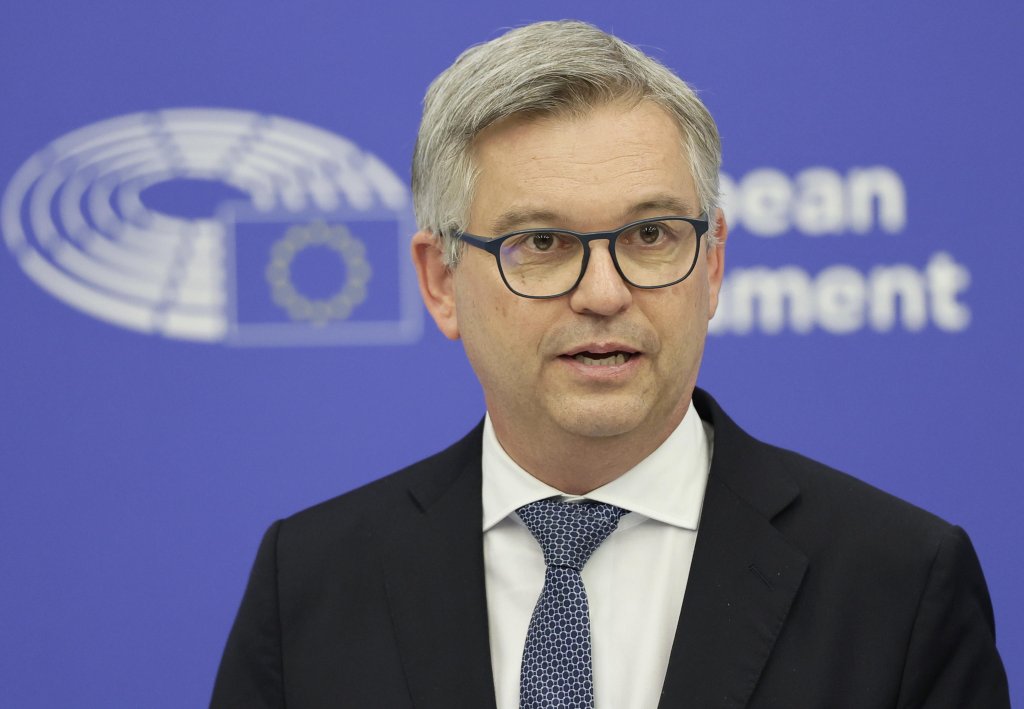
President Ursula von der Leyen presented the initiative as part of a broader effort to stop smugglers from profiting from dangerous journeys. "We all have a common goal. To drive them out of business. And to save the lives of thousands of people who dream of a better life." While also using migration control rhetoric: "We in Europe must be the ones to decide who comes to us and in what circumstances."
The proposal is the latest step in an EU strategy that has increasingly combined migration management with law-enforcement, foreign policy and financial pressure. It follows the second International Conference of the Global Alliance to Counter Migrant Smuggling, held in Brussels in December 2025, where the Commission said more than 80 delegations and 58 partners endorsed a joint declaration built around prevention, response and alternatives to irregular migration. That conference also underlined the Commission’s view that smuggling is not just a border problem but a transnational criminal business that must be tackled along the route, online and through the financial system.
The Commission says the new regime would complement, not replace, criminal-law tools. In its Q&A on the topic, it stressed that sanctions are separate from prosecutions and are meant to close loopholes by targeting people and entities responsible for, supporting, or benefiting financially from migrant smuggling, trafficking in human beings, firearms trafficking, drug trafficking and money laundering. The measures are temporary and reversible, but they depend on unanimity in the Council.
Read AlsoFive arrested in Germany and Switzerland over migrant smuggling network
How effective?
The effectiveness question is the most important one. The Commission’s logic is largely simple: if smugglers can be denied access to money, travel and international mobility, their business model becomes harder to sustain. But research and policy briefings are more cautious about how far that will actually work in practice. The European Parliamentary Research Service says there is still little research on whether asset freezes and travel bans really disrupt smuggling networks, especially the most adaptable and geographically dispersed ones. As migration routes shift, smuggling networks often adapt with them.
In practice, the regime would depend on the EU’s standard sanctions system, with the Council listing targets and member states, banks and other operators responsible for freezing assets and blocking travel. Yet that still leaves the hardest task untouched: smuggling networks are designed to stay hidden, so sanctions will only work if the EU can identify the right people, secure robust evidence and enforce designations across jurisdictions where cooperation may be uneven.
Critics argue that sanctions may be easier to announce than to enforce. A recent RUSI-backed study says political will is a central but under-examined factor in sanctions policy, and that major questions remain about how targets are selected, how host states respond and whether the measures actually change criminal behavior.
Read AlsoGreece to toughen sanctions against migrant smuggling
Legal pathways as a counter measure
A 2025 report by the Mixed Migration Centre suggests that smugglers are only one part of a much wider migration system. It finds that lack of legal migration pathways is a key driver of demand, and that tighter border controls can increase demand for smuggling while also pushing routes into more dangerous and costly patterns. In other words, pressure on smuggling can shift the market rather than eliminate it.
This point is crucial, the Commission’s own language links smuggling policy with a broader push for stricter migration control. It also states that the proposals respond to irregular border crossings and aim to disrupt the "business model" of smugglers, while the Global Alliance has also emphasized prevention, enforcement and alternatives to irregular migration. But the evidence base suggests that enforcement alone may be insufficient unless it is paired with lawful pathways, cooperation with transit countries and measures that reduce the incentives driving people into irregular routes.
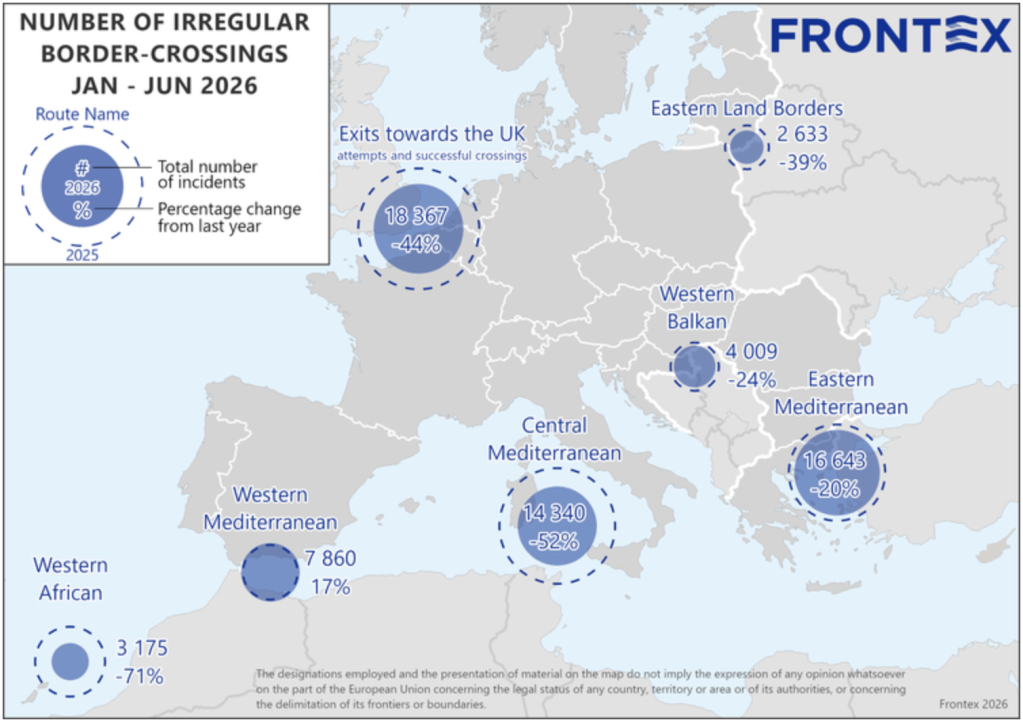
Frontex says irregular crossings into the EU fell by 37 percent in the first half of 2026, even as migration remained a politically charged issue across Europe. That contrast strengthens the case for more legal migration pathways, especially at a time when labor shortages are weighing on many European economies and when deterrence alone is unlikely to address long-term demand.
With labor shortages affecting many European states, there is also a practical case for creating more legal pathways to migration. That would help meet economic needs while avoiding the more punitive forms of migration control that risk undermining the human-rights values on which the European project was built.
Read AlsoFrontex expected to be given more powers, including new role in managing return hubs
Smuggling and tougher policy
The political context is also key here. Across the EU, migration policy has moved toward more deterrence, more outsourcing and more emphasis on return, border screening and criminal enforcement. The sanctions proposal fits that pattern, it is framed as a way to make migration control more credible by going after the people who facilitate irregular entry without looking more deeply at the wider causes.
But smuggling often thrives precisely because migration policy becomes harsher, think some analysts. The Mixed Migration Centre report says stricter border controls both raise demand for smugglers and alter routes, because people on the move still seek access to safety, work or family reunification when legal pathways are limited. It also notes that smugglers frequently are not the original cause of migration decisions -- only six percent of smuggler users surveyed globally said smugglers were a key influence on the decision to migrate. That suggests policy aimed only at smuggling networks may miss the underlying demand side of irregular movement.

The EU has tried to address that wider picture through the Global Alliance, including prevention campaigns, work with digital platforms, financial investigations and support for legal pathways such as Talent Partnerships. The Commission says the EU has invested more than 700 million euros in cross-border cooperation against migrant smuggling and trafficking in human beings. Yet the same policy architecture still relies heavily on deterrence and disruption, even though research indicates that irregular migration is sustained by conflict, poverty, restricted mobility and demand for labor and family reunification.
Read AlsoMore deaths, fewer arrivals: Migration to Europe is becoming increasingly lethal
What changes now?
If adopted unanimously by Member States, the regime would give the EU a new horizontal sanctions tool not limited to a specific country or region. It would also sit alongside existing EU work on migrant smuggling, anti-trafficking and organized crime, rather than replace it. The Commission says the proposals would not target migrants, asylum seekers or humanitarian workers, and that legitimate assistance would remain protected.
The policy significance is therefore less about a single instrument than about the direction of travel. Brussels is signaling that migrant smuggling is now being treated as a sanctions issue, a financial crime issue and a foreign-policy issue, not just a migration-management issue. Whether that produces real disruption will depend on implementation, evidence sharing, partner-country cooperation and whether the EU is willing to match enforcement with more accessible legal migration pathways.
Read AlsoWhat the new EU migrant 'return hubs' deal means in practice
With dpa