
Under new plans, Frontex could soon have powers to deport people from one non-EU country to another as part of the European Union's changing approach to managing migration. The change is likely to mean that the EU's external border force agency would be in charge of enforcing removals to planned EU return hubs. The changes would come as part of a major overhaul of Frontex's mandate.
Last week, the deputy-director general of the EU Commission's Department for Migration and Home Affairs (DG HOME), Olivier Onidi, confirmed plans to expand Frontex's existing powers to potentially include the enforcement of coordinated removals between non-EU members.
Onidi explained that the change would be based on a "fully-fledged international agreement" backed by EU states and the EU parliament.
Onidi, who is currently in charge of drafting the proposal to expand Frontex's powers, stressed that "[t]here is no intention to give a free mandate to Frontex to conduct return operations from third countries to other third countries."
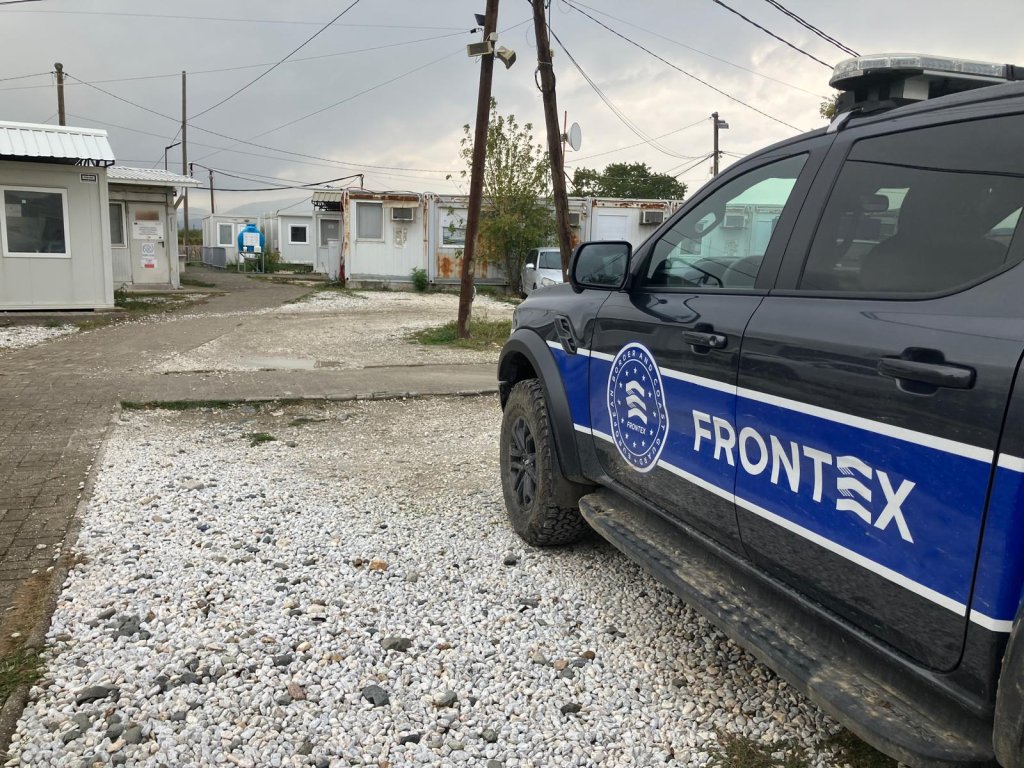
Details, however, remain scarce; a Frontex spokesperson said that the agency could not comment on the ongoing developments until all central EU bodies involved in finalizing the renewed mandate — the European Commission, the European Parliament and the European Council — had completed their work.
"Frontex doesn't get ahead of decisions that are theirs to make. It's too early to comment on specifics before anything is public. Once there's a proposal on the table, Frontex will engage through the normal legislative process, as with any mandate change," the spokesperson explained.
Frontex expected to assist with third-country return hubs
According to Onidi's comments, however, the planned changes could suggest that Frontex might play a role in EU plans to establish so-called migrant return hubs in third countries, which were green-lit in Brussels last month.
Under the plan, failed asylum seekers who cannot be sent back to their home countries — mainly on account of the absence of returns agreements with countries of origin — could be sent to third countries, which agree to take them in.
Onidi commented that for any Frontex involvement in third-country operations, "[t]here will be safeguards, in terms of orchestrating this in order to ensure full compliance of the way we actually practice returns in our jurisdictions,"
Frontex meanwhile is also expected to play a greater role in proactively encouraging the voluntary returns of failed asylum seekers, which will include the development of a mobile phone app to inform those affected of their options.
Read AlsoEU pushes ahead with overhaul of migration rules as ‘return hubs’ approved
Frontex: More accountability, more transparency
Onidi also highlighted other changes that may be in store for Frontex: it is intended that it engages in more data-sharing with other EU agencies and individual member states.
This comes after a 2024 review of Frontex's mandate by the European Commission found that the EU needed to "prepare and equip Frontex for its increased role as the operational arm of the EU in border management, ensuring a high level of security at the EU's external borders in response to the new operational challenges."

Read AlsoExplainer: A closer look at Frontex and its role as Europe's border force
As part of this, Frontex is expected to update aspects of its governance structure and transparency as part of ongoing efforts to modernize the EU body; it is intended to become more decentralized, with aspects of its management structure expected to be devolved from its headquarters in Warsaw to regional command centers within individual EU states.
These command centers have already started being rolled out, and are intended to be located in Germany, France, Belgium, Denmark, Latvia, the Netherlands, the Czech Republic, and Switzerland. A regional center for the Iberian peninsula was also recently opened in Portugal.
Read AlsoEU court opens path to justice for alleged pushback victims in landmark case against Frontex
Expanding Frontex' role and capabilities
To achieve all these objectives and more, the European Commission has started drafting a new mandate for Frontex, with a draft proposal due by the end of September.
Under the plans, Frontex is expected to have the number of border guards working for the agency expanded to 10,000 officials by 2027, with a view of ultimately reaching 30,000.
Frontex told InfoMigrants that "broadly, no EU country manages migration or its external border entirely on its own anymore, and that's really why Frontex exists."
"The agency was built on the idea that this is a shared problem needing shared capacity, and that idea has only become stronger as the challenges have become more complicated."
Frontex has already witnessed a major expansion drive over the past decade; the EU is keen to keep boosting the powers of the agency, in particular in the fight against irregular migration.
According to Statista, the annual budget of the border agency exceeded the mark of 1 billion euros last year for the first time in its 21-year history.
Read AlsoFrontex: Irregular border crossings into EU drop by 25 percent in 2025