
Five men are accused of trafficking migrants, including children, as part of a large-scale smuggling network uncovered after a dangerous transport incident in Bavaria.
German and Swiss authorities have arrested five suspected members of a human trafficking network accused of smuggling hundreds of migrants into Germany and generating millions of euros in illegal profits, in a case that highlights the scale and adaptability of migrant smuggling operations across Europe.
The coordinated arrests took place across multiple locations. The alleged ringleader was detained in Geneva, Switzerland, while four other suspects were arrested in the German cities of Berlin, Dortmund, and Delmenhorst, according to statements from prosecutors and police. The men, aged between 25 and 45, are Syrian and Lebanese nationals believed to have held senior roles within the network.
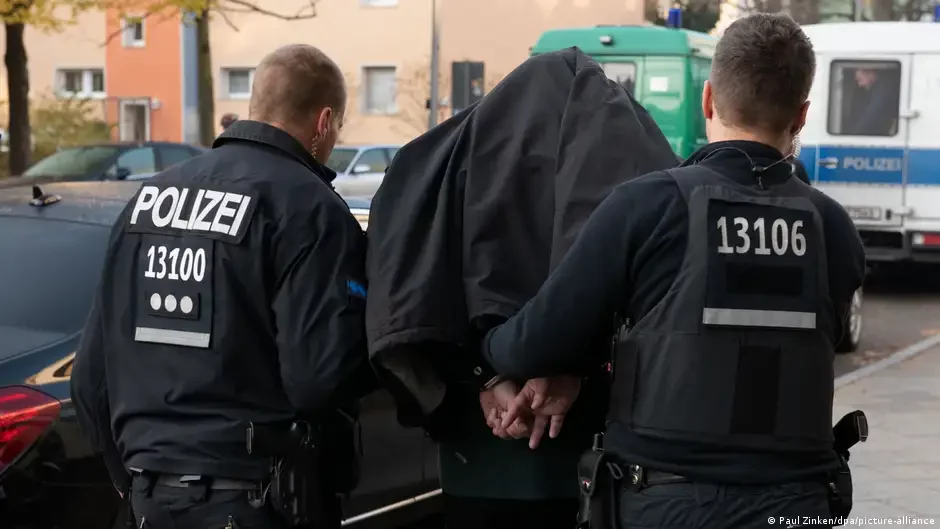
Investigators say the group was involved in trafficking at least 164 migrants, including children, between October 2023 and March 2024. However, authorities estimate the broader network may have facilitated the irregular entry of more than 700 people into Germany, underscoring the industrial scale of such operations.
The investigation began in 2023 after the discovery of 30 people crammed into vans and trucks near Passau, close to the Austrian border. Authorities said those transported were in "grave danger," highlighting the often life-threatening conditions faced by migrants relying on smuggling routes.
Read AlsoGerman national arrested in Latvia on suspicion of migrant smuggling
International crackdown
The case is part of a wider international crackdown. Two members of the same network have already received lengthy prison sentences in the Bavarian courts, while additional suspects have been arrested in Greece, Austria, Slovenia, and Kosovo. German prosecutors are now pursuing extradition proceedings for the suspect detained in Switzerland, while those arrested in Germany are due to appear before a judge to determine whether they will remain in pretrial detention.

The arrests come at a time when irregular migration into the European Union is declining. According to Frontex, irregular border crossings fell by 37 percent in the first half of 2026 compared to the previous year. Yet authorities warn that smuggling networks remain highly active and continue to adapt to enforcement measures.
Across Europe, migration policy debates have increasingly focused on tightening border controls and deterring irregular movement. From EU-level initiatives to national political platforms in Germany, the dominant narrative emphasizes "control" and "toughness." However, emerging research suggests that this approach may have unintended consequences.
Read AlsoCeuta: 6 arrested in operation against migrant smuggling network
Stricter migration policies lead to more dangerous routes
A recent study by the Mixed Migration Centre, based on interviews with more than 80,000 migrants and 700 smugglers, indicates that stricter enforcement often drives migrants toward more dangerous routes while increasing reliance on criminal networks. As legal pathways remain limited, demand for smuggling services persists, allowing such networks to thrive within a climate of heightened enforcement.
Europol has consistently identified migrant smuggling as one of the most profitable and resilient forms of organized crime in Europe. Networks often operate across multiple countries, combining logistical sophistication with exploitation of vulnerable individuals seeking safety or economic opportunity.
Europol continue to emphasize the effectiveness of cross-border law enforcement cooperation and the enduring challenge of dismantling complex trafficking systems. However, while individual networks can be disrupted, the broader dynamics driving irregular migration -- ongoing conflicts, inequality, and limited legal migration options -- continue to sustain demand.
As European policymakers weigh further measures, the case adds to a growing body of evidence suggesting that enforcement alone may not be sufficient. Experts increasingly argue that expanding safe and legal migration pathways could play a critical role in reducing the influence of smuggling networks, while improving safety for those on the move.
Read AlsoEU pushes ahead with plans for migrant return hubs outside Europe
With dpa