
Iranian artist and activist Shailin Asadollahi survived prison and torture from a regime she says wanted to break her. Her fight against the Ayatollah's patriarchal culture continues from exile in the west, where she hopes to rally support for Iranian girls and women.
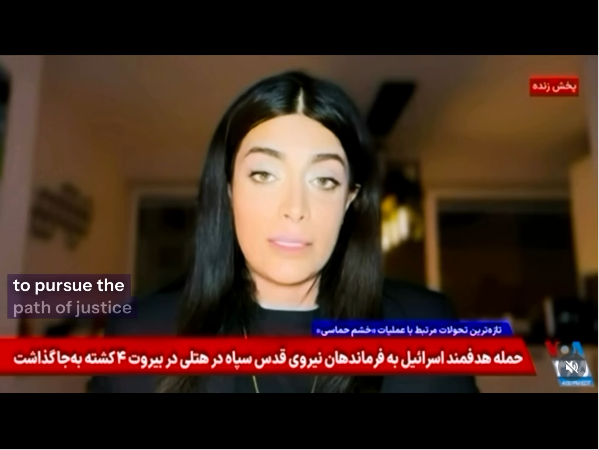
"You don’t know how many brave people there are in Iran," said Shailin Asadollahi. The exiled artist and activist chose to meet in a Starbucks café, where the pulsating beat of a Madonna soundtrack played on a hot day. The young woman herself is an example of the new generation's struggle against the regime. Asadollahi fled Iran first for Turkey on a student visa. Later she traveled to Germany where she was granted asylum, and now she travels in and out of France on her German residence permit.
Asadollahi believes her and her family’s experience with state repression by a totalitarian government – and now her exile – give her a unique position to speak for those who are still in Iran and silenced by the regime.
"My people need support," said Asadollahi. "Not what the United States and Israel did, but true support." For the young woman with a manicure and discrete tattoos, democracy in Iran can only be achieved through women’s rights and freedom for political prisoners.
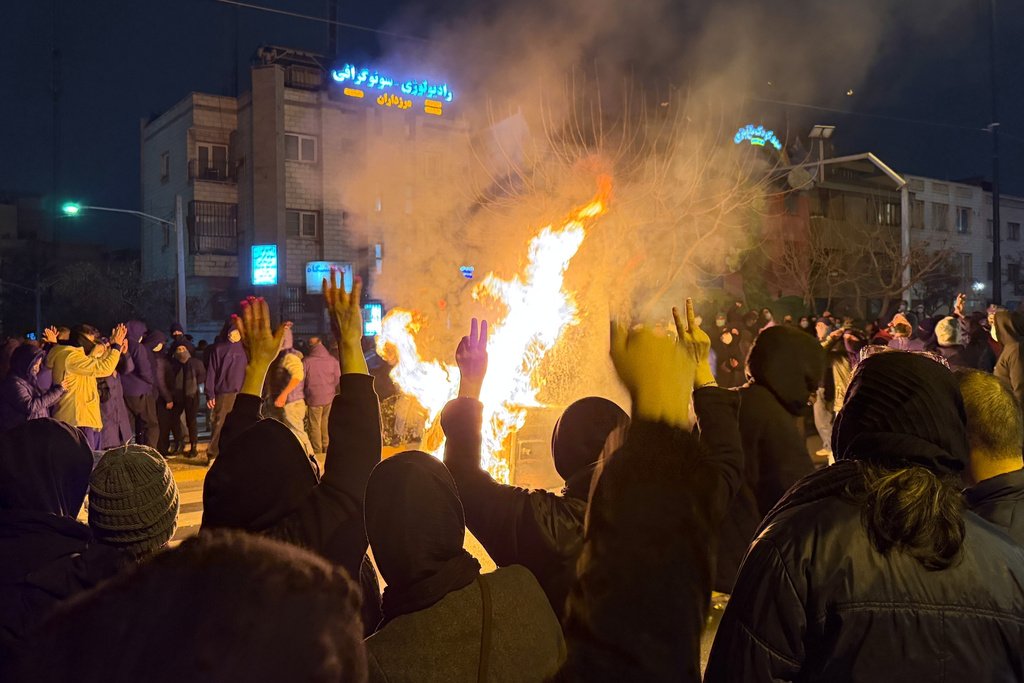
The "800-year gap in mentality" between the clerical rulers and the modern youth was already underlined in 2022 by the late Franco-Iranian film director and comic-book author Marjane Satrapi. Yet after the regime reportedly killed tens of thousands of protesters in the streets in December 2025 and January 2026, the irreconcilable differences between the two became more apparent. For the first time in decades, the Islamic Republic found itself at the edge of a political precipice.
'We must destroy their rules against women'
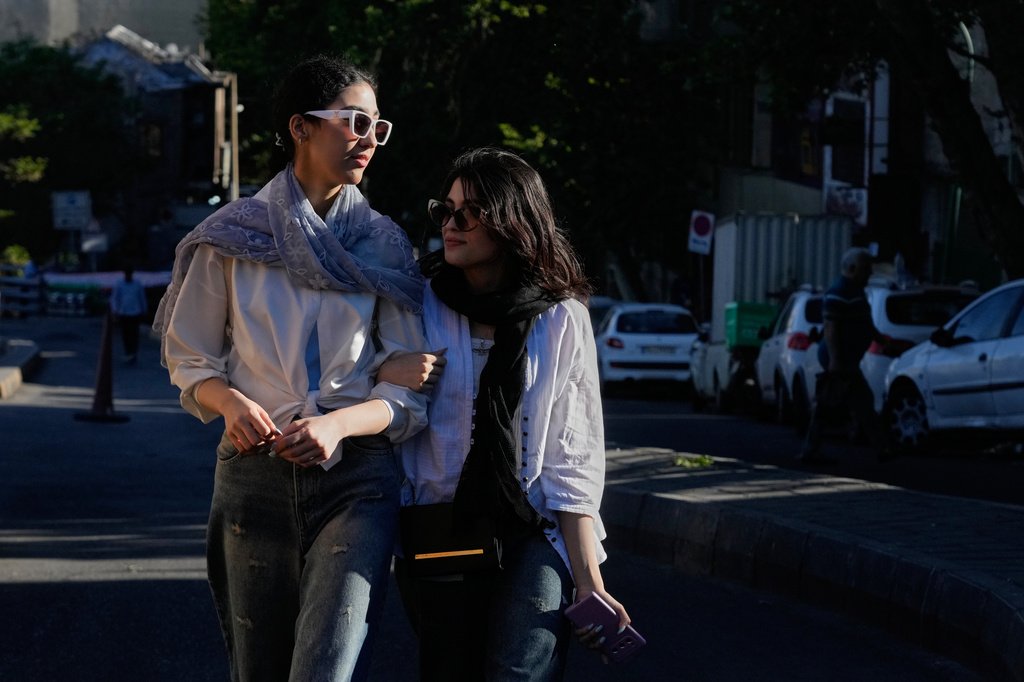
"They have banned us for almost five decades. Why do they push us to wear a hijab? Why do they put their finger on women in this area? The basic thing we must destroy are their rules against women," said Asadollahi about the Iranian authorities.
"The Iranian government is like a fragile edifice, and 'control over women's bodies' is its only pillar. Their restrictions on women’s freedoms aren’t truly about religion. They exist because if that pillar shifts, their entire ideological roof would collapse," added the activist.
Asadolllahi’s own path to freedom didn’t come without a price. The young women chose exile in 2022, first moving to Turkey – a country "that was not a safe environment for her." She fled to Germany after the Turkish authorities detained her and tried to forcibly return her to Iran. The activist settled in France in 2025, where she is "free but doesn't have a home."
Read AlsoMigrant women in France face 'double violence' when reporting abuse
European life offered safety, but Asadollahi’s mind revolved around Iran. The authorities arrested her brother Ali Asadollahi, a poet and dissident, in late January. While he was still in prison, the US and Israel began bombing Iran. Asadollahi asked PEN International, a writer’s association that defends freedom of expression, to publish a letter, which was signed by over a hundred writers, urging Ali’s release.
The Islamic Revolutionary Guards Corps released Ali after two months. Anisha Asadollahi, their sister and a labor rights activist, was also in prison at the same time and recently released. Asadollahi describes the situation as "silent suicide": the way the regime quietly wears down dissidents and their families through prolonged physical and psychological torture.
A feminist awakening
Asadollahi's family taught her the meaning of freedom, she says. Two uncles died in mysterious circumstances during the Iran-Iraq war in the 1980s. It was shortly after the Islamic Revolution in 1979, when the new government was cracking down on internal enemies in the name of its war against the external enemy (Iraq).
Two experiences marked the activist as a teenager and young adult, she explains. Following a large earthquake, she came across a Kurdish woman in a village who had left her husband and feared she would be killed. "She didn’t want to be pregnant again, they had a fight and so she left. He thought maybe she had a lover. Women who leave the house in western Iran without their husband’s permission can be killed, according to tradition. The law gives them the right to do this – even now."
Then, in 2019, Asadollahi was a student at Islamic Azad University in Tehran when she learned through a friend about allegations of widespread obstetric abuse at Imam Ali Hospital, in southern Tehran. The friend explained that Kurdish and Afghan women, along with other women belonging to ethnic minorities and the working class, were forced into premature labor due to overcrowding at the hospital.
Asadollahi organized a sit-in at the hospital to protest the abuse. A large crowd attended, with female journalists who promised that if their newspapers wouldn’t publish the story, they would talk about it on their personal social media accounts. The police later arrived and dispersed the demonstrators.
Prison and interrogation
Two hours after the protest, Asadollahi received a series of threatening messages on her phone: "If you don’t close your mouth, we’ll close it for you," said the caller. The calls continued and ultimately culminated in a letter summoning her to the Ministry of Intelligence to answer some questions. She remembers: "It was the kind of letter that shows they want to arrest you," she remembered.
The summons occurred while Asadollahi had created a role and participated in writing a play called "Auschwitz for Women". The performance followed three women on death row in an Iranian prison, depicting the "hellish situation of women in Iran" and portraying the "Iranian government as Nazis".
Following one of the performances, Asadollahi noticed her brother’s calls; the police had arrested Anisha. Two weeks earlier, Anisha had warned her sister that she might be arrested: "if anything happens to me, do not accept any charges from them.”
When Asadollahi returned home, she saw that agents were present in the house.
“They gave me five minutes to pack my things, tied my hands and took me to an unknown location in central Tehran,” said Asadollahi. “A 10-hour interrogation followed, in which they tried to humiliate me by asking very personal questions and said that they had killed my sister and would kill my mother and father too.”
This was one of the most horrible interrogations, remembers Asadollahi. Despite everything, she went back to the theater after being released the next day. A police officer arrested her backstage.
“This happened over and over again,” said the young woman. “To avoid putting pressure on anyone or causing trouble for others, I tried to keep this matter private; given that I had no experience, I didn't try to share this issue with anyone.”
Read AlsoGerman intelligence services note growing intimidation used against Iranians in exile
"Exactly on my birthday, the case officer called and said, 'I want to give a gift: your sister will be released today.' He wanted to show me how much power they had over me." It was at that moment that Asadollahi realized how bad the situation was.
When Anisha came out of jail, Asadollahi said, "I understood something very bad had happened and that she had endured a lot of pressure in prison." said Asadollahi. The two sisters tried to heal from their respective traumas by doing sports at home and taking their dogs on long walks during the Covid-19 pandemic.
"I realized that I had to help my sister. I thought if I could save her, I could save my own life,” said Asadollahi.
When the pandemic-related restrictions ended, Asadollahi abruptly decided to leave the country. "Every time they arrested my sister or brother, they used me against them. I was under pressure from the government all the time. I felt responsible for everyone."
A passion for independence
She also feared a renewed cycle of arrest, investigation, and release herself. "I came to Turkey with just one backpack and a little money. I had barely managed to settle there when I was forced to migrate again to ensure my safety. Migration is an experience in which one must grapple with a feeling of uncertainty and the struggle to rebuild an identity in a new land. The wounds of past unsafe experiences remain on the soul and spirit."
There is only one thing more beautiful than freedom, which is the fight for freedom, said Satrapi in an interview with the public radio station France Inter. Asadollahi is determined to be part of that struggle, even from exile. "Talk to the girls in schools and compare them to the boys. Girls have a point of view for the future. They want to be president of Iran, pilots, engineers. With all the pressure they have on them, they are passionate," she said. "And our government hates that."
Asadollahi never expected the Iranian regime to benefit from international impunity after its crackdown last year which left thousands dead. She is also against the ongoing US attacks which have sought to decapitate the Iranian leadership. There is a wide margin between indifference and revolution, she thinks. This is the space Asadollahi has carved out for herself, as an outspoken woman and artist explaining Iran to the West.*
"We will change our government," she said. The activist believes in the power of the people and their ability to unite. Above all, she believes the next generation of the Iranian government belongs to women, saying they are the "key solution for our future."
Read Also
Iran war: Refugees may look to Germany as hostilities continue
*This paragraph was updated on July 10 to attribute the analysis to Asadollahi and better represent what she said in the interview.