
An Italian court sentenced a farm owner to 16 years in prison for voluntary homicide with reckless intent over the death of a farm worker in June 2024. The death of Satnam Singh, an undocumented labor migrant from India, became a symbol of the exploitative system operating in much of Italy's agricultural industry.
Antonello L., the owner of an agricultural company, has been convicted in relation to a 2024 work-related accident that ended in the death of 31-year-old Indian farm worker, Satnam Singh. Antonello L. has been sentenced to 16 years,* although the prosecutors applied for 22 years initially.
Reports from local media indicate that Singh, was an undocumented worker on the Agrilovato farm in Borgo Santa Maria, in the province of Latina. On June 19, 2024, while making preparations for melon cultivation, he reportedly became trapped in a plastic wrapping machine. The machine, which was described as being towed by a tractor, severed his arm and caused several leg fractures.
Instead of taking Singh to the hospital, it was alleged that Antonello L. transported Singh into a van, placed his severed arm in a fruit crate and dumped Singh in front of his home.
A coworker called a union representative for help. Singh was then transported via helicopter to a hospital in Rome but by then, had reportedly lost too much blood. Singh succumbed to his injuries two days later.
Read AlsoItalian town to be plaintiff in immigrant Singh's case
Symbolic of exploitative working conditions
The verdict follows months of hearings in which prosecutors detailed the events leading to Singh's death and Antonello L's alleged failure to seek immediate medical assistance. A key argument of the prosecution was that timely medical intervention could have improved Singh's chances of survival.
An outpouring of rage and grief sparked by Singh's death led to demonstrations by agricultural workers, trade unions and members of the Indian migrant community in 2024. Picketers in the town of Latina, not far from Rome, demanded stronger protections for migrant workers and tougher action against so called 'caporalato,' the word used to indicate the gangmastering system.
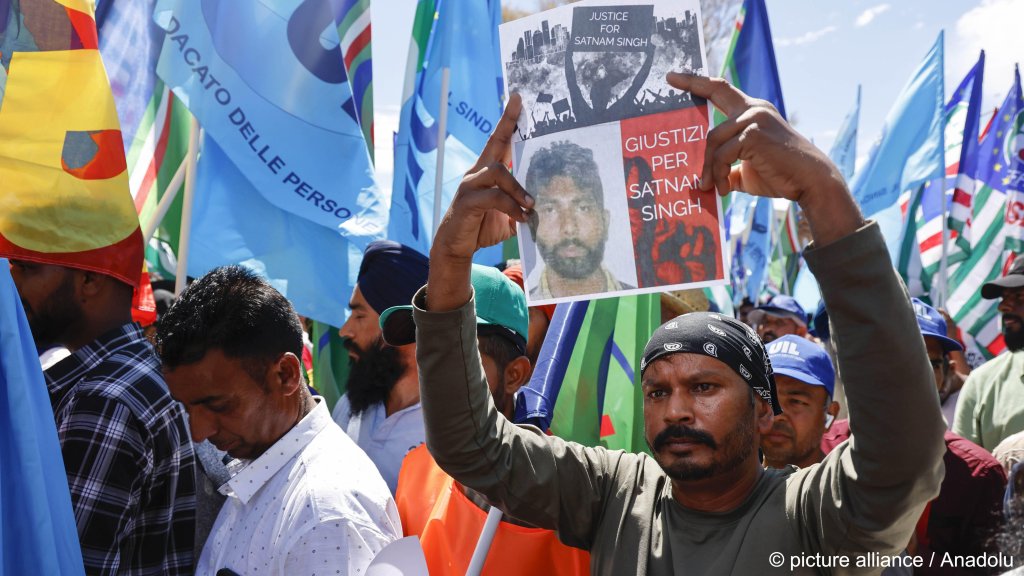
The gruesome details of injury and abandonment surrounding Singh’s death and revealed in the case have become symbolic of the more widespread exploitative conditions faced by many agricultural migrant workers in Italy. The country stands as one of Europe's largest agricultural producers in a sector that brought in an estimated 73 billion euros in 2024.
According to the Migration Policy Center, Italy was reported to have just over one million agricultural workers in 2022. Of these, 10 per cent were intra-EU migrants, meaning that they came from another country that is a member state of the European Union. An estimated 36 percent were third-country nationals. At least 230,000 of all agricultural workers were irregularly employed.
Read AlsoDeath of migrant farm worker in Italy highlights limbo of illegality
Undocumented worker
Singh had traveled from India to Italy in search of work and was employed in the Pontine countryside, an area that has long relied on migrant labor for fruit and vegetable production. Like many migrant farm workers, he was employed under precarious conditions in a sector where irregular employment, low wages and unsafe working practices remain widespread.
According to reports by the left-leaning Italian online newspaper Il Post, Singh's case also prompted local authorities to introduce new measures to protect victims of labor exploitation. In Latina, various sectors across labor, law enforcement and health signed a protocol allowing workers identified as victims of exploitation to obtain a special residence permit, rather than face immediate immigration enforcement measures that could include detention and or deportation. Hospitals can also initiate the protection process, in cases where they treat an injured worker.
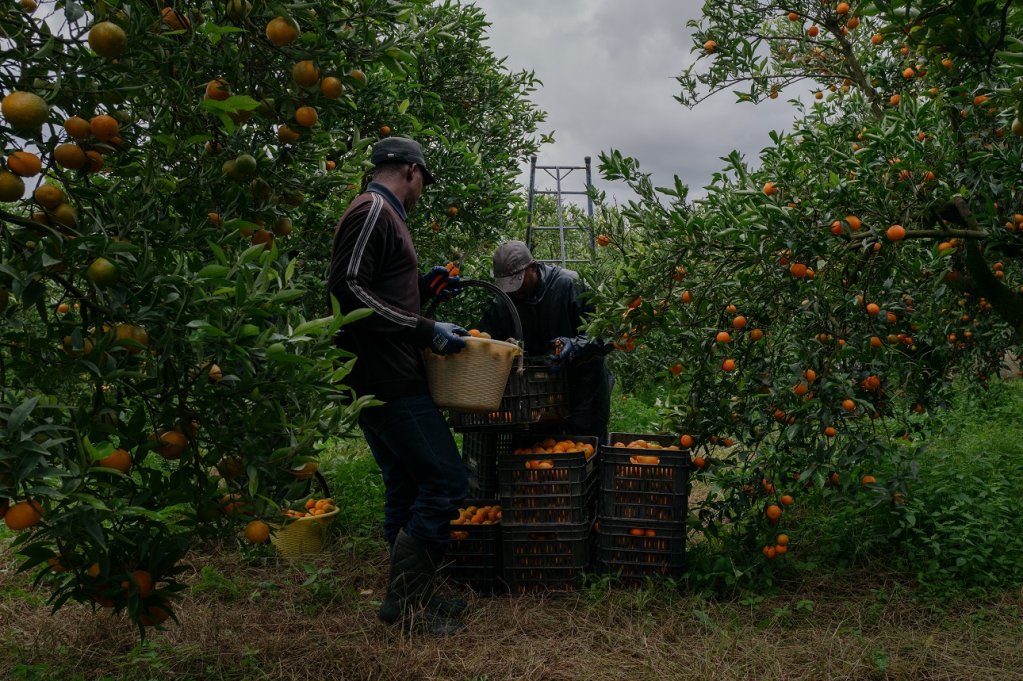
Measures to improve the living and working conditions of farm workers are also slowly taking place more widely across Italy. In the Calabria region, SOS Rosarno, manages the agricultural cooperative Mani e Terra (Hands and Earth). The cooperative consists of about 100 organic producers and 70 foreign employees – mostly from Africa or Eastern Europe. Their working conditions are outlined in a contract that stipulates a fair wage and human working conditions that include a rest period and a day off.
SOS Rosarno was established after the riots which shook Calabria in 2010 that saw clashes following the reports of racist attacks on African farm workers.
Read AlsoHow Italy's Calabria region is improving the living conditions of seasonal migrant workers (1/4)