
The NGO Alarm Phone has sounded the alarm about a group of migrants believed to have left the Algerian coast on board a boat on June 29 and who have not been seen or heard from since. The boat is thought to have been carrying at least 12 people.
"Their relatives are worried. We hope they will be found alive," posted the organization Alarm Phone on its X page on July 5. The organization monitors migrant journeys towards Europe and regularly posts about boats in difficulty and alerts the authorities to their potential whereabouts. They also keep in touch with relatives and the migrants on board certain groups, who often report difficulties first to the organization. The group of at least 12 migrants is missing the Western Mediterranean after having left Algeria on June 29, added the organization.
"Since then, there are no news from them," continued the organization, saying they had alerted the Spanish rescue services Salvamento Maritimo. Most migrant boats setting off from Algeria hope to make it to somewhere in Spain, although occasionally, boats have traveled from Algeria to Italian islands like Sardinia too.
Alarm Phone also posted about the potentially missing migrants on July 4, when they said they had been alerted to their apparent disappearance by a worried relative. According to that organization, the group left the Algerian port of Tipaza.
Spain’s maritime rescue service, Salvamento Maritimo, told the Arabic newspaper Asharq Al Aswat that they had not intercepted the boat or found a group of 12 migrants on that route.
Read AlsoBelgium and Algeria sign landmark migration agreements
Dangerous route
A few days earlier in June, on June 23, Alarm Phone also reported at least one person missing after having attempted the same route, from Tipaza in Algeria towards Spain. According to the organization, on that boat, there were 16 men on board, and it set off on June 15. However, at least one of the men on board stopped contacting his family.
"Since their departure, the family has not received any news from him. They are extremely worried about his fate. Where is he?" they asked via Alarm Phone.
Around the same time that this boat may have gone missing, Alarm Phone also posted alerts of other boats that set off from Libya and Tunisia towards Italy and Greece, which had also got into trouble and were either requesting rescue, or had been intercepted by the Libyan coast guard and potentially taken back to Libya.
According to the UN Migration Agency IOM’s Missing Migrants page, more than 35,000 migrants have died or gone missing on various Mediterranean routes towards Europe since 2014.
The latest incidents of dead or missing were recorded on June 30 this year. IOM notes that many more migrants may actually have died on this route, since there is no official register of departures, so reports of dead or missing are reliant on either finding a boat and bodies, or on witness testimony or relatives who report no longer receiving news from their loved ones.
Since the beginning of the year, on the Western Mediterranean route, at least 225 migrants have been recorded as dead or missing. Across the whole of the Mediterranean, that number climbs to at least 1,410 for the same period.
Read AlsoBodies believed to be migrants wash ashore in Italy after storms
Drowned off Algeria
In April this year, at least 17 Somalians were recorded to have drowned after hoping to cross the Mediterranean from Algeria to Europe. The group included around 12 men and five women, the Somali ambassador in Algeria told the press at the time.
The Ambassador, Yusuf Ahmed Hassan, was quoted by AFP as saying that he had been contacted by relatives of those missing, who had heard no news and wanted to know where their children might be.
Many of the crossings that set off from around Tipaza hope to hit the eastern Spanish coasts, between Almeria and Alicante, at least that would be the shortest crossing point. However, often those who are charged with piloting the boats are not experienced sailors. The boats often get into trouble and or drift off course, resulting in days at sea, where those on board will be subjected to hunger, thirst, exposure to the elements and possibly also run out of fuel along the way.
Between March and April this year, at least 33 sub-Saharan African migrants are thought to have died on routes leaving Algeria towards Spain, according to Spanish activist Francisco Jose Clemente Martin, who monitors these migration routes, reported InfoMigrants French in April.
Read AlsoAlgeria: IOM signs partnership with government expanding voluntary return partnership
Journeys towards the Balearic islands increased
As well as reaching the Spanish mainland from Algeria, there has also been an increase in the number of migrants heading for the Spanish Balearic Islands in the Mediterranean. Between January and February this year, Spanish government data registered a six percent rise compared to the same period the previous year.
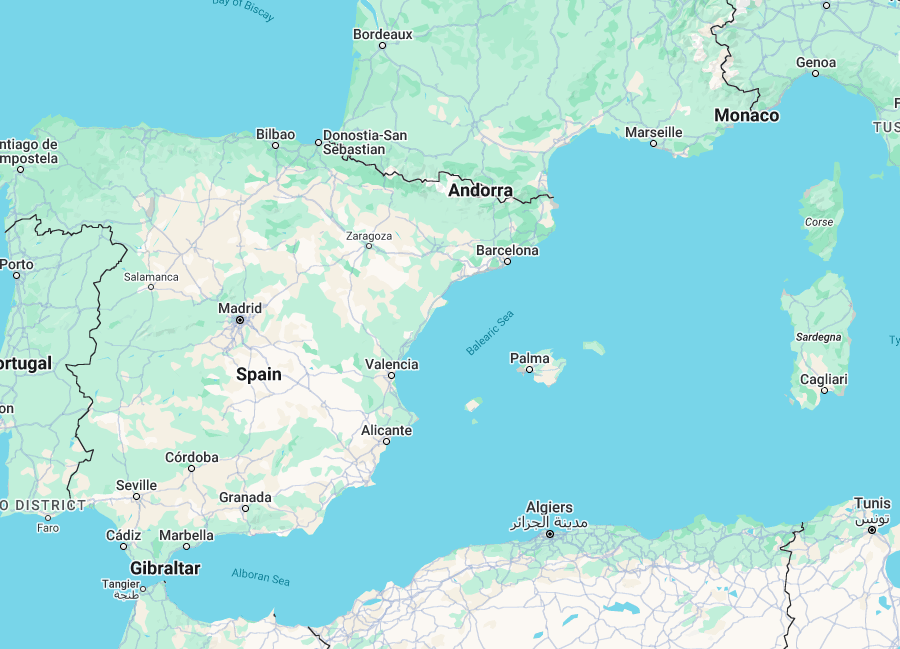
Although the origin of migrants traveling these routes is mixed, more and more sub-Saharan African migrants are opting for the Algeria -Spain route, reported Associated Press, in particular nationals from Somalia, who have been pushed towards that route following unrest and conflict in their country, and limited economic opportunities, as well as climate factors like drought.
UNHCR arrival data for Spain was last updated on June 15. At that point, the UN agency registered 10,701 arrivals overall, with 2,182 arriving on the Balearic Islands, 3,267 on the Canary Islands via the Atlantic route and more than 2,490 arriving on the Spanish mainland. In addition, 2,493 migrants were recorded as entering Ceuta, the Spanish enclave on the African continent, and 108 in Melilla, another enclave on the African continent, both surrounded by Moroccan territory.
According to UNHCR data, the majority of migrant arrivals in Spain are Algerian nationals this year, followed by Morocco, Mali, Senegal, Gambia and Guinea. Sudanese nationals account for 7.4 percent of arrivals this year and migrants from Somalia account for 1.7 percent.
Read AlsoMoroccan families search for their missing children