
An annex of the Bobigny courthouse near Paris’s Roissy-Charles de Gaulle Airport reviews the cases of foreign nationals who were refused entry onto French territory. Minors who arrived in France alone are often among those facing hearings. InfoMigrants attended the courtroom procedures.
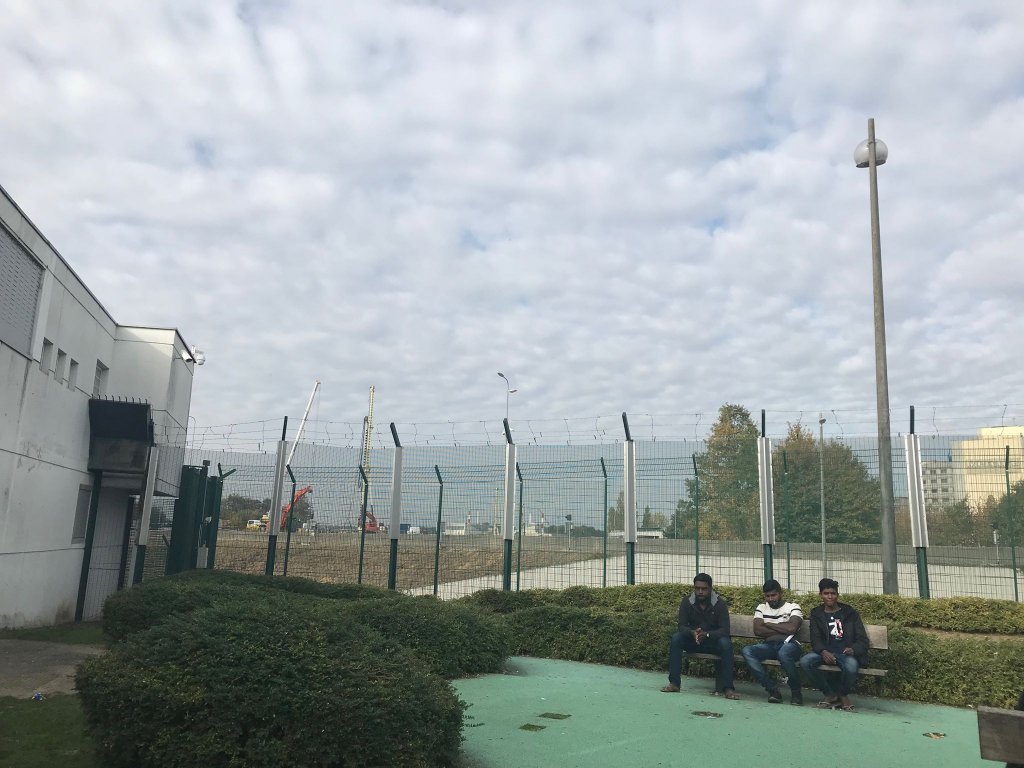
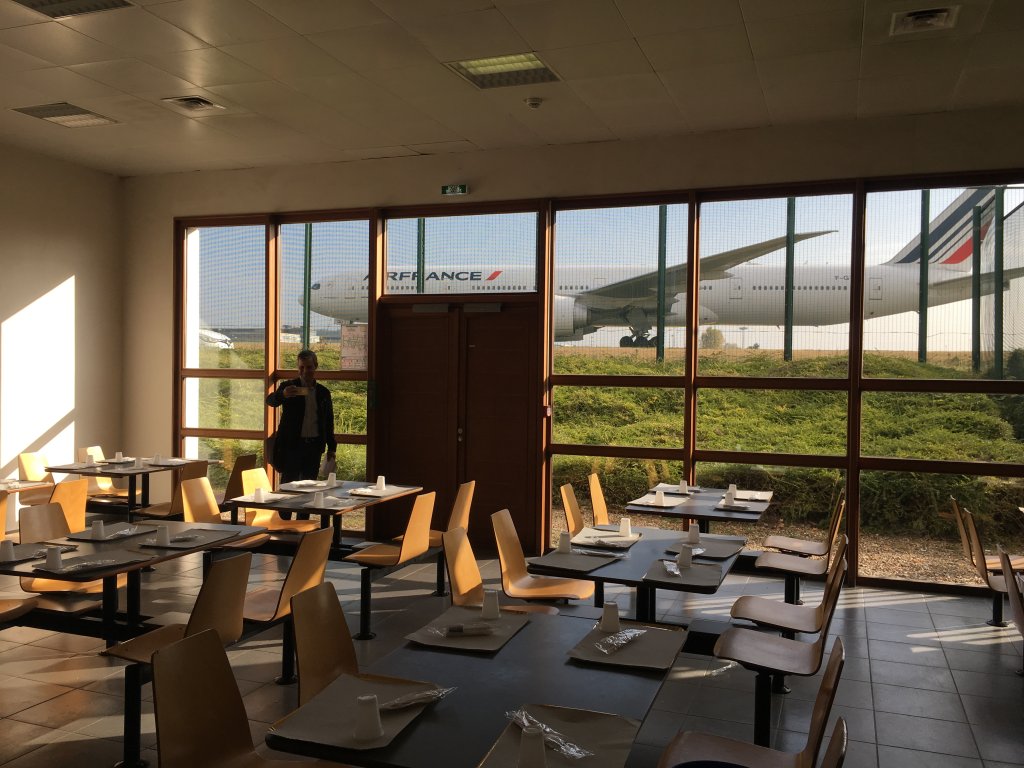
The courthouse, built in the shadow of an air traffic tower with the constant roar of airplanes taking off, is part of the "waiting zone" (dubbed ZAPI) of Roissy-Charles-de-Gaulle Airport for people who have been refused entry onto French territory. The building blends in with the other warehouses scattered throughout the airport’s maze of roads.
On July 1, 12 cases were scheduled to be presented before the Judge of Liberties and Detention (JLD) in the small courtroom with mahogany-colored wood panelling. Among them were three unaccompanied minors who have been held in Charles de Gaulle airport’s "waiting zone" since arriving in France.
The first minor to appear before the judge was a 16-year-old Moroccan with thick, curly brown hair and the frail appearance of someone who had just experienced a sudden growth spurt. Wearing glasses and a standard teenager outfit of jeans and a t-shirt, Nabil (the first names of all the minors have been changed) was accompanied by an Arabic interpreter and an ad-hoc guardian appointed to represent him.
Read AlsoMigrant detention centers in France: What you need to know
'The role of France now is to protect you'
It was Nabil’s second time appearing before the JLD. He arrived in Paris on June 19 without any ID or travel documents. French authorities immediately placed him in the holding zone. On June 23, they extended his detention in the ZAPI for the first time by eight days. By then, he had already spent 13 days living in an area of the holding zone reserved for minors and managed by the Red Cross. Judging by his worried expression, the teenager never expected his arrival in France would unfold this way.
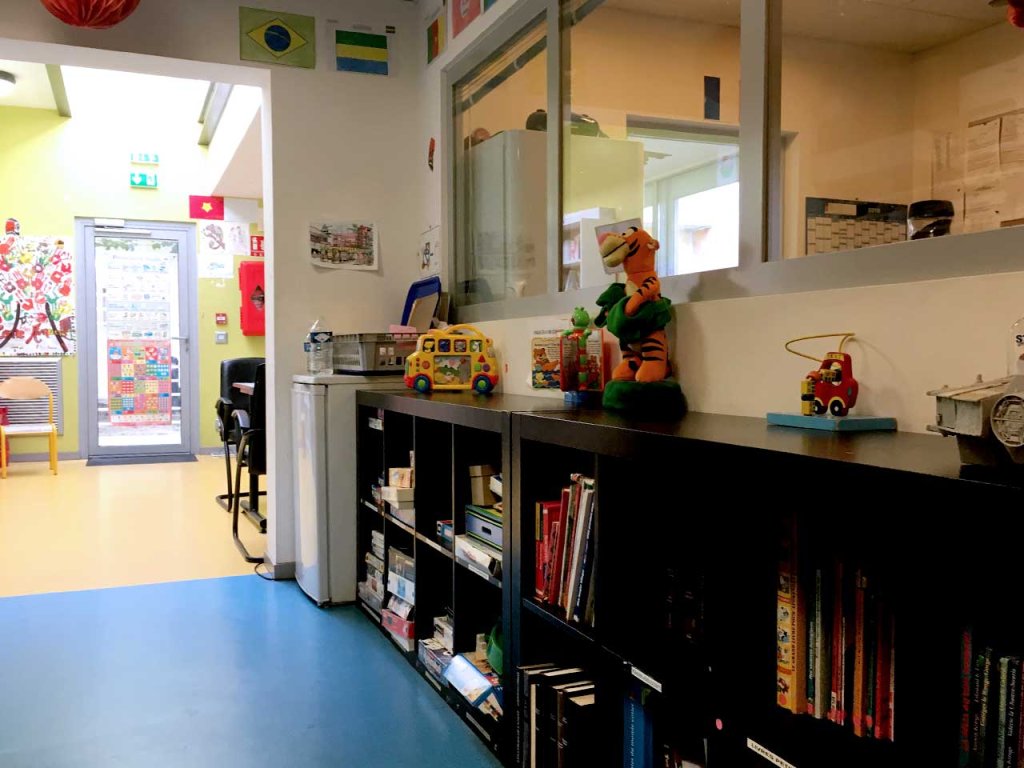
Under the EU Pact on Migration and Asylum, which began to take effect on June 12, Nabil was subject to the screening and asylum procedure at France’s border. Though he expressed his wish to file for asylum upon his arrival in France, his case dragged on, and the young man was paying the price.
The issue at hand was not why Nabil wanted to seek asylum, but when he would be able to do so. The seven-day limit for holding a minor in a waiting zone for the screening procedure had already been exceeded. The teenager "appeared to be caught between the two procedures of screening and asylum – while being deprived of his freedom," stated the ANAFÉ (National Association to help Foreigners at the Borders) in a press release issued on June 30.
"What was your destination when you decided to come to Europe?" the judge asked Nabil. Intimidated, the young man said he had an uncle in Italy. He claimed the uncle was notified of his arrival in France. "He told me I could come join him," the interpreter said.
"You are a minor, alone, in a holding zone, and without documents. The role of France now is to protect you," said the judge, before questioning the interested party. "What about you – what would you like, young man?"
"I want to apply for asylum and join my uncle in Italy," said Nabil.
Read AlsoSeventeen unaccompanied minors are being detained in Paris Charles de Gaulle Airport
A departure from Mayotte, via Doha
The second case examined in the courtroom left the audience stunned. Assia, nine years old, with colourful beads in her braided hair, sat down in front of the judge. She was wearing a denim jacket and clutching a small blue-and-pink backpack. The girl had arrived alone from Doha, Qatar, on June 28. Her mother had sent her on a plane from Mayotte with fake documents.
"You are so young. Do you mind if we use the informal 'tu' ('you' in French) with each other?" the judge asked her, visibly moved by the unusual case.
In her child’s voice, Assia explained in French that her aunt was supposed to pick her up at the airport. A woman in the courtroom wearing a dress and a khaki-green headscarf claimed to be the girl’s aunt. A small investigation by the court-appointed representative revealed that the woman was not actually related to the little girl, who said she didn’t even know her.
Called to testify, the woman described the agreement reached with Assia’s mother. Upon hearing the arrangement, which sounded more commercial than a child custody arrangement, the judge lost her temper. "I am shocked! You’re talking about her as if she were a bundle of laundry. Don’t you realize she is a living human being?"
Read AlsoFrance: 'Deport more and regularize fewer people' – are the government's aims achievable?
'We're in Seine-Saint-Denis, we know how things work here'
"What is to be done with Assia?" the judge seemed to ask herself. The girl's lawyer and ad-hoc guardian requested that the matter be transferred to the public prosecutor's office, which would arrange a temporary placement for the girl while waiting for her parents to agree to take her back.
Yet the judge thought their request was unconvincing. Tensions arose around the little girl. "We are in Seine-Saint-Denis, we know how things work here! She’ll end up in a hotel tonight, even though she is extremely vulnerable," said the judicial officer with indignation.
There seemed to be no good solution for Assia. Her lawyer argued for the child's best interests, seeking her release from the holding zone. The administrative representative called for her to remain there, arguing that the little girl would be safer in the holding zone than in a hotel – a solution criticized by the ANAFÉ.
"Detention is never in the best interests of the child. We see from the minors we assist that it has consequences on their physical and psychological health. It harms the child's healthy development," said Laure Palun, director of the ANAFÉ.
Read AlsoEU migration pact: How France plans to implement the new rules
'Have you seen your father before?'
Ousmane was the last minor of the day to appear before the judge. Before it was his turn, four Pakistani men who had recently arrived from Johannesburg appeared and filed for asylum based on the abuse they endured in South Africa. Their cases were processed and reserved for deliberation.
Ousmane was accompanied by his court-appointed lawyer and a Fula interpreter. The boyish-looking 16-year-old was dressed in a navy-blue and white striped tracksuit. Appearing overwhelmed by the situation, he sat hunched over with his head down.
The young man arrived in Paris on June 27 with fake documents. His mother wanted him to leave Senegal to live with his father in France, he said. His voice was so low that even the interpreter next to him struggled to hear him.
His father was present in the courtroom, but the judge appeared to question the family link between him and the teenager: "Have you seen your father before? Why was this decision to change your life decided for you?"
The father insisted on his good intentions despite numerous difficulties. He spoke very little French and lived in a hostel for workers where he wouldn't be able to accommodate his son. He also didn’t seem aware of the steps required to enroll his son in school.
"Your son needs a safe and stable place to live. You are not in a position to provide that," said the judge. Ousmane’s lawyer argued that he should be released into his father's custody. "If this adolescent seems frightened, it's because this is his first time in Europe."
The rulings came at the end of the day. Nabil was to be taken into care under a temporary placement order and placed under the responsibility of Child Welfare Services (ASE). Assia’s detention in the holding zone was extended by eight days. Ousmane would remain in the airport holding zone for at least another eight days, giving his father time to find new accommodation and to enroll him in school. He would have to spend at least another week at the airport, watching airplanes leave for faraway destinations.