
A movie that openly blames immigrants in Europe for a spike in violent crime is currently topping many streaming charts across the continent and beyond. But what does the popularity of "Citizen Vigilante" say about public concerns over migration, crime and integration?
Everybody is talking about "Citizen Vigilante" -- but what is this new film really about?
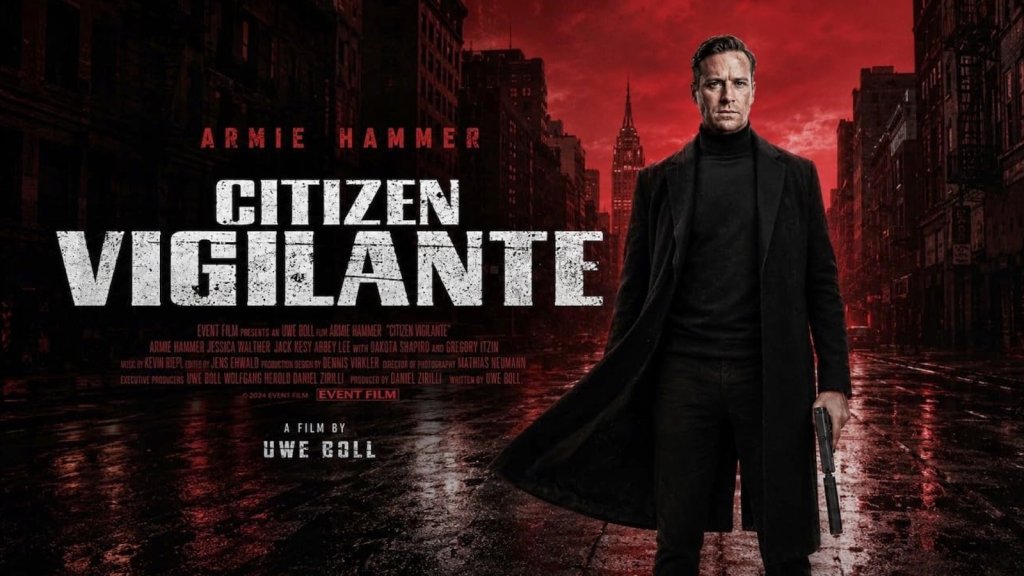
Set in present times in a non-specified European city (presumed to be in Croatia), the new thriller follows the character of a vigilante who has set out to pursue and punish immigrants who have committed crimes.
The film explores questions about how victims and their families respond to violent crime, and whether faith in the rule of law and justice through the courts can be maintained after traumatic events.
Nevertheless, the movie has also sparked widespread debate across Europe due to its portrayal of immigrants, crime and public safety.
Some have compared "Citizen Vigilante" to other revenge classics featuring similar characters like "Dirty Harry" or "Taxi Driver," though many film critics have refused to review the low-budget production. Others, like Variety magazine, have panned the production as a "violent, incoherent, morally bankrupt slice of exploitation."
Regardless of the reviews, the film's focus on immigrant crime appears to have resonated with certain audiences: Released last week, the movie has quickly accrued so many views that it is now featured in the top three positions of various streaming platforms.
So is "Citizen Vigilante" just an oddly compelling movie produced on a low budget, or does the film's popularity reflect broader political and social concerns that are gaining traction across Europe?
The film's portrayal of migration and crime
"Citizen Vigilante" is self-described as "an action film based on real cases and a commentary about injustice."
The protagonist of the divisive film, Michael Sanders (played by US actor Armie Hammer), engages in a vengeful rampage against criminals with a foreign background. The motivation for all the carnage shown in the movie is of a deeply political nature: In one scene, the character of Sanders explains that he is out to combat an "unfriendly takeover by Islamist extremists and the blind-sided woke left."
Director Uwe Boll has said in a recent interview that the film is "dedicated to all the women in Europe who got left alone by the law," claiming that "[s]o many cases of random rapes, random stabbings, random violence happened based on mass migration."
But how much truth is there to such sweeping claims?
Read AlsoGerman media bias falsely inflates crime by foreigners
Migrants and crime: misleading statistics
Researchers at Germany's Institute for Economic Research (IFO) studied crime statistics in the country between 2018 and 2023, reaching the verdict that migration to Germany does not directly result in higher crime, including violent crime such as homicide or sexual assault.
In other words, the crime rates remain steadfast relative to population growth, including growth by way of immigration.
When compared to crime rates reaching back to the 1980s and 1990s, crime in Germany was even found to have improved, just like in many other Western European nations, experts say.
At the same time, immigrants were nevertheless also found to be overrepresented in official crime statistics by Germany's Federal Criminal Police Office, with more than a third of all crime numbers being attributed to foreign nationals in recent years.
Researchers attribute this phenomenon to demographic patterns such as age and gender, highlighting that most immigrants in Germany are young males, who are more likely to engage in risky and illegal behaviour.
Furthermore, these statistics also include immigration crime, which German nationals cannot commit, as well as crimes committed by tourists, factors that researchers say complicate direct comparisons between nationals and foreign citizens.
A similar study conducted by the Migration Observatory at Oxford University also found that migrants were not a main driver of violent crime in the UK, although they were found to statistically be more likely to be convicted of drug offenses or fraud.
Both studies found that crime among migrants appeared to be primarily motivated by a lack of economic opportunities, highlighting further that elements like migrant trauma and witnessing war might also contribute to a higher propensity to engage in crime.
They also both stress that media reporting often inflates the role and proportion of immigrants in crime and in crime statistics.
Germany -- concern about public safety
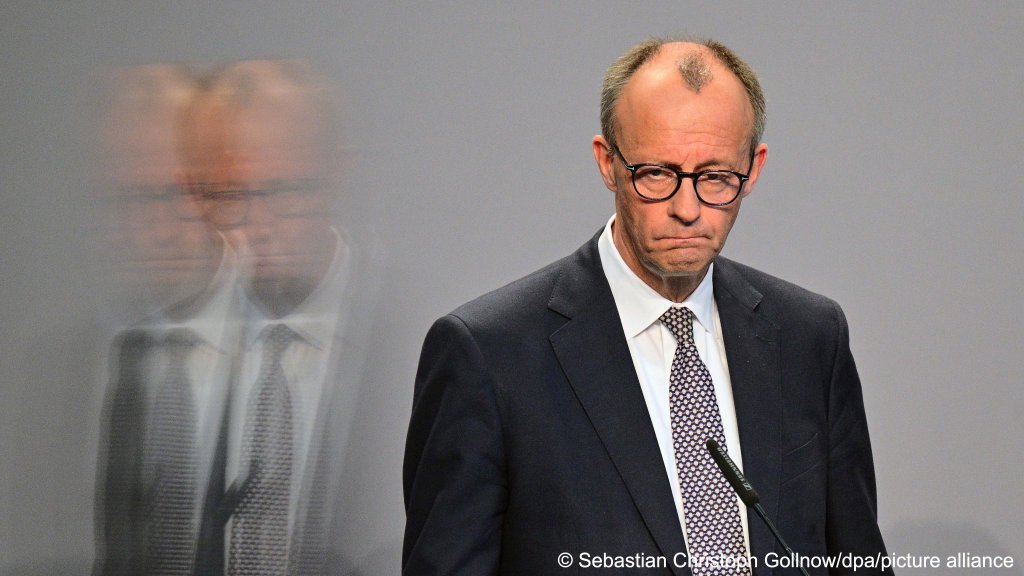
The debate on migrants and crime statistics also gained renewed momentum last year, when German Chancellor Friedrich Merz commented that Germans and Europeans in certain areas were increasingly "afraid to move around in public spaces" on account of immigrants who "do not abide by our rules."
The chancellor's comments attracted criticism from opponents who described the remarks as stigmatizing migrants, though far-right elements expressed that they welcomed the comments.
When challenged on his remarks, Merz doubled down: "I don't know whether you have children. If you do, and there are daughters among them, ask your daughters what I might have meant. I suspect you'll get a pretty clear and unambiguous answer," he said, reflecting concerns about public safety that are also central themes in the film: sexual assault, rape and murder committed by foreign criminals in Germany and other parts Europe.
Critics of the film however argue that it vilifies immigrants while offering few answers to broader questions surrounding integration, coexistence and crime prevention.
Audiences in Germany meanwhile might have a difficult time deciding for themselves: Due to the divisive message of the film, authorities in Germany have even effectively chosen not to show the film by refusing to issue it an age-appropriate rating. This means that it cannot be commercially distributed in Germany.
Some other countries have also voiced opposition to the violence depicted in the movie, stopping shy, however, of any outright ban.
Read AlsoMerz says Europeans fear 'public spaces' due to migration
Elon Musk stirs further debate
Supporters of the film portrayed the restrictions as censorship, an interpretation that likely gave it further leverage, garnering support on social platforms and even catching the eye of the world's richest man, tech entrepreneur Elon Musk, who has increasingly aligned himself with right-wing politics.
Last week, Musk made "Citizen Vigilante" available for free for 48 hours on the social media platform X.com, which he owns; Musk later also endorsed the prospect of the production of a sequel to the film, which Boll says would be released next year.
Elon Musk is a known supporter of unadulterated free speech, including many acts that could be interpreted as hate speech; additionally, he has also repeatedly espoused views in public against immigration and multiculturalism. Musk also repeatedly endorsed far-right political parties such as Reform UK in the United Kingdom as well as the Alternative for Germany (AfD) party.
His ideology is widely regarded as in line with isolationist and protectionist policies across the globe, chiefly the United States, where a crackdown on irregular immigration since the return of President Donald Trump to the White House has resulted in hundreds of thousands of people being deported.
Europe's shift to the right
Deportations meanwhile are also on the rise across Europe, which has seen a large volume of irregular immigration for over ten years, with major conflicts in the Middle East and humanitarian crises in Africa pushing many people to seek better lives elsewhere.
The majority of deportations focus on removing criminals, including to countries deemed not to be safe, such as Afghanistan. In fact, the German government has removed over 230 criminal Afghans since the Taliban returned to power in 2021, and plans to significantly increase that number by cooperating more closely with the country's Islamist regime.

Read AlsoAfghanistan: Germany 'close to reaching deportation deal' with Taliban
The EU meanwhile has green-lit legislation to allow its member states to deport failed migrants to third countries, especially in instances where there is a deportation agreement in place; at the same time, more and more EU nations are adopting a zero-tolerance approach towards criminal foreigners.
Despite these policy changes, some anti-immigration activists argue they do not go far enough, with many staunchly claiming that immigrants push up crime and allege that they seek to erode social order. Many also support the view that most immigrants may not wish to become part of the culture of their host countries, drumming up further hostility towards foreigners.
Read AlsoGermany: Interior Minister says citizenship holders should align with 'German values'
Far-right supporters view film as cautionary tale
Some far-right populist voices even argue that immigrants to Europe seek to dismantle public order altogether and allege that foreign nationals have a secret plan to install their own regimes in the long run and thus "replace" the continent's existing populations, using violent tactics as part of a so-called "Great Replacement" plot.
Even though such conspiracy theories have long been debunked, they continue to gain traction among audiences concerned about immigration as well as some far-right groups, often fuelled by Islamophobia.
Films like "Citizen Vigilante" and other works of fiction that critics say oversimplify questions surrounding migration, crime and integration play into such ideas, often ignoring the realities on the ground across Europe, where most people get by on a daily basis, with native populations standing side-by-side with immigrants in functional, pluralistic societies.