
Over a million undocumented migrants have sought to regularize their legal status in Spain under a government initiative launched earlier this year. The scheme, which closed on June 30, thereby attracted more than twice as many applicants as initially expected, raising questions about how prepared the country is to integrate so many people into its fold. Hundreds of thousands of irregular immigrants meanwhile continue to hear back the result of their applications.
Spain's regularization decree was originally predicted to attract around half a million applicants when it was launched in April this year, with the majority of applicants expected to come from Latin American nations.
With the qualifying deadline now over, a more diverse group of more than 1 million people have submitted applications to be part of the scheme.
Spain's Prime Minister Pedro Sanchez hailed the program as a success, saying that "[t]he more than one million applications submitted ... show how necessary this recognition of rights and responsibilities was."
While the number of submitted applications does not necessarily reflect how many migrants will ultimately secure legal status, it is unclear whether Spain has sufficient capacities to truly integrate so many people into its workforce and social systems.
Read AlsoHow Spain's 2026 regularization works
Migration as a solution to economic challenges
Under the helm of leftist leader Sanchez, Spain has emerged as one of the few remaining EU nations with a more open immigration approach. Across Europe, governments have shifted their immigration policies increasingly towards more limited policies in recent years, leaving Spain as an exception to this overall trend.
Sanchez believes that Spain needs immigrants to keep its economy afloat, as falling birthrates and longer life expectancies begin to mark irreversible shifts in the country's demographics.
He has cited previous regularization decrees in the past 50 years as well as Spain's successful economy as reasons to justify the decree, while stressing that the country's current growth rate would become untenable without expanding the work force.
In particular, Spain faces challenges to its state pensions and its social welfare systems, including healthcare, in the future. However, there's also some research that suggests that more liberal immigration policies alone cannot address Spain's demographic challenges in the long run.

Read AlsoSpain: Study finds that immigration is not the solution to ageing population and falling birth rates
At the same time, Sanchez also believes that it is Spain's responsibility to present itself as a progressive nation that defies populist rhetoric and far-right fear-mongering.
"We want the world to view Spain as a country that respects, protects and upholds human rights," he said as the June 30 deadline for applying to the scheme closed.
Read AlsoInside Spain's extraordinary regularization drive
Right-wing fear of unregulated immigration
Spain's initiative has attracted mixed responses, with business leaders welcoming the regularization drive and opposition groups -- especially conservative and far-right parties -- criticizing Sanchez for introducing a policy which they believe will only incentivize further mass irregular immigration.
When the process was launched in April, the secretary-general of the conservative People's Party (PP), Miguel Tellado, claimed the decree would cause chaos in Spain, alleging that "public services, social assistance, healthcare, and access to housing -- all of these will be severely affected."
By the end of the deadline, PP doubled down on that sentiment, saying that the initiative was poorly planned, which -- in their view -- had become evident in the fact that the number of applicants had "exceeded the government's own projections."
Read AlsoSpain's regularization campaign enters final hours
Sanchez responded to the accusation levels by the right-wing, saying that such a narrative only served the purpose of "fuelling fear (and) stirring up xenophobic discourse that does not solve any problem."
The prime minister has also repeatedly stressed that the decree only applied to people who were in Spain by the end of 2025 already, stressing that it therefore shouldn't incentivize future immigration.
However, he also acknowledged that there would be "tensions" and "challenges" linked to questions about immigration and integration, not detailing however what kind of capacities Spain has to integrate a million people into its various social systems.
The Spanish government meanwhile has earmarked over 500 million euros in funds to the scheme, including for integration measures such as language learning and professional training.
Read AlsoSpain: Regularization drive to be supported by job matching initiative
Several regions challenge legality of regularization decree
Meanwhile, some Spanish regions governed by right-wing opposition parties -- in particular Valencia and Aragon as well as the community of Madrid -- have filed various court appeals against the nationwide measure, which, if successful, could derail the ongoing processing of applications.
Spain's Supreme Court gave the plaintiffs until the beginning of next week to submit their arguments against the decree; if any of the grounds are found permissible by Spanish courts, the matter could be placed on hold and escalated to the European Court of Justice (ECJ).
However, Spain's Culture Minister Ernest Urtasun has meanwhile stated that he expected the notion to fail, stressing that regional governments cannot challenge a policy introduced as national jurisdiction.
Similar objections have also been made by the Ministry of Inclusion, Social Security and Migration.
Migrants see 'huge opportunity' ahead
Under the stipulations of the regularization decree, authorities have three months to process the paperwork of each application and decide whether to issue a work and residence permit in each case. About half of all cases have been confirmed to be presently under review.
The permits will be valid only in Spain, meaning that those who qualify under the scheme cannot move to another EU country to enjoy similar benefits and rights.
Applicants to the regularization drive have to have lived in Spain for at least five consecutive months prior to 2026 and produce proof of a clean lifelong criminal record.
Many of the applicants to the scheme are nationals of other Spanish-speaking countries in Latin America, though the high number of applications submitted suggests that many more people from other backgrounds than expected also made use of the initiative.

Read AlsoSpain's migrant regularization scheme: What it means for mobility across the EU
One of those applicants is a 23-year-old Moroccan immigrant called Mohamed, who spoke to the AFP news agency.
For him, the main benefit of the decree is that he will now qualify for regular work after engaging in undeclared work for several years with employers who he says "take advantage" of irregular migrants "by paying low salaries, without any rights or ... don't pay at all."
Mohamed says he hopes to "be able to work legally, to pay contributions" after spending four years in the country with an irregular status.
Juana Hernandez, a 59-year-old Cuban national who has lived in Spain for more than two years, agrees that the scheme is "a huge opportunity" for her.
Having recently learned that her application was approved, she told AFP the process that she plans to find work at Madrid Barajas Airport.
Read AlsoFor Sunanda, Spain's regularization means more than papers
Applicants forced to turn to scammers and intermediaries
Ernesto, a Paraguayan applicant to the scheme, meanwhile told the Spanish EFE news agency that being regularized in Spain would be "like taking a huge weight of anxiety off my shoulders."
Ernesto explains that he arrived in the country almost three years ago, moving in with his partner after receiving an HIV diagnosis; he says he faced substantial difficulties accessing adequate treatment in Paraguay, hoping that his luck would improve in Spain.
He adds that the application process was unpleasant, with bureaucrats not showing kindness and understanding during interviews.
"It was obvious they were doing it because they had to and didn't want to," Ernesto explains. "It was a very inhumane and rude way of treating you, questioning every aspect of your life."
Even though he came to Spain with a plan of building a new life there, Ernesto hopes that, ultimately, he will return to Paraguay -- but for now, he has to focus on getting an appointment to finalize some remaining steps, such as submitting his fingerprints to a national police database.
Although scheduling such an appointment is free, he says that the recent spike in demand has made it "almost impossible" to get one; Ernesto highlights that he has had to turn to an "intermediary" to book an appointment, paying up to 250 euros out of pocket for the privilege.
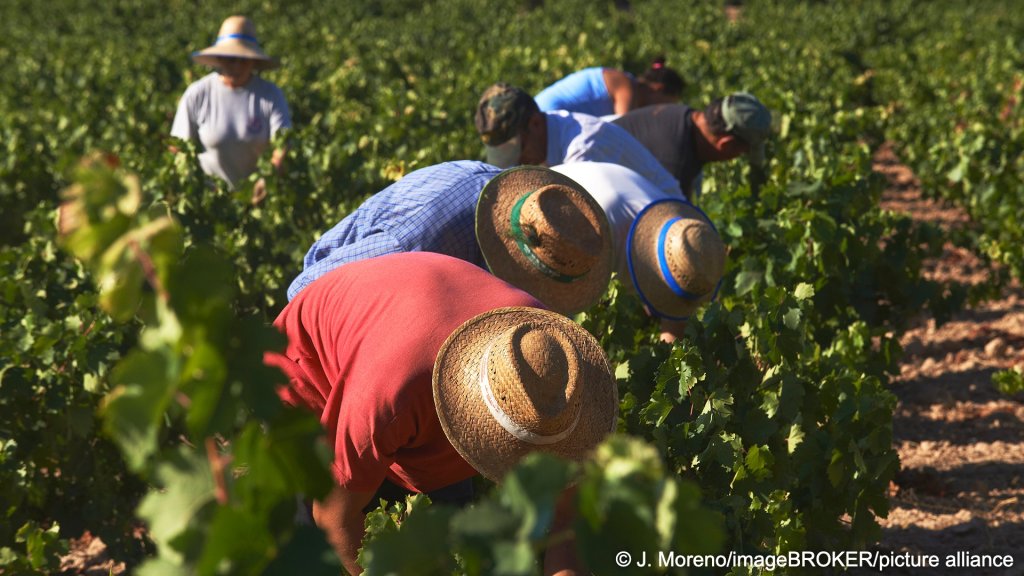
Read AlsoCan Spain's regularization process help tackle labor exploitation?
Immigration lawyer Hamza Al Llabili meanwhile told EFE that his firm had to assist hundreds of immigrants through the application process in recent months.
Many of the applicants have expressed distress over difficulties in obtaining certain documentation required to process their regularization in recent months, with long lines of people repeatedly forming outside various embassies, city halls as well as other government offices tasked with handling the paperwork.
According to Al Llabili, the systems behind the decree are indeed "overwhelmed," resulting in many of the applicants remaining on edge until they receive word that their papers have been approved.
He also warns that among potentially illegal intermediaries, there also are many scammers who have emerged in recent months, trying to take advantage of the desperation felt among the applicants by making empty promises while charging for immigration and regularization services they never provide.
Spain's unique role in Europe's migration situation
In recent years, Spain has become a key entry point into the European Union for tens of thousands of irregular migrants and refugees
While many are fleeing violence, poverty and persecution in their home countries, there are also countless people who decide to embark on perilous journeys to Spain in hopes of economic betterment.
Many of those migrants come via the Atlantic route from West Africa to Spain's Canary Islands, which has been identified as the deadliest sea route for migrants in the world.
Various initiatives by the Spanish government, such as close cooperation agreements with governments in Africa's Sahel region, have resulted in a significant drop in migrants succeeding with these journeys to the island groups in the past two years.
Read AlsoSpain’s extraordinary regularization: Who benefits and who is left out?
with AFP, EFE