
Eleven football players whose life stories have been shaped by displacement agreed to feature in a symbolic team alongside the 2026 World Cup: the "Gamechanging Team." Created by the United Nations High Commissioner for Refugees (UNHCR), this team -- which will not play any matches -- aims to promote social cohesion and offer hope to young people who have experienced displacement.
What if there were an extra team alongside the 48 delegations present at the 2026 World Cup? This team is not competing in the tournament currently taking place in the United States, Mexico, and Canada. Why? Because some of its players are already competing with their national teams -- such as Eduardo Camavinga for France or Antonio Rüdiger for Germany.
This team is the "Gamechanging Team," created by the United Nations High Commissioner for Refugees (UNHCR).
'It is special to lead players whose childhoods were marked by war and displacement.'
Their goal is to raise public awareness about the plight of refugees around the world. The 11 players on this unique team -- all of whom have experienced the journey of migration and displacement -- are seizing the spotlight provided by the 2026 World Cup to share "their personal accounts and stories, and to invite the public to show empathy toward refugees," Sarah Epstein, a communications officer at the UNHCR, told InfoMigrants.
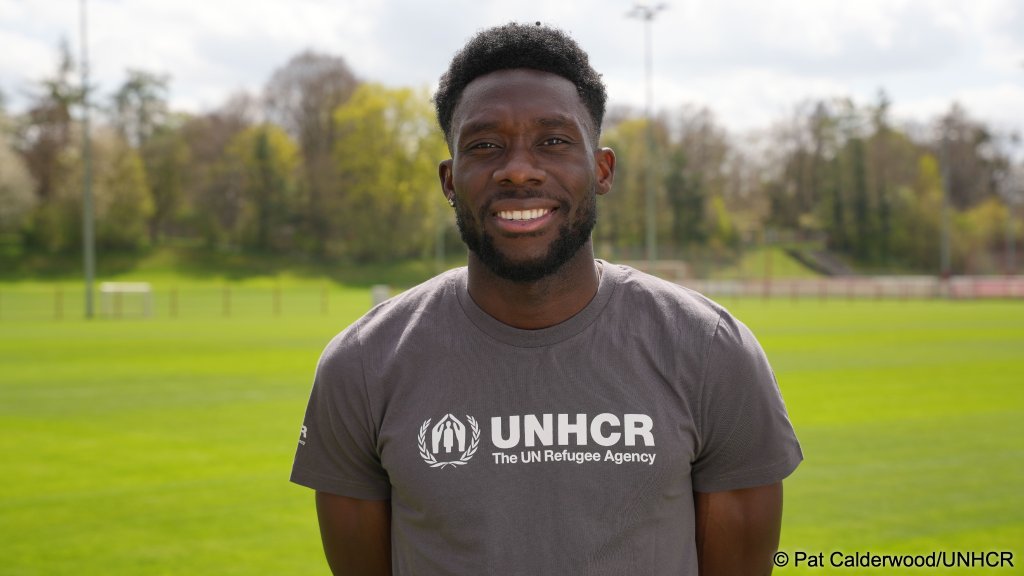
For instance, their captain, Alphonso Davies, was born in a refugee camp in Ghana to Liberian parents who had fled the civil war. He and his family were resettled in Canada via the UN when he was five years old. In March 2021, he became the first footballer to be appointed a UNHCR Global Goodwill Ambassador.
"It is very special to lead this team -- a group of players whose childhoods were marked by war and displacement," Alphonso Davies says. "In moments like these, I hope we can bring hope and remind people that, no matter how difficult the journey, it is always possible to thrive," the Canadian national team star, who was injured at the start of the tournament, concludes.
Collecting soccer gear for refugees in Kakuma, Kenya
The United Nations has launched numerous campaigns involving soccer and sports to promote inclusion and raise awareness about the plight of refugees. This has been the case since the 2016 Olympic Games, when a refugee team competed for the first time under a neutral flag.
Awer Mabil, an Australian player of South Sudanese descent who was born in a refugee camp in Kenya, is another member of this team. He has been recognized for his commitment to refugees, particularly through his organization "Barefoot to Boots." He explains, for instance, that he "collects cleats and soccer gear to give to refugees in Kakuma," the camp where he grew up.
The Olympic team is featured in an artwork by Canadian artist and activist Carling Jackson, currently on display at the United Nations headquarters in New York until July 2026. The team also appears in a video where the athletes share their personal journeys.
"They also champion a message of hope: safety, understanding, and the chance to achieve their dreams for children living in refugee camps," Sarah Epstein of the UNHCR says.
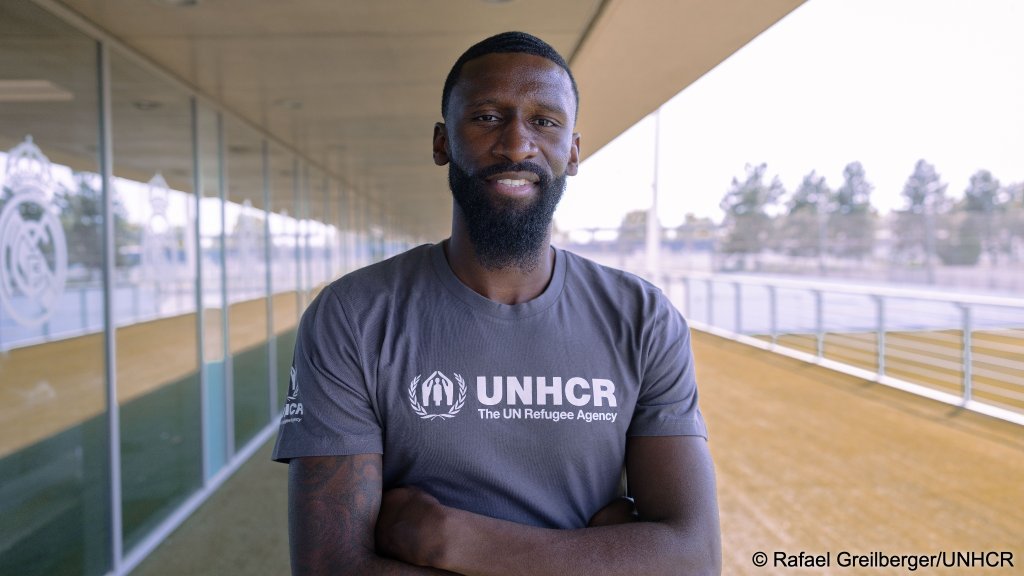
Antonio Rüdiger, a German defender of Sierra Leonean descent, recounts how his "parents left Sierra Leone for Germany in search of safety and a better future." He welcomes the fact that, thanks to organizations like the UNHCR, displaced young people and families can access education, sports, and healthcare. "Because every child deserves to grow up, dream, and succeed."
Read AlsoGermany's 2026 World Cup squad built on African roots
Treatment of foreigners: a controversial issue at this World Cup
However, this message of brotherhood championed by the UNHCR is overshadowed by the migration policies pursued by the Donald Trump administration -- specifically the treatment of certain foreign players and fans arriving in the US, particularly those from the African continent.
The international press has condemned the treatment faced by the players themselves; examples include photos of customs checks conducted on the Senegalese team right on the airport tarmac, and the case of Iraqi captain Ayman Hussein, who was subjected to a seven-hour screening upon his arrival in the United States.
In early June, UN High Commissioner for Human Rights Volker Türk spoke out: "I truly hope there will be a fundamental reassessment of how the implementation of migration policies affects human rights and human dignity, and that -- particularly in the context of the World Cup -- we rethink the policies that currently seem to prevail, especially in the United States."
Read AlsoDeniz Undav, Germany's unlikely Kurdish-Yazidi hero