
In future, asylum seekers arriving in the UK might be expected to pay back up to 10,000 pounds of their accommodation costs before applying for residency. Children who have received support will be exempted from making repayments, the Home Office said in a statement.
Asylum seekers will be required to pay back the cost of support and accommodation as part of new reforms under the Immigration and Asylum Bill. Migrants will be required to pay off the full amount before being eligible for permanent settlement in the UK. Additionally, anyone who leaves the UK will be required to make their payments if they wish to return at a future date. The repayment cost is estimated to be about 10,000 pounds or roughly 11,600 euros.
"The new reforms set out new powers for the Home Office to recover costs from adults who have received asylum support such as subsistence or accommodation, provided they have access to sufficient funds,'' the UK Home Office said.
In a statement sent via email to InfoMigrants, the Home Office outlined some of the provisions of the new policy saying that details of implementation will be set out in due course, and that it would be applied to those arriving after any legislation is put in place, rather than sending bills to those who may already have received help. Children who have received support will be exempted.
- The measure is part of the Immigration and Asylum Bill will apply to Section 4 and Section 95 Asylum support (accommodation and payments)
- The flat-rate charge will apply to all adults who are able to pay and have stayed in accommodation or have received support. Eligible adults will need to pay off an amount each month above a set threshold
Ability to pay will be means-tested meaning there will be various methods for those individuals to pay. The primary mechanism for this is expected to be through direct payments to the Home Office with options also being explored to use the tax and benefits systems to levy the amounts owed.
Read Also
UK: Plans for safe and humanitarian routes for refugees, based on community sponsors
A fairer migration and asylum system
As far as safeguards to ensure fairness in implementation, the Home Office statement said, "The Home Secretary will have the power to adjust the charge and the thresholds, ensuring they are both fair to the taxpayer and will not force any migrant into destitution."
"The cost of asylum accommodation on the British taxpayer is too high. Receiving asylum support is a right, but it is also a responsibility. Once people can contribute and repay the generosity of the British people, we expect them to do so," Home Secretary Shabana Mahmood said.
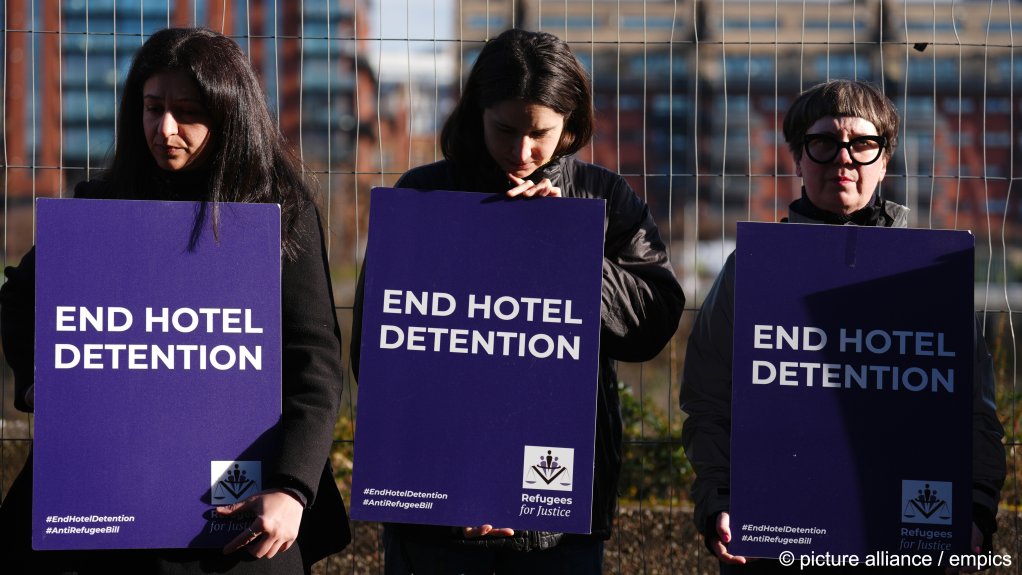
The policies under the UK's "Restoring Order and Control" immigration policy has been met with sharp criticism from rights groups. In a joint letter signed by more than a dozen refugee organizations in March, groups criticized the line up of changes in asylum policy, describing them as "cruel" and saying they would place refugees in "a state of perpetual limbo".
"We believe that a fairer asylum system is possible, but that it will require political courage and the rejection of the performative cruelty that has characterised debate in the UK in recent years," the statement read.
Read AlsoUK far-right group stages anti-immigration protest in London
Cost to taxpayers
The Home Office estimates that annual costs of 4 billion British pounds (about 4.6 billion euros) go into supporting asylum seekers across accommodation.
The Home Office broke down the average cost per person as follows:
- Accommodation: per night of accommodating asylum seekers is 23.25 British pounds (27 euros) in dispersal accommodation and 144 British pounds (167 euros) in hotels
- Meals and subsistence allowance: subsistence payment range from 9.95 to 49.18 British pounds (11.50 to 57 euros) per person per week
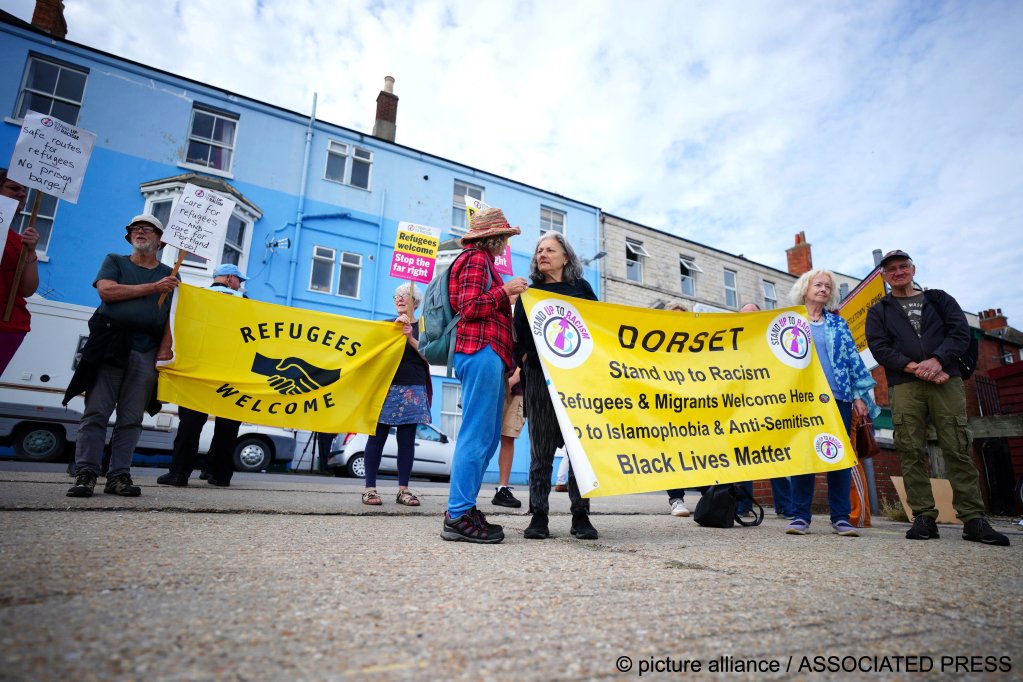
The government has cut these costs by ending the use of asylum hotels and moving asylum seekers into basic accommodation that have included former military sites as well as barges.
Home Office data indicate that about a quarter of 16 to 64-year-olds granted asylum between 2015 and 2023 found a job within the same calendar year they were granted status. Two years after refugee status was granted, that number rose to about 50 percent. The data also showed that over a period of eight years after being granted asylum, about 37 percent were employed full-time and earned a median salary of about 23,000 British pounds or roughly 26,000 euros.
This was still far below the UK average earnings published by the Office for National Statistics. In January 2026, the ONS said that across the UK, average regular earnings stood at around 690 pounds per week. Multiplied by 52, that would bring earnings up to around 35,880 pounds (around 41,624 euros). Even if you took off five weeks of those earnings, to account for people who might be working temporary jobs and shift work without holiday pay, the UK national average stood at around 32,000 per year (around 37,000 euros).
Read AlsoUK immigration falls sharply, but the perception that it is increasing is still widespread