
The Spanish maritime rescue services rescued 81 migrants on board a boat off the island of Lanzarote on Thursday evening. Earlier in the week, 119 migrants, including four minors, were rescued about a mile from another island in the Canary Islands archipelago, this time El Hierro.
Overnight on Thursday (June 25), the Spanish rescue service Salvamento Marítimo said it located a boat with 81 people on board east of the island of Lanzarote. Lanzarote is located in the Spanish archipelago known as the Canary Islands, situated in the Atlantic Ocean off the coast of West Africa.
According to a report by the press agency Europa Press (EP), and published on local news portal Canarias 7, rescue services received a distress call at about 11:30 pm on Thursday evening. Everyone on board the boat was brought to land safely and attended by the emergency services and the Spanish Red Cross.
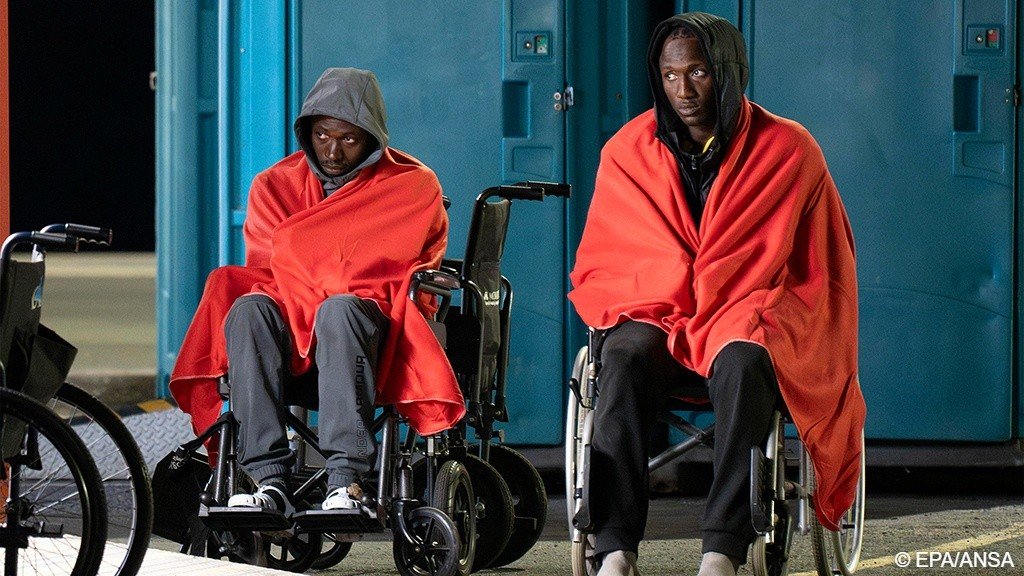
Earlier on June 25, an inflatable boat carrying migrants was reported at about 11:15 am and eventually spotted by a rescue plane. Then a rescue vessel was sent to pick it up, reported the Gazette Lanzarote. According to sources, 61 men and ten women, one of whom is pregnant, were taken by the rescue services to Puerto Naos in Arrecife, Lanzarote. Those on board told the authorities they had set off from a town called Tan-Tan in Morocco two days previously.
Read AlsoHow spiritual leaders in Senegal scam the families of missing migrants
119 migrants arrive on El Hierro
On June 23, the Spanish news agency EFE and various local news portals reported that a boat with 119 migrants on board had been spotted off the tiny Canary Island of El Hierro, the most western of the islands in the archipelago.
It was spotted just about a mile from land and brought into port by the Spanish rescue services. Those on board said they had been at sea for more than eight days.
Dangers on the Atlantic Route
The Atlantic route from West Africa towards the Spanish Canary Islands is one of the most dangerous, due to the distance between the African coast and the islands, as well as strong currents, winds and the potential for storms.
Many of those who set off from various countries in Africa are never even found, since they tend to set off from places as hidden as possible from the authorities who are working to stop departures.
Engine trouble and problems with the boats used on this route are common and can lead to the boat capsizing, sinking, or drifting at the mercy of the currents. Those who have survived the route often speak about the deaths of some of those on board, from thirst, hunger, or overexposure to the elements. Others say they have seen ‘ghost ships’ floating by, sometimes still with the remains of bodies on board.
A few times, boats with the bodies of the remaining migrants have turned up as far away as the Caribbean or Brazil, or Cape Verde, when they have drifted so far off their initial course. Since the beginning of the year, the IOM's Missing Migrants project has recorded 168 deaths on the Canary Route, however, they admit the actual numbers could be much higher.
With EP and EFE