
A growing coalition of European Union member states is pushing for the establishment of migrant return hubs outside the bloc, as hardline migration policies gain support amid the rising influence of far-right parties across Europe.
Nineteen EU countries have endorsed plans to create offshore migrant centers in third countries where rejected asylum seekers could be transferred while awaiting return to their countries of origin. The proposal, long spearheaded by Denmark and Italy, follows the adoption of new EU migration legislation -- known as the Pact on Migration and Asylum -- that supporters say provides a legal framework for such arrangements.
In a joint letter published ahead of the June European Council summit, the leaders of the 19 countries argued that external processing and return facilities could help reduce irregular migration, weaken human smuggling networks and increase deportation rates. The signatories called on the European Commission to support the initiative financially and politically and urged "willing" member states to pursue partnerships with non-EU countries (Italian government letter, 19 June 2026).
The coalition includes Austria, Belgium, Greece, Italy, the Netherlands, Poland and Sweden, among others, according to Italy's Presidency of the Council of Ministers.
The coalition has pointed to Italy’s migration agreement with Albania as a potential model for future arrangements.
Read AlsoWhat the new EU migrant 'return hubs' deal means in practice
Denmark at 'forefront' of offshore hubs
Danish Prime Minister Mette Frederiksen, one of the strongest advocates of the policy, has called on the EU to "take control" of its borders.
In a press release published on June 19 by the Danish government, Frederiksen said "Excessive immigration has enormous consequences for European populations, for the cohesion of our society and for the people who risk their lives on their way to Europe, in many cases only to be sent back.
"Denmark has been at the forefront, and we have stood very much alone. But now there are many of us, and we finally have the opportunity to establish reception and departure centers outside Europe together with other EU countries. Now we must establish those centers," she said.
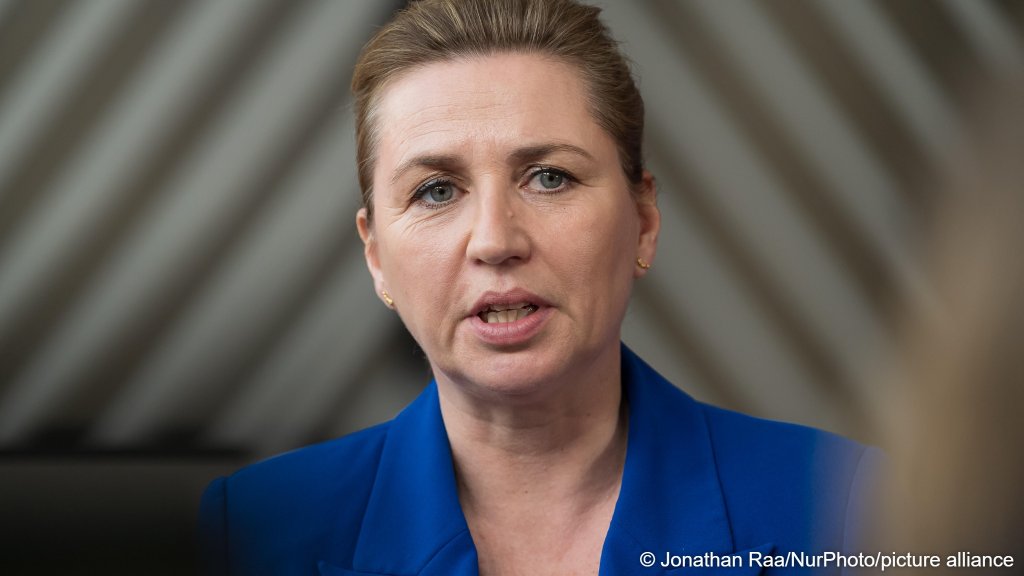
The Social Democrat has argued that migration challenges should increasingly be managed beyond the EU’s borders.
"As a social democrat, it’s quite clear that the price you are paying when migration turns into problems is paid by the lower classes in your society," the Danish leader was quoted as saying by the Financial Times. "Being a social democrat nowadays means tackling, handling mass migration in Europe . . . nobody has been able to convince me that it’s not a social democratic idea to have return hubs outside Europe.
"[The hubs] have to be according to international law. I think everybody agrees on that. So it will be a hub outside Europe, but on European conditions,” she added. “None of us wants to do something that is not sustainable. We would like to do this in a correct way and to treat people like we do in Europe."
Denmark’s government said the initiative reflects a broader effort to regain authority over Europe’s borders and address the social and economic pressures associated with irregular migration, according to the Prime Minister’s Office.
Read AlsoLeaders of France and Spain speak out against return hubs
France criticises offshore plans as incompatible with European values
French President Emmanuel Macron, however, has questioned both the effectiveness of offshore hubs and compatibility with European values, stating that he has yet to see a return center "that works."
Macron said last week that he would be against using the EU budget for such schemes. "I'm not sure that these are the fundamental principles on which our Europe was built," Macron added, according to Reuters.
Spanish Prime Minister Pedro Sanchez also expressed doubts, arguing that offshore centres would not provide a meaningful solution to migration pressures.
Speaking at a press briefing on June 19 after the EU summit in Brussels, Sanchez said Spain was also against such hubs but was in the minority on the issue in Europe.
Return hubs are "simply going to waste economic resources, and Europe doesn't have many of those," Sanchez said, according to Reuters.
Human rights organizations have raised concerns about whether EU legal standards and protections can be guaranteed outside the bloc. Though Frederiksen insists any future hubs would operate in accordance with EU law and international conventions, concerns about oversight, implementation and host countries remain.