
The money migrants send to their countries of origin remains a stable financial flow despite economic uncertainty, conflict and rising inequality. Immigrants in France often cut back on other expenses to continue sending remittances to their loved ones.
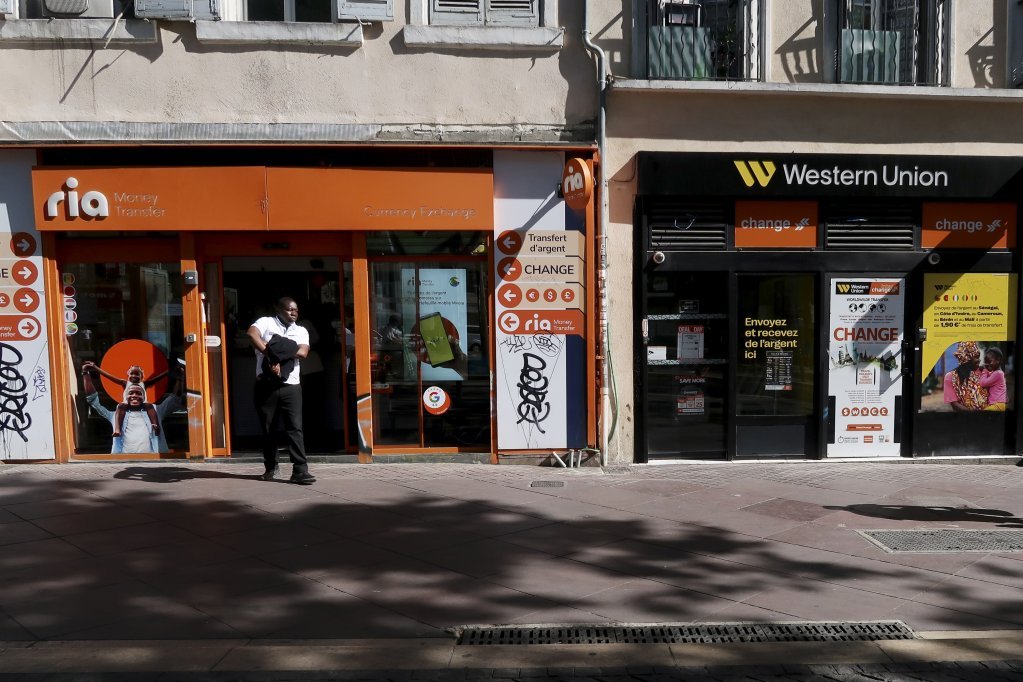
"Who was the last to arrive?" asks the newcomer as he slips in behind the dozen customers already crammed into the few square meters of the Ria, a money transfer operator in Marseille (southern France). When it was his turn, the 40-year-old -- dressed in a jersey from the Raja de Casablanca football team of Morocco -- approached the counter, visibly nervous. "It's to send 150 euros please." His credit card was refused once, then twice. He finally removed three 50-euro bills from his wallet.
Abdel* lit a cigarette after leaving the locale. "It's only the beginning of the month and I’m already broke," said the driver employed by a moving company. "My brother called, saying our mother is sick and they need the money."
Another client of Ria was there for a similar reason. "Of course, inflation affects us, but do we really have a choice when our parents are sick?" she said, before heading out onto La Canbière, a commercial street in downtown Marseille.
Read Also'Critical lifeline' – migrant remittances to grow 7% in 2021
'Non-negotiable' transfers
Despite "economic uncertainty, conflict, and rising inequality," the money migrants send home remains "remarkably steady", according to the International Organization for Migration (IOM). In 2024 alone, 19.7 US dollars billion (about 17 billion euros) was sent from France abroad, despite an economic context complicated by inflation.
"This is one expense which is never called into question by migrants, regardless of multiple economic hardships: the regular payments they make to older generations like parents and grandparents," said Caroline Henchoz, a professor at the University of Applied Sciences and Arts Western Switzerland, specializing in economic sociology, gender and the family.
Migrants will often cut back on other expenses such as food, clothing, and leisure, rather than reduce or stop their regular remittances. Other types of transfers like "investments" in the education of relatives or in business ventures, are "more vulnerable", said the professor.
Remittances "also account for the most significant capital flows to developing countries, more than both foreign direct investment and overseas development assistance," according to the IOM. "These funds rely on the invisible labor and personal sacrifices of migrants," said Henchoz, pointing out how this challenges the negative assumptions sometimes associated with migrants.
Financial and family pressure
The financial effort which involves sacrifices and overtime is compounded by what she described as "emotional labor" consisting of "significant family pressures". The migrants in turn develop expectations regarding the relatives with whom they maintain these financial ties. "We go without luxuries, but the money sent must be used for essentials."
Jessie Mahongeu, a 28-year-old undergraduate student at Aix-Marseille University, regularly visits the Western Union branch on Athens Boulevard, in the shadow of the Saint-Charles train station. He comes to collect money transfers from his parents who are shopkeepers in the Democratic Republic of the Congo.
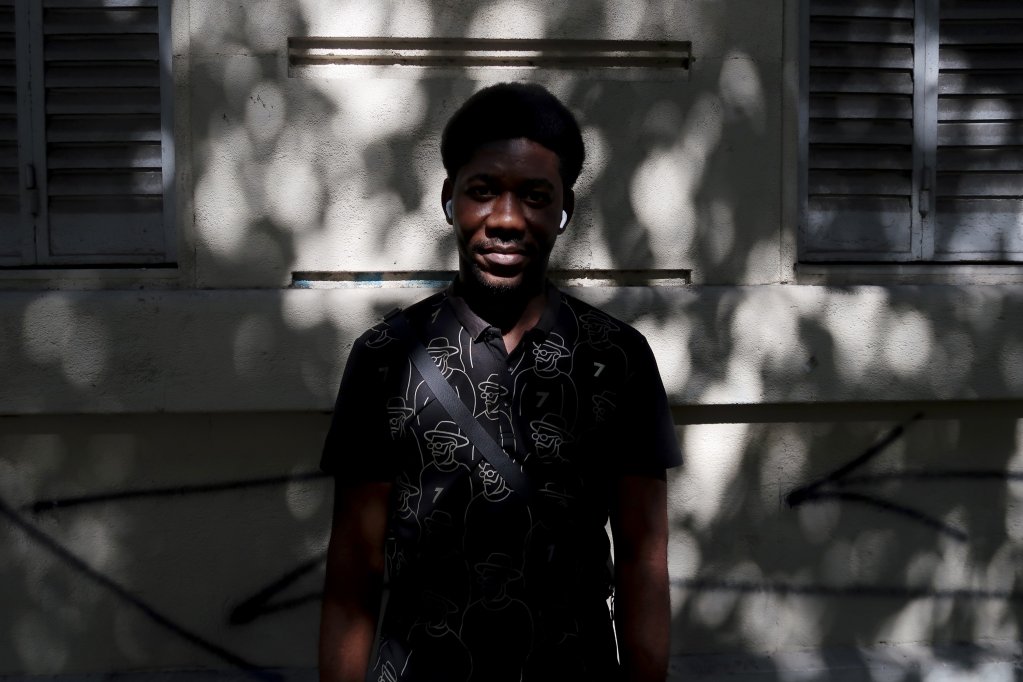
It was his turn to send money to a relative back home: seven euros that squeezed his already tight budget, supplemented by 15 hours of work every week at a fast-food restaurant. The rising cost of living was affecting his daily life as well as his future plans to become a chemistry professor and researcher.
Read AlsoSmall & steady: How migrant remittances from Europe keep families and countries afloat
'Counter-cyclical effect'
Even if he only occasionally sends money, the student will soon have to "take over" the responsibility on a permanent basis. He endures family pressure without judgment: "Our parents don't know the reality here; they think that once you go abroad, you’ve already made it."
That "reality", characterized by inflation, a housing crisis and rising unemployment, could soon get even worse with the economic fallout from a war in Iran and the closure of the Strait of Hormuz.
Paradoxically, as economic conditions worsen, remittances actually increase. This is the "counter-cyclical effect", said Hillel Rapoport, a professor at the University of Paris 1 Panthéon-Sorbonne and scientific coordinator of studies on international migration at the Paris School of Economics. This consists of stimulating the economy when it is slowing down and cooling it off when it is overheating.
Beyond remittances, the primary role of migration is to build economic, commercial, or educational bridges between countries of origin and destination countries, said Rapoport. "More than anything else, migration contributes to integrating countries of origin into the global economy."
*Did not wish to provide a surname
Read Also4 billion euros sent abroad from Sicily by immigrants in 19 years – study