
More and more Sudanese refugees who fled war in their country for Egypt are speaking out about the horrors facing them in Egyptian jails and the fear of deportations.
Lawyers and human rights groups have denounced what they describe as a "sweeping crackdown" against Sudanese refugees in Egypt. When the latest conflict broke out in Sudan in 2023, Egypt took in more than a million Sudanese.
According to the UNHCR's latest data roundup from May 2026, there are currently about 1.1 million registered refugees and asylum seekers in Egypt, of which around 849,000 are Sudanese, 100,000 are Syrian, 56,000 are from South Sudan and 45,000 are from Eritrea.
But as Egypt's economic crisis deepens, anti-migrant sentiment is rising in the North African country.
Read AlsoRefugees forced to hide in Egypt to avoid arrests and deportation, Amnesty reports
Death in jail
Al Nazir Al-Sadig is one of the casualties of this, it seems. According to the news agency Reuters, the 18-year-old Sudanese student died of pneumonia after having been held for three weeks in what they describe as a "squalid Cairo jail." According to friends and relatives, the young man suffered "beatings and extortion" at the hands of other inmates while in jail.
Al-Sadig was just one of thousands detained in the crackdown, which began late last year. According to testimony, plain-clothes security officers pull migrants and refugees off the streets, from their homes, or while at work and detain them.
According to Al-Sadig’s sister Nadia, the student had been standing outside his house with two friends when a white minibus stopped and a group of plain-clothes men piled out and arrested them all. The family had arrived in Cairo in October 2024 and had settled into the east Cairo suburb of Badr.
Al-Sadig had hoped to return to Sudan and so hadn’t legalized his presence in Egypt. One of his friends, who was detained with him, said that the group was locked up in a tiny cell with more than 140 inmates. Criminals in the cell robbed him and they all struggled for air, said the friend. "It was suffocating; there was no oxygen. Only one broken AC."
When relatives visited, Al-Sadig told the relatives that the food they had brought had been stolen from him. So they were forced to rely on bread and cheese handed out by the authorities. Other inmates also stole Al-Sadig’s clothes, including a sweater, which left him "shivering" during the winter.
According to Reuters, during his mother's final visit to him, Al-Sadig complained of a chest infection, saying that no medicine had been provided. The next day, a police officer called to notify the family that Al-Sadig was dead. The cause of death was recorded by the public prosecutor as pneumonia. The others in the group detained with Al-Sadig were deported to Sudan. The journey to the border town from Cairo took 18 hours, said Al-Sadig’s friend Suleiman. The legs and hands of those on board were chained and they weren’t given either food or water. He said he was given no reason for the deportation.
Read AlsoEgypt: Government confirms three Egyptians dead and 18 missing en route to Greece
Other fatalities
Since November 2025, Egyptian authorities have deported more than 5,500 Sudanese. This is, of course, just a fraction of the overall refugee population in the country, but it is still an escalation on data from 2023 and 2024 that suggests Egypt was carrying out around 100 deportations a year.
Egypt does not publish detailed immigration data, and so it was difficult for Reuters to independently verify either the deportation or detention figures they obtained via lawyers and campaigners.
However, while reporting on the issue, Reuters says they documented at least three fatalities of Sudanese refugees in Egyptian prisons this year alone. One they say was a 30-year-old who collapsed 72 hours after he was detained, the second was a 67-year-old diabetic man and the third was the high school student Al-Sadig.
Two Egyptian security officials, who spoke to Reuters on condition of anonymity, told the news agency that a total of nine Sudanese nationals had died in custody, without elaborating on the circumstances of the deaths.
Read AlsoEgypt: Fears of mass detention sweeps are pushing refugees into hiding
Sexual assault
The conditions in those jails have been described by former detainees who have made it out alive. They told Reuters that they would have to sleep in shifts because of a lack of floor space. They also mentioned beatings and other abuse. They said they were sometimes assaulted for clothing or food and that the sanitary conditions in the jails are "filthy."
One Eritrean refugee who had been detained recently told Reuters about a "violent sexual assault by other female inmates." They said her account was supported by medical records from a Cairo hospital.
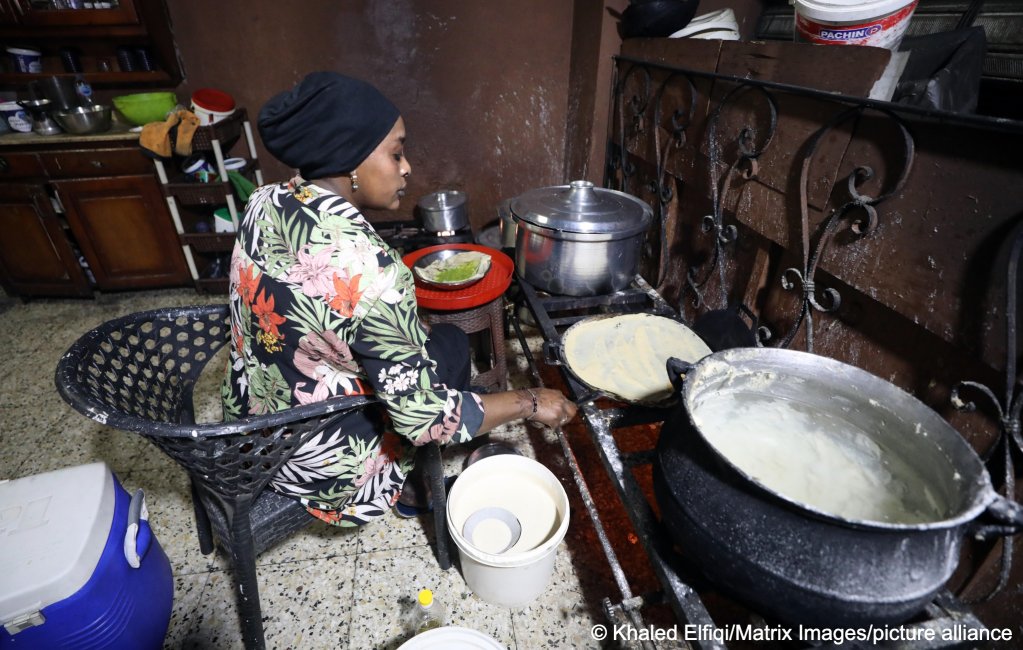
The woman works selling tea in Cairo. She told Reuters she was arrested while at work on the streets and taken to a police lock up. In there, she said that three female inmates assaulted her with a bottle. After her release, she was treated for "uterine bleeding" at the Mostafa Mahmoud clinic in Cairo, said Reuters, which checked the authenticity of her records with the hospital. The hospital declined to comment further.
Since then, the 40-year-old tea seller says she is too scared to leave the house and is surviving on charity from friends as she is now out of work.
Nine other former detainees told Reuters that they had also suffered "severe overcrowding, scarce food, dirty water, robbery and beatings by other inmates and abuse or lack of protection by guards."
Read AlsoEgyptian families pay ransoms for sons missing on migrant boats to Europe
Sudanese targeted in particular?
They alleged that Sudanese and dark-skinned refugees were particularly targeted by the inmates. One 23-year-old Sudanese asylum seeker who spent three weeks in jail remembered there was a "price for everything" in the jails, including a space to sleep. "This is when you suffer hallucinations," he said.
Karim Ennarah from the Egyptian Initiative for Personal Rights, a human rights group working with migrants, refugees and asylum seekers, said that the scope of the campaign against migrants at the moment is "unprecedented." Ennarah accused Egypt of reneging on its obligations under international law that restrict the deportations of refugees.
"Protection as it existed in Egypt for decades has collapsed," said Ennarah.
Khaled Mohamed, the director of the research and monitoring unit at the Egyptian Network for Human Rights, told InfoMigrants in February this year that he is similarly concerned and finds the situation for refugees, migrants and asylum seekers "deeply troubling."
Mohamed underlines that the Sudanese community is one of the oldest and largest in Egypt, but that since last year, there has been "a decline in relations due to the economic and social pressures faced by Egyptian citizens, in addition to some isolated incidents and negative media campaigns that affected the image of the Sudanese community."
Read AlsoSudan: Massive displacement after more than 1,000 days of war
Egyptian authorities deny there is a problem
The Egyptian authorities deny that charge. They told Reuters via a statement from the State Information Service that deportation "is generally carried out only through clear legal procedures and judicial guarantees," and only when an individual is proven to have broken the law or to pose a national security threat. It also denied that a broad-based campaign against refugees exists.
The statement went on to say that individual "incidents" do not reflect state policy, and highlighted that millions of Sudanese and other migrants live, study and work in Egypt and benefit from public services such as education and healthcare.
Despite the denials by the Egyptian authorities, the fear that they might be rounded up and or deported is spreading among the Sudanese community.
Read AlsoWhy are people migrating from Egypt?
'I came here searching for safety, but there is no safety'
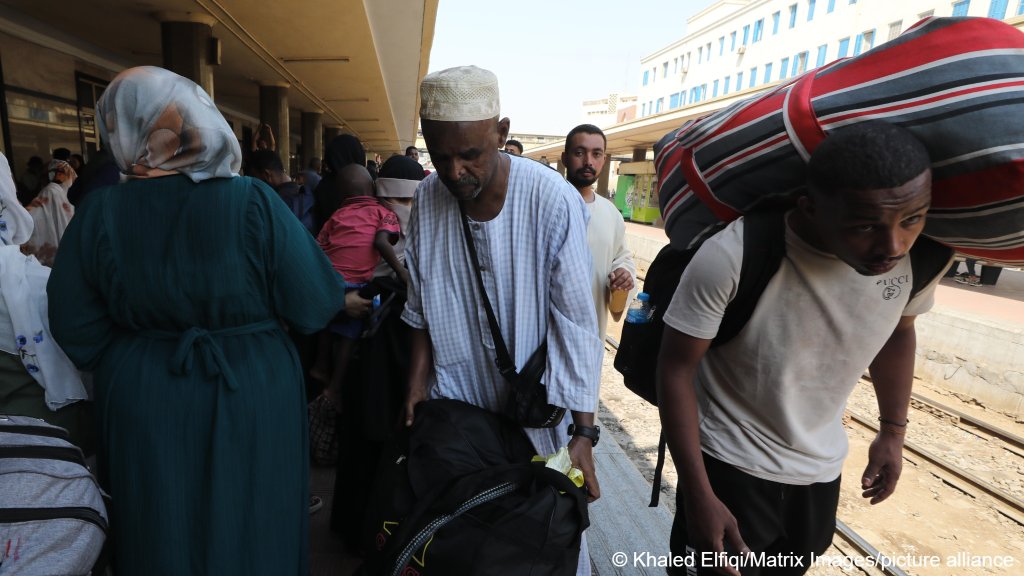
Hosna, a 40-year-old school teacher with four children, said she was so scared they might be rounded up, she had decided to take transport back to Sudan. Her family had received recognition of their refugee status from the UN, but were still waiting for an appointment to apply for Egyptian residency two years later. She said she knew of two families whose children had already been detained and deported in her building alone.
"I came here searching for safety but there is no safety. It’s better to die in my country than lose my children," declared Hosna. Hosna and the others waiting to return to Sudan said they were worried about the uncertain security situation but they felt they had little choice.
Fatima, an English teacher living in Cairo, told InfoMigrants that she wonders why her cousin Huda, who is 35, is being detained by the Egyptian authorities, despite suffering from a heart condition and needing a pacemaker. Fatima says that Huda had a UNHCR yellow card, which is valid until December 2026 and a passport renewal document for 2027. Huda is the sole provider for her two children and requires daily medication, explained Fatima.
In 2024, Egypt passed a new asylum law, granting refugees the right to work, seek education and healthcare. However, the UNHCR criticized the law, saying that it gave Egyptian officials too wide a discretion over who could actually qualify as a refugee.
Ennarah too thinks the law is problematic. He says that bylaws implemented this month offer insufficient protection from refoulement, the forcible return of refugees to a territory where their life or freedom is at high risk.
The Egyptian government however told Reuters that the law "affirms respect for human dignity and the principle of non-refoulement."
A spokesperson at the UNHCR said they are concerned by reports of arrests, detention and deportation, including of some of those who are registered with the UN. The UN agency added that "returns to Sudan should not take place under the current circumstances, given the ongoing conflict and humanitarian situation, which do not allow for safe and sustainable return."
In 2024, the European Union pledged 7.4 billion euros to Egypt, partly to help it support asylum seekers and refugees within the region and prevent them from continuing their journey northwards towards Europe. However, during previous crackdowns in Egypt, many have decided to continue onwards towards Europe via neighboring Libya, despite the risks.
Why now?
Dr Amani Al-Tawil, an expert on Sudanese affairs and director of the African program at Al-Ahram Center for Political and Strategic Studies, told InfoMigrants Arabic in February this year that he believes there has been a growth of hate campaigns on social media, which is contributing to a state of mutual resentment between some Egyptians and Sudanese.
However, the Sudanese ambassador in Cairo, Lieutenant General Engineer Emad El-Din Adawi said in an official response to InfoMigrants in Feburary that talk of restrictions on Sudanese in Egypt was just "illusory" and he stressed that the Egyptian state had the right to enact its laws in the presence of foreigners in their country, including those registered with the UNHCR.
In a statement in May this year, UNHCR said that the conflict in Sudan, which continues along Egypt’s southern border is "deepening economic pressures" on the country. Partly because of its position, Egypt has become both a major transit and destination country for refugees and asylum seekers, assuming a central role in regional displacement dynamics.
Between May 2022 and May 2026, the total number of refugees and asylum seekers in Egypt increased by 281 percent, rising from 288,500 to 1.1 million. Over the same period, states UNHCR, per capita funds available for one refugee or asylum seeker have fallen by 76 percent. This creates "a severe mismatch between operational demands and available funding."
In 2025, Egypt also became the country receiving the highest number of new asylum applications globally, with UNHCR Egypt running the organization’s largest mandate Refugee Status Determination RSD operation worldwide.
According to the UNHCR, humanitarian needs among refugees in Egypt "remain severe." More than half of the refugees present are "food insecure," and one in three Sudanese refugees lacks access to medical care, and approximately half of refugee children are out of school.
In August 2024, UNHCR Egypt launched an online registration appointment tool, which has, they say, allowed 78,000 Sudanese between then and April 2026 to access appointments faster and eased pressure on reception centers.
With additional reporting by Nada Faroog Abdalfatah Gaber