
The new EU Pact on Migration and Asylum came into force on June 12, signaling the bloc's move towards establishing return hubs in third countries. But some major countries within the bloc appear to be swimming against the tide. The leaders of both France and Spain recently expressed concerns about the establishment and use of such centers.
The European Parliament has passed new rules that would allow member states to establish "return hubs" outside the European Union for rejected asylum seekers or those ordered for removal. The latest vote appeared to signal a general move towards this policy idea becoming a reality.
While many governments support the EU Pact on Migration and Asylum, French President Emmanuel Macron has emerged as the latest opponent to the measure.
"I have not seen a return center in a third country that actually works," Macron said on Friday (June 19), addressing the media at the tail end of a two-day EU summit in Brussels
Spanish Prime Minister Pedro Sánchez has expressed similar concerns about the implementation of the migration pact, arguing that such return hubs waste Europe's already scarce resources.
Rwanda: the deportation hub that never launched
Macron and Sanchez's statements appear to reflect the patchy history that surrounds Europe’s experiments in offshoring its migration process, namely, the UK's Rwanda scheme and Italy's Albania deal.
Struggling to manage small boat arrivals through the English Channel, the UK government proposed establishing return hubs in Rwanda as a deterrent to Channel crossings in 2022. Under the proposed agreement, the Rwandan government would process asylum claims and grant asylum to approved applicants.
Two years and a new government leadership later--and numerous legal battles in between, in 2024, the newly elected Labour Party cancelled the Rwanda scheme and announced that it would redirect budgets to finance a new border agency.

According to an analysis and timeline drawn up by the UK-based Migration Observatory, save for four people who were under a separate voluntary removals program, no person was "forcibly sent to Rwanda under the scheme."
"There is no evidence that political discussions surrounding the Rwanda policy deterred small boat arrivals," said the Migration Observatory report, adding that the number of people taking this route did not fall following the policy’s announcement in April 2022.
By then, a substantial amount of funds had been poured into the experiment. Records from the UK National Audit Office show that the government had committed 370 million British pounds (433 million euros) to the partnership and as of April 2022 had paid 20 million British pounds (23.4 million euros) as an advance for the first arrivals of relocated individuals.
Later, Rwanda sued the UK government for damages over the scrapped migration deal. Courts rejected the claim earlier this month.
Read AlsoRwanda takes UK to court over contentious migrant deal
Albania: the legal friction
Italy built two centers in Albania to process asylum claims from migrants intercepted at sea. Penned in 2023, the deal allows Italy to transfer people rescued at sea to "processing centers" in Albania. The centers were due to operate entirely under Italian law and were intended for those migrants who did not have any vulnerabilities and came from countries deemed "safe."
The arrangement has been repeatedly challenged in Italian courts and in 2025, Italy repurposed the facilities as repatriation centers for failed asylum seekers, whose cases had already been heard and processed on Italian soil.
Albania has already announced it won’t extend its migration deal with Italy beyond 2030. In an interview with Euractiv, Albanian Foreign Minister Ferit Hoxha said that the country will not extend the migration deal beyond 2030 because by then, he explained, Albania would be part of the EU and no longer be considered a "third country" for the location of return hubs. (Albania is said to be "on track" to join the EU, but it would not become a member before all 27 member states vote unanimously to allow that to happen.)
Read AlsoECJ judge issues legal opinion in support of Italy's migrant processing centers in Albania
Unwilling hosts
Member states have been searching for potential partner countries that could be willing to site these potential return hubs. Discussions have reportedly "zoomed in on 12 nations, namely, Rwanda, Ghana, Senegal, Tunisia, Libya, Mauritania, Egypt, Uganda, Uzbekistan, Armenia, Montenegro and Ethiopia."
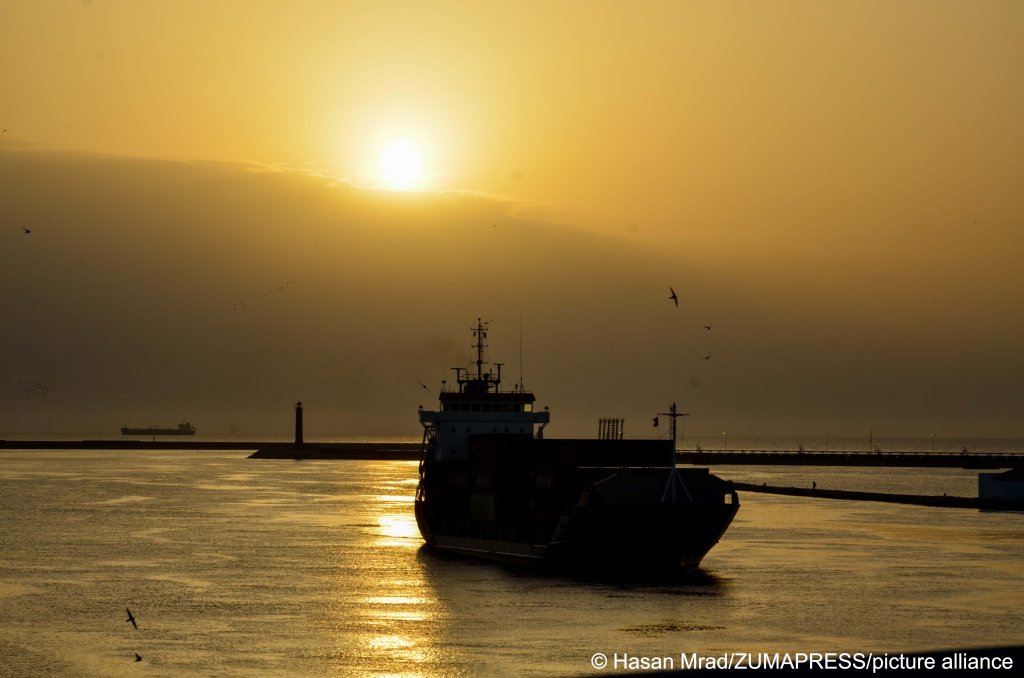
Although Montenegro is on the initial list, last year, its leaders said they would not be prepared to house asylum seekers from other countries on their territory. The Tunisian leader, President Kais Saied, has said similar things, stating, "'Tunisia will never be a land where migrants settle."
While the legal framework for return hubs has passed parliament, finding willing host countries seem to be proving more difficult.
Read AlsoNew EU migration pact: Will the bloc deliver on promises?