
Another 32 men have been deported from Germany to Afghanistan. The deportation is based on an agreement with the Islamist Taliban and comes amid ongoing criticism of returning people to the Central Asian country.
Germany's Federal Ministry of the Interior stated that the Afghans deported on Tuesday (June 16) to their home country via a charter flight were convicted criminals who had committed crimes "including homicide, child sexual abuse, rape, drug trafficking, and extortion with violence," reported the German press agency dpa, citing the ministry.
A dozen of the men alone came from the southern state of Baden-Württemberg, the state Ministry of Justice there said. Other states involved in sending people for the flight included Lower Saxony, Bavaria, North Rhine-Westphalia and Schleswig-Holstein as well as from areas under the jurisdiction of the Federal Police, AFP reported, also referring to a statement from the federal interior ministry.
The statements came from a spokesperson for the Federal Ministry of the Interior following an inquiry.
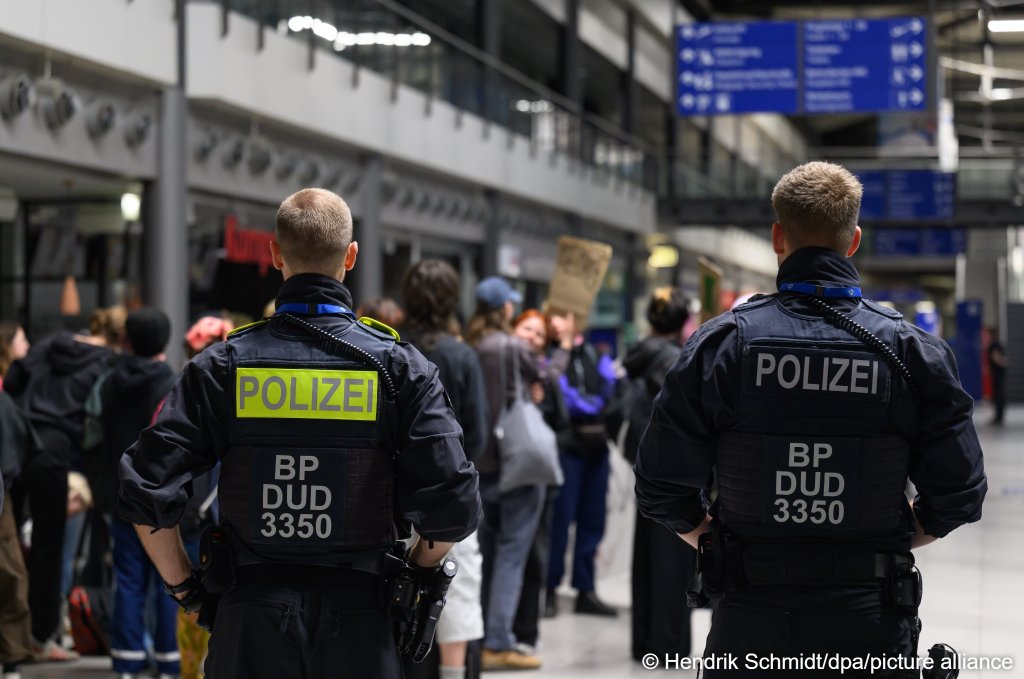
According to dpa, the plane took off from Leipzig/Halle Airport during the night from Monday (June 15) to Tuesday (June 16) and later landed in Kabul, Afghanistan's capital. Some 35 opponents of the deportation gathered in the airport terminal to demonstrate against the action, dpa reported.


The exact number of individuals who might be deported on individual scheduled flights, using commercial airlines, is not always consistently reported, however, it seems Tuesday's deportation marked at least the sixth reported instance of deportations from Germany back to Taliban-ruled Afghanistan since August 2024.
The direct channels of agreement with the Taliban allow the federal government to carry out regular deportations to Afghanistan without the involvement of intermediary states.
Read AlsoUNHCR head condemns deportations to Afghanistan
First deportation flight in 2024
According to AFP, Tuesday's planned mass deportation to Afghanistan was initially planned for late May but was then canceled when the Taliban refused to cooperate.
The militant Islamists reportedly expressed dissatisfaction with what they saw as a lack of willingness to engage in dialogue on the part of representatives of the German Foreign Office. According to dpa, the Taliban are primarily interested in sending more diplomats to Afghan missions in Germany.
Prior to the direct talks between German officials and their counterparts in Afghanistan, Germany managed to deport more than 100 Afghan criminals with the help of Qatar, which acted as a logistical intermediary, and helped operate the planes to Afghanistan, via charter and places on commercial flights.
Public opinion in Germany has soured towards Afghan migrants, following several high-profile attacks by Afghan nationals, such as a car-ramming in Munich last year that left 36 people injured.
The current German government under Chancellor Friedrich Merz, which came into power a little over a year ago, first called for direct talks with the Taliban to deport Afghan criminals last July. Since then, several groups of Afghan men have been deported directly to Afghanistan.
Investigations show that in April, Afghan citizens slated for deportation were presented to Taliban representatives on German government (BAMF --Federal Bureau for Refugees and Migration) premises in preparation for the issuance of their deportation documents.
Austria is also taking action, having reportedly hosted a Taliban delegation last September. Other countries like Belgium and Sweden are considering similar moves, supported by those favoring stricter migration policies.
Major human rights concerns
Since overthrowing a US- and NATO-backed government and reclaiming power in 2021, as well as subsequently enforcing a strict interpretation of Islam with draconian laws, the Taliban have remained sidelined by the international community.
Last week, InfoMigrants reported that the EU was preparing to meet with Taliban delegates to help manage irregular migration and discuss deportations. Magnus Brunner, the European Commissioner for Internal Affairs and Migration, claimed that Europe has no other option but to work with the de-facto rulers of Afghanistan.

There is no date set yet for the meeting to take place, and Taliban officials are yet to be granted visas for the visit to Brussels. An EU spokesperson meanwhile told Reuters that the discussion would not amount to any official recognition of the Taliban.
Efforts to deport Afghans to their home country have long faced strong pushback from human rights organizations, the political left and other groups.
Critics argue that the German government is being inconsistent: While it refuses to formally recognize the Taliban due to their human rights abuses -- especially against women -- it is still making concessions to ensure deportations proceed, such as allowing Taliban-appointed diplomats to work in Germany.
Rights groups moreover worry the planned visit in Brussels could help the Taliban identify people they want back, risking their safety.
Read AlsoWill Europe's bid to deport Afghans legitimize the Taliban?
Criticism from opposition parties
"The initial cancellation of this deportation flight showed just how vulnerable to blackmail Germany has already made itself," said migration expert Filiz Polat of the Green party. "Since the flight did take place after all," the member of Germany's Parliament added, "the question arises as to which of the Taliban's demands the federal government yielded to in order to make the deportation possible.
The opposition Left Party also criticized the operation. Clara Bünger, the party's spokesperson on domestic policy, said that the federal and state governments had apparently "completely thrown human rights concerns overboard."

Bünger also pointed out that in Afghanistan, "unemployment is high, millions of people are suffering from acute hunger, women and girls are being rigorously deprived of their rights, and political dissent is brutally persecuted." No one should be deported to such conditions, she added, "regardless of what crimes a person has committed."
In contrast, state justice minister Moritz Oppelt called the deportations "a huge gain in security for our state. In Baden-Württemberg, we will continue to do everything in our power to remove foreigners who are required to leave the country."
Interior ministry conference, expected go-ahead for 'return hub'
Meanwhile, Hamburg's Senator for the Interior, Andy Grote, wants Germany to be able to deport other criminal migrants more easily in the future. Grote is a member of the social democrat party SPD, which is part of the current governing coalition in Germany.
"When it comes to repatriating criminals, we must lower the high legal barriers for people with protected status -- regardless of their country of origin," Grote told the Redaktionsnetzwerk Deutschland (RND).
Grote is chairman of the Conference of Federal and State Interior Ministers, whose three-day spring conference begins on Wednesday (June 17) in Hamburg.
Grote further demanded to lower the threshold for deportation. At present, compelling reasons of national security must exist for deportation. The politician argued that public acceptance of refugee protection as a whole suffers if people with protected status do not lose their right of residence even in cases of serious crimes and convictions resulting in prison sentences. This is particularly true when a recognized refugee later commits the most serious crimes, Grote added.
Grote also said that deporting criminals to Syria and Afghanistan could even be ramped up.
Read AlsoGermany: Interior Minister wants more deportations, especially of criminals
Interior Minister Dobrindt: Criminals have 'no right to remain'
Federal Interior Minister Alexander Dobrindt also rejected criticism of Tuesday's deportation flight, saying that people can be deported to a country like Afghanistan under certain circumstances.
The deportees are people who have committed serious crimes and were deported while in custody, Dobrindt said at an event in Hamburg. "And anyone who has committed serious crimes here has no right to return to our society."

In November, Dobrindt had stated that "criminals and individuals posing a threat must be given priority." However, this does not mean that deportations will be limited exclusively to these two groups in the long term.
On Wednesday, June 17, European lawmakers are expected to approve stricter migration rules, allowing authorities more power to detain new arrivals and establish deportation centers outside the EU.
Germany, Denmark, Austria, Greece and the Netherlands and others have already been exploring options to set up these so-called return hubs.
with dpa, AFP