
Spain’s extraordinary regularization scheme is being sold as a route into legality for hundreds of thousands of undocumented migrants. But asylum lawyers say the process is also exposing the limits of a system that can turn a legal opening into another form of uncertainty.
Spain’s extraordinary regularization process is being presented by the government as an orderly way to bring hundreds of thousands of undocumented migrants into legality. In Catalonia, government delegate Carlos Prieto told InfoMigrants that the process is "advancing as it should," with applicants already receiving the first notification that allows them to work and reside legally.
But for asylum lawyers working directly with applicants, the picture is not quite so tidy. The new route may offer a way out of limbo, yet it can also force people into a legal gamble that trades one form of uncertainty for another.
Read AlsoPope Leo bows to migrants' 'dignity' in Gran Canaria
A route framed as inclusion
On paper, the scheme is broad and accessible. Applicants must generally show they arrived before December 31, 2025, have no criminal record, and meet one of several criteria, including vulnerability, family ties, work-related circumstances or an earlier asylum claim. Successful applicants receive a one-year residence and work permit, which can later be renewed or modified.
Teresa Gómez, an immigration lawyer in Madrid, describes the process as unusually "simple" by Spanish standards, especially compared with earlier routes that demanded longer residence or a more rigid job offer requirement. But simplicity on paper does not mean security in practice.
For asylum seekers, the regularization route is shaped less by choice than by the weaknesses of the asylum system itself. Gisela Cardús Rius, a lawyer at Comissió Catalana d'Acció pel Refugi (CCAR) specializing in asylum and forced migration, said many applicants are in "a very vulnerable situation," including people with "serious post-traumatic stress" after persecution and violence. These are often people who need sustained legal, social and psychological support, not just a fast administrative route into the labor market.
Yet asylum in Spain is both slow and frequently refused. Cardús Rius says that for many people, "the only option left … is to try the regularization route." What is presented publicly as a new opportunity can therefore function, for rejected or discouraged asylum seekers, as a potential alternative or a fallback plan.
Read AlsoSpain offers legal status to migrants
The cost of switching
However, that fallback comes with risks. Cardús Rius warns that people who opt for regularization may later have to prove a period of social-security contributions in order to renew their documents. For applicants dealing with trauma, precarious housing, unstable mental health or language barriers, that raises the prospect that they may become regularized now only to risk descending back into irregularity within a year.
It can also mean giving up support that still exists under the asylum system. If asylum seekers move into regularization, Cardús Rius said, "they have to leave the system and they are left without any type of help." In legal terms, the switch may solve one status problem while creating a new welfare and protection gap.
That pressure has sharpened since a 2025 reform changed how time spent in Spain counts for later regularization. Inés Torío Sanchis, also a lawyer at CCAR in Barcelona, said that if a person’s asylum claim is rejected, "you start from zero again." Time spent waiting in Spain during the asylum process no longer counts in the same way toward later residence through arraigo, making refusal more punitive than before.
For many people, that makes regularization look like the only option that offers any certainty at all. Torío Sanchis says "almost everybody is opting for regularization because it is something safe," even if what it offers is only a one-year permit rather than the longer-term protection asylum could, in principle, provide. The safety is immediate, not necessarily durable.
Read AlsoCan Spain's regularization process help tackle labor exploitation?
Bureaucratic barriers
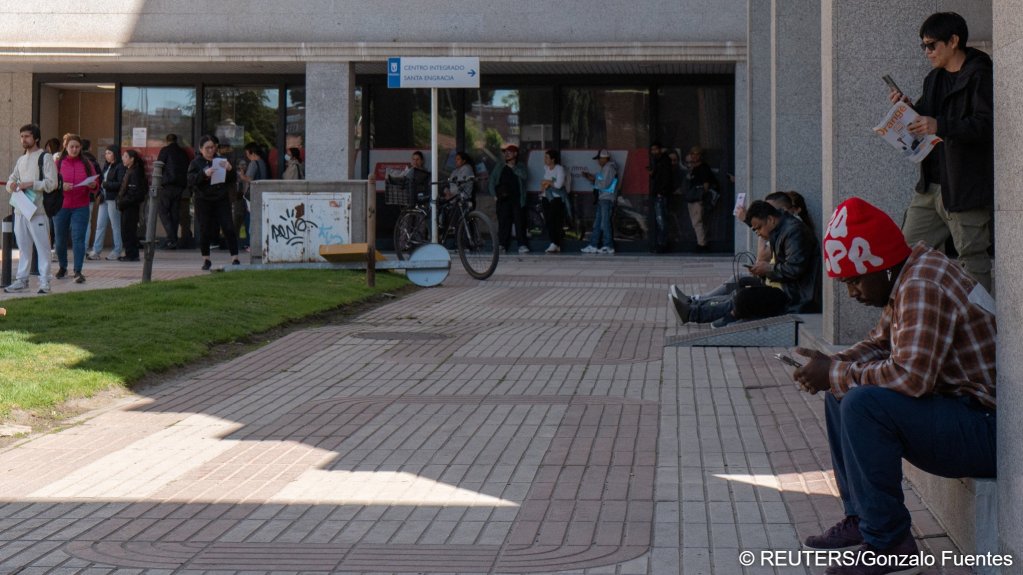
The lawyers' concern is not only legal but administrative. The process has been marked by bottlenecks around appointments, vulnerability reports and registration documents. Torío Sanchis said the rollout in Barcelona had been "quite chaotic," with services "overwhelmed" and some people sleeping in the street to try to secure the paperwork they needed. Cardús Rius similarly described a "collapsed" system struggling to handle demand for appointments and documentation.
Even the categories meant to include vulnerable people can become barriers in practice. People without a fixed address, without family support, or without the means to obtain documents from their country of origin may find themselves excluded by the very bureaucracy meant to recognise their vulnerability.
In addition, Teresa Gómez, an immigration lawyer working with migrants in Madrid, notes that the initial permit is only for one year, except in the case of minors, who can receive a longer authorization. After that, renewal depends on meeting conditions such as social-security contributions and continued compliance with the law.
For Gómez, the process is valuable, but it should not be mistaken for a permanent solution. It is "an entry point" into legality, not a guarantee against future irregularity. That is especially important for asylum seekers who may be moving from a theoretically stronger protection framework into a shorter and more conditional residence status.
Read AlsoInside Spain's extraordinary regularization drive
The Dublin edge
The risks become even sharper at the edges of the system, especially for people returned to Spain under the Dublin rules. Under the Dublin framework, the EU country of first entry is responsible for examining an asylum claim, and this often leads to people being transferred back to the state deemed responsible for their case. In Spain, however, return does not necessarily mean meaningful access to support.
Dublin returnees remain a weak point in Spain’s asylum system. EUAA reporting in 2025 says transferred applicants still have difficulty accessing the reception system despite the Madrid court ruling and the instructions issued to guarantee access for returnees, while ECRE’s updated Spain report confirms that the issue remains unresolved in practice.
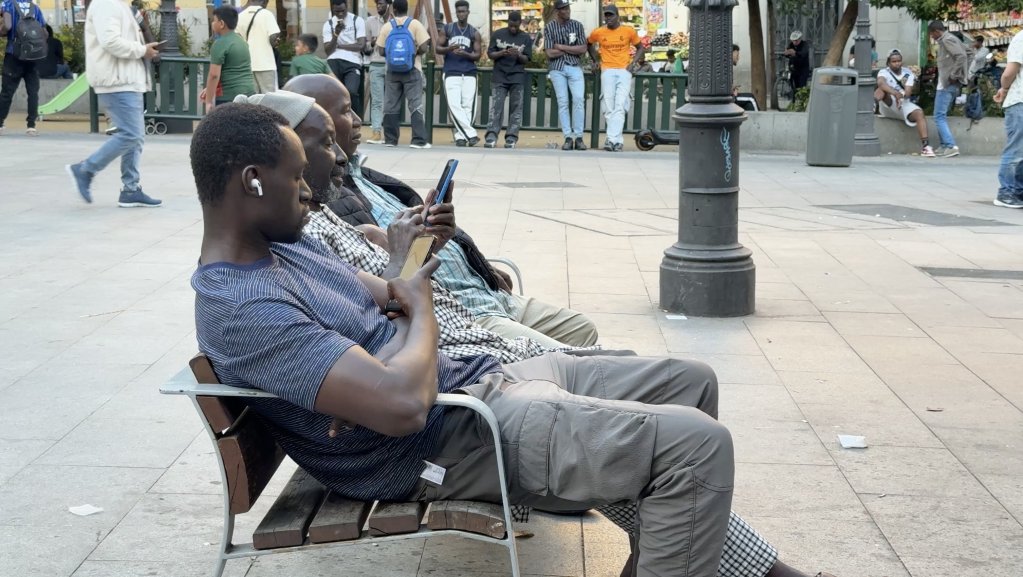
This gap is especially visible among young people returned after turning 18. In Madrid's Lavapies neighborhood, InfoMigrants spoke to several Somali teenage boys who had arrived a few days earlier.
One of the boys said he had spent years in Germany with his family, attended school there, learned fluent German and was hoping to move into an apprenticeship. Instead he told InfoMigrants, he was transferred back to Spain once he had aged out of childhood protections. Now in Spain, he found himself in a country where he did not speak the language, did not understand the bureaucracy and had received no practical help even after approaching the police for information and assistance.
His situation shows how Dublin returnees can fall between the asylum system and regularization process: too newly arrived to benefit from the scheme, but not secure in the system they were sent back into.
Read AlsoSpain: Study finds that immigration is not the solution to ageing population and falling birth rates
A 'narrow door' approach
Gonzalo Fanjul, policy and development director at ISGlobal -- The Barcelona Institute for Global Health, described Spain’s migration model as a "puerta estrecha" -- a narrow-door regime built more to block migration than to govern it.
From that perspective, regularization is not only a corrective measure but also evidence of a wider fault line in a system that produces irregularity and then periodically tries to repair its consequences. It is also a mechanism that redistributes risk. It offers immediate legality to some, while asking others to exchange one unstable status for another.
Regularization can be life-changing for many people already in Spain, and it may be the only realistic route left for many asylum seekers. But it is also shaped by a system in which delay, refusal, administrative collapse and precarious renewal rules push people toward choices that are less free than they first appear.
The result is not a simple story of inclusion. It is a story about which forms of insecurity the state is willing to reduce, which ones it leaves in place, and which people -- especially asylum seekers and Dublin returnees -- are still expected to navigate the gap between them.
Read AlsoFor Sunanda, Spain's regularization means more than papers