
Immigrants in Northern Ireland and across the UK are feeling a sense of unease after days of violent protests in response to a harrowing assault perpetrated by a 30-year-old Sudanese suspect in Belfast earlier in the week. How are people in Belfast -- immigrants and locals alike -- reacting to the developments?
Video footage of the knife attack against local resident Stephen Ogilvie on June 8 quickly went viral on social media, prompting various far-right figures to call for anti-immigrant protests online.
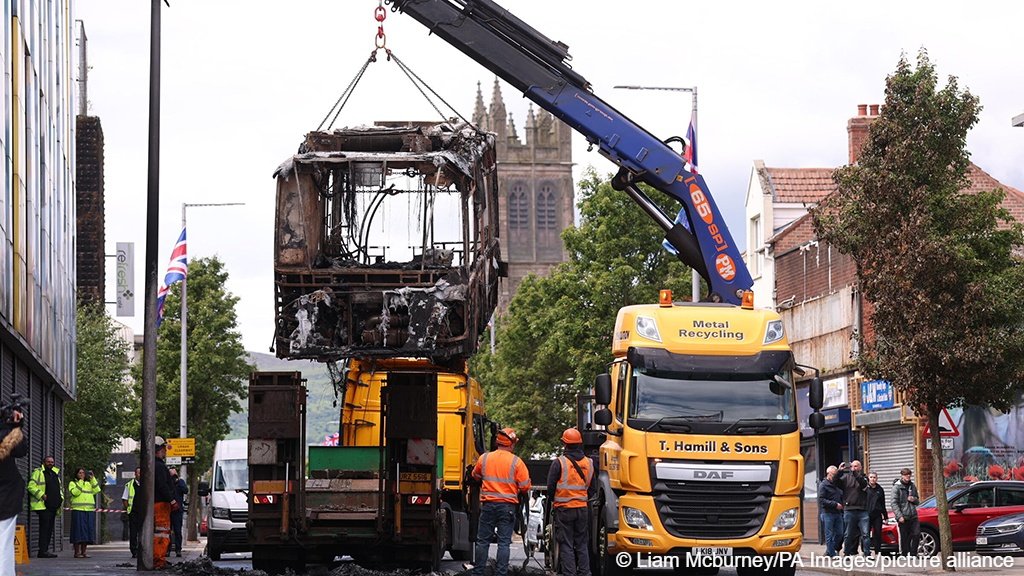
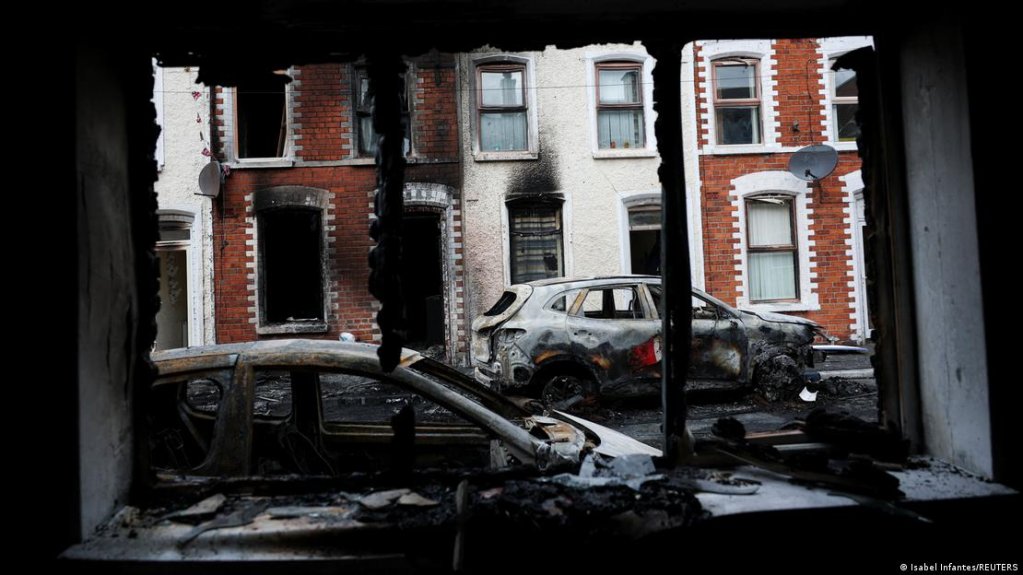
The ensuing violence has left entire neighborhoods of Belfast devastated, with at least two dozen people having their homes scorched in the riots. Entire families had to be rescued by police and firefighters, Police Service of Northern Ireland Chief Constable Jon Boutcher said.
"These weren't just families from ethnic minority communities, these were families from across communities that were caught up in this vile behavior last night," Boutcher told the BBC.
"There is absolutely no excuse for it."
Read AlsoAnti-migrant violence in Northern Ireland raises questions about peace in the region
Belfast resident loses everything in blaze
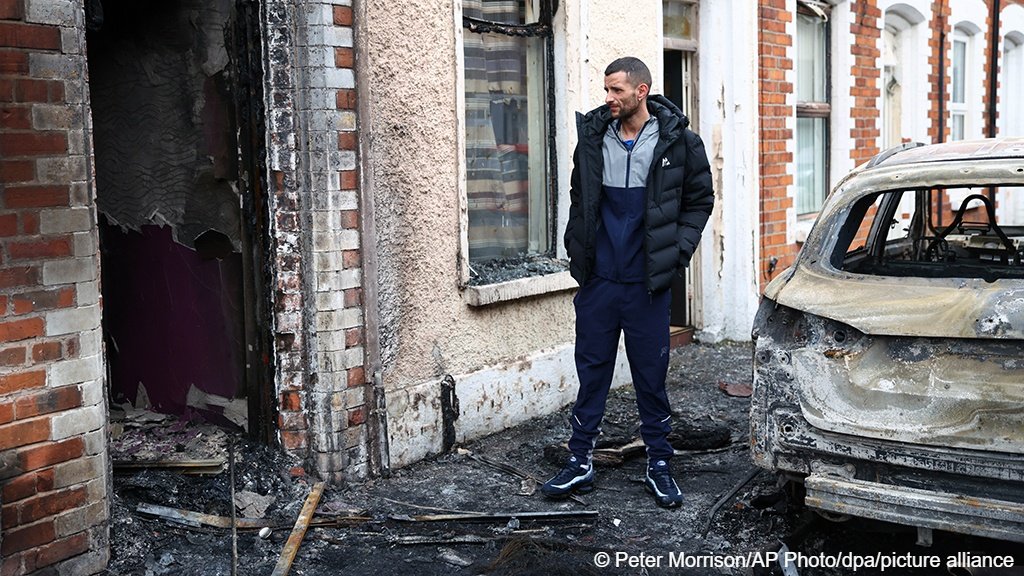
Jamie Corry is one of the many Belfast residents who sadly lost everything in the recent violence that engulfed his city.
"[It's a] feeling I'll never get over: Standing there watching the whole house get burnt down, losing everything," he said, highlighting that he felt that he got "caught in the crossfire" of the clashes.
"I was actually standing right there watching my whole house just go up, slowly but surely, and that was it. There's literally nothing I could have done about it," the 33-year-old Belfast resident told the Reuters news agency.
Still, there is almost a sense of sympathy in Corry's voice: "It's people that's angry, lashing out, you understand why. I mean one of our own people has basically been butchered in the middle of the street."
Read AlsoUK: Police urge calm after 'sickening' Belfast stabbing
Painful echoes from the past
For many, the scenes of this week bring back memories of Northern Ireland's violent history, marked by decades of sectarian violence between Irish Republicans (Catholics) and British Loyalists (Protestants) in the 20th century still echoing through the streets of Belfast.
Norma, another local resident, told the AFP news agency that she felt like "[I]t's never going to end."
"It took me back to when the Troubles first started here when I was going to primary school through barricades," she remembers.
Almost 3,600 people died in decades of clashes between Catholics and Protestants until the signing of the Good Friday Peace Agreement in 1998.
Immigrants hiding in fear
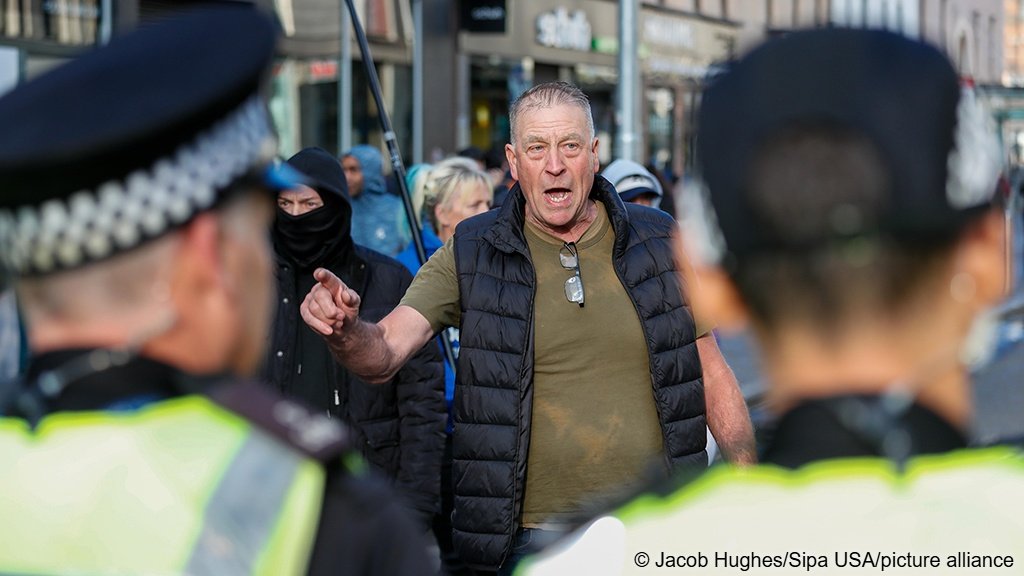
During the riots and protests this week, there appeared to be some instances of Loyalists and Republicans uniting in their anti-migrant rhetoric, creating further unease to what had already become an explosive situation,
In response, many immigrants in Belfast said they have practically been forced to go into hiding, fearing that the violent mass riots could reach them next.
Anselme Shima, who came to Belfast from the Democratic Republic of Congo in 2013, told AFP that he does not "know what to do" as the tensions continue to simmer.
"I'm scared. Seeing this, I'm wondering if I'm next. I've lived on my street for almost 10 years, I have a good relationship with my neighbors, but last night was a horrific one," he said.
"I have children at home. And this morning I'm wondering can I send them to school?"
Twasul Mohammed, a Sudanese refugee living in Belfast, told the BBC that "[e]veryone is terrified, we are keeping our kids at home."
However, Mohammed also stressed that he had fully expected to see such a strong response: "When the attack happened on Monday night, we knew this would be coming."
The violence even affected Ukrainian war refugees, with 19-year-old student Yura telling the BBC that her family had to flee their home in east Belfast during the riots.
"My neighbor's house was set on fire. So, my front door caught the fire a bit. It had to be kicked out to stop the fire because it was about to go in the house," she recalls.
Read AlsoVideo: Far-right riots unsettle UK's Muslim community
Longstanding immigrant communities also affected by riots
Even members of Belfast's longstanding Indian community have said they would continue to lie low: Satyavir Singhal, chairman of the Indian Community Center in Belfast, told the BBC that he has been advising members of his community to stay at home.
"The Indian community has been in Northern Ireland since the early 1930s and we have never had a problem. I think our integration with the communities has been good. But the problem comes in this kind of violence because the people who are doing this violence don't differentiate between the communities, so people are definitely worried and hope for the best," he explained.
Another man, who originally came to Belfast from India, told the BBC that he was going to leave Northern Ireland after 25 years in the UK.
"It was horrible. It was like a war zone. Everything was burning," the man, who did not want to be identified, told reporters.
Other migrant communities with long histories in the region, including Turkish and Romanian families, were also among those affected by vandalism, looting and destruction.
Read AlsoNorthern Ireland: Plans to burn effigy of migrant boat condemned
Attacks on healthcare workers reported
Meanwhile there are mounting reports of foreign health care officials being intimidated by anti-migrant protestors and being followed to and from work.
Patricia McKeown, regional secretary in Northern Ireland with the Unison trade union, told the BBC that a nurse with "a different skin color was chased into the Ulster Hospital by four masked men."
"There is no excuse for any of this. This is racism, pure and simple," McKeown says, adding that provisions to protect foreign workers were being made.
Meanwhile, police said that home addresses of people targeted in the riots were shared on social media and communication apps:
"We have received phone calls from a number of families, house owners, neighbors and members of the wider community who are extremely distressed as a result of this reckless activity," a police spokesperson said.
"This is unacceptable. It is putting lives at risk and has to stop."
Read AlsoUK to restrict overseas care worker recruitment amid exploitation concerns
Britain's daily Guardian newspaper meanwhile chronicled the experience of two female care workers from Uganda, who were forced to barricade themselves in their home for hours and could only eventually be evacuated with the help of a local pastor.
"Someone who is actually rioting doesn't know that the person they are targeting is actually looking after their mother or their granny," one of the two women told the Guardian. "Meanwhile, I left my mother back home."
The chief executives of Northern Ireland's Health and Social Care Trusts meanwhile have issued a statement saying it was "completely unacceptable that our international staff, who provide an invaluable service, should be intimidated or feel too frightened to come to work."
"The current unrest is having a profound impact on all of our services, which are already under enormous strain," adding that patients could be affected by shortages.
Read AlsoQuickly hired, unjustly fired: A Filipino nurse's struggles under the UK Health and Care Worker visa
Victim's family appeals for calm
Meanwhile, in the midst of all the chaos, the family of Stephen Ogilvie appealed for an end to all the violence, stressing that migrants "make a deeply valuable contribution to our country, including in our healthcare system and hospitality sector and we depend on them to make our country work."
"We do not want this terrible tragedy to be used to divide people or fuel hostility," the family said in a statement. "We want to make it absolutely clear that overnight unrest is not welcome."
with AP, AFP, Reuters