
Signing up for high school is an obstacle course for foreign unaccompanied minors in France who have not yet had their status recognized by the authorities. Yet education is important for the integration of these minors, say associations. It also represents a chance to avoid deportation once they turn 18.
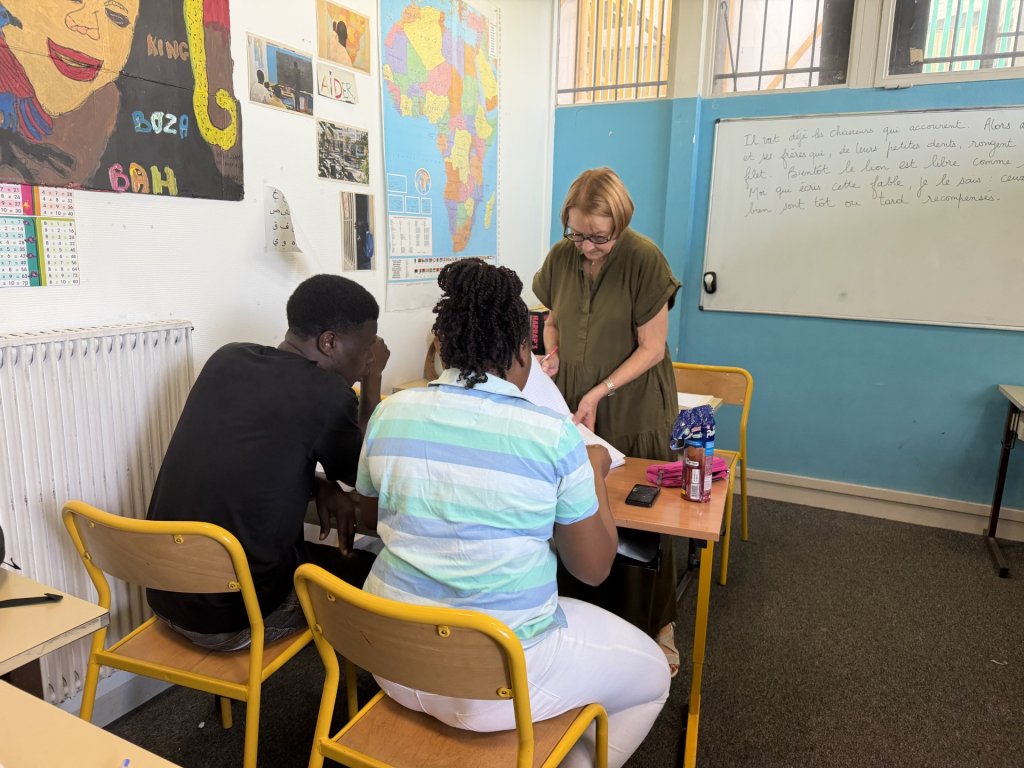
Mehdi laughs as he leaves his French class. He has just completed an exercise and he is in a good mood. "Martine said I have a good level," he proudly says. The volunteer encourages her student as he works, telling him his text "wasn't bad." Her objective is to help Mehdi and his classmates catch up, ahead of enrollment in a Parisian high school, through classes offered by the association Right to School (Droit à l'école).
The 16-year-old from Guinea is impatient to attend a French high school. His classmates also hope to enter the national education system. "I think I’ll be be offered a place at the start of the school year in September," says Trésor, a 17-year-old from the Democratic Republic of Congo. “I should know where I’m going soon too,” replies Mehdi.
While they are waiting to see which schools they might have been assigned, the adolescents attend classes given by the association at Ground Control, a lively venue in eastern Paris.
'I would have given up' without the association
The road to school for Mehdi and Trésor would have been easier if the state had recognized them from the beginning as minors. The children's welfare office, Aide Sociale à l'Enfance (ASE), could have enrolled them in high school. Yet "the French state thinks I'm lying about my age. I'm 16 but they don't believe me, so I wasn’t entitled to any protection," says Mehdi, summing up the situation.
The two adolescents filed appeals after their applications for minority status were rejected. As they waited for their hearing with a juvenile judge, they found themselves deprived of education.
Trésor never imagined the process to be "so difficult." In France, a foreign student is not required to present a residence permit to enroll in high school. However, other administrative elements are required: a mandatory registration with CASNAV (Academic Center for the Education of New Arrivals and Traveler Children) which is run by the Ministry of Education; placement tests in French and maths to determine the student’s level; a birth certificate and proof of address. Finally, an adult mentor must be present during the enrollment procedure.
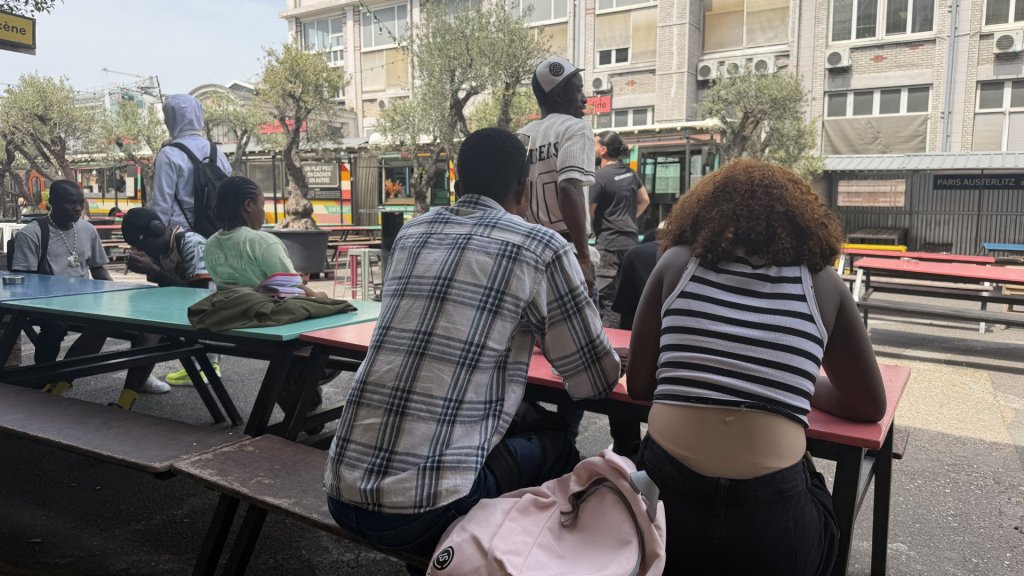
It is these requirements that add obstacles into the path of young people hoping to access an education, say campaigners. Young people have little chance of completing the administration process on their own, without assistance from an association. "I would have given up," said Mehdi. These procedures are "exhausting", said Trésor. "I took my CASNAV exam in April. Without the association, I would have been stuck at the first step of finding a mentor," he said.
'Difficult in Paris but worse elsewhere'
"It's very difficult to find a mentor who can attend these mandatory appointments which usually take place during working hours," said Rose, project manager at the Right to School association. "Without our help, many young people wouldn't know how to enroll themselves. The process is very complicated and slow. Too slow."
Besides the multiple obstacles, there are time limits to be respected. The adolescent can't enter high school in the middle of the year even after passing the placement test. He or she must wait until the following September. "We address this gap with our 'school for those without a school'," said Rose.
Read AlsoA place of belonging for unaccompanied minors in Paris
But even once they obtain a place in a high school, things can be difficult for these young migrants, explain campaigners. "They're in school but they have no way of financing their studies," said Rose. "High schools don't always have the resources to help them. Social funds [grants for high school students to help the most disadvantaged ones] are dwindling, and schools can't always afford Navigo [public transport] passes, cafeteria meals, school trips and even supplies."
The members of Right to School admit to sometimes feeling overwhelmed. "We're the only association which helps young people with school while they are on the streets until they reach the end of high school," said Rose.
The association helped 128 young people enter classrooms in 2025, but many others remain on waiting lists. "We can't take them all in, so they wait on the streets, with nothing."
While "there are difficulties in Paris, it's worse elsewhere!" said Anouchka, another member of Right to School. For example, signing up for high school in Lille is nearly impossible. "Only minors recognized by the department can go to high school," said a volunteer from the Utopia 56 association.
The hardship of living on the street
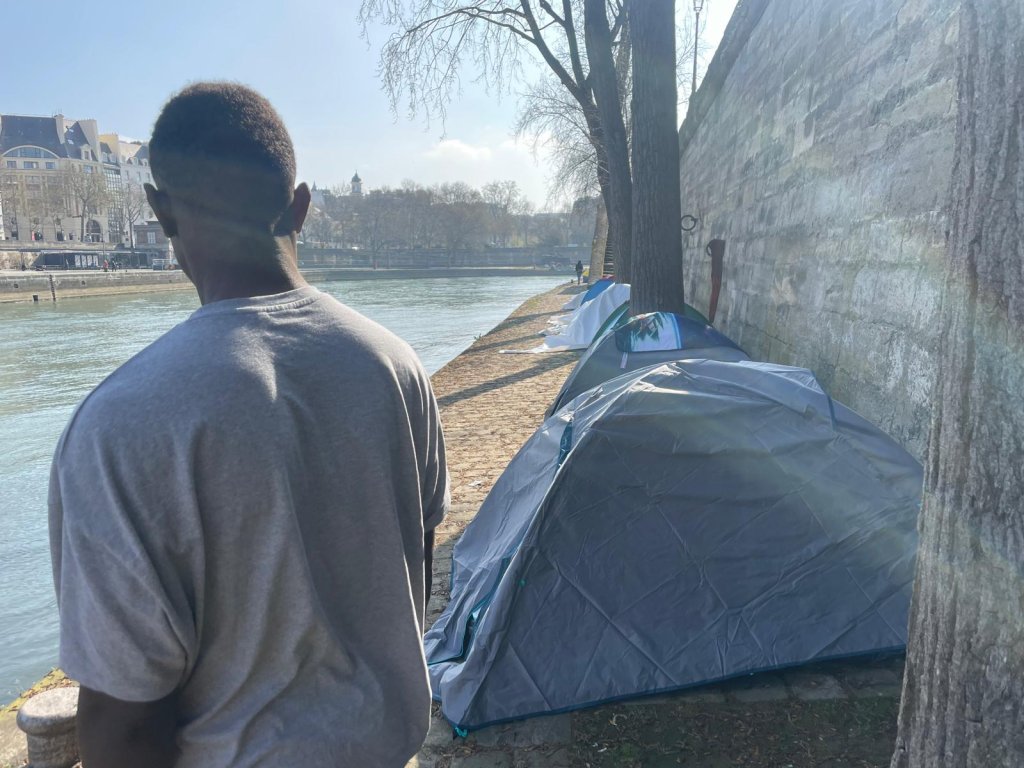
High school is important for these young people. Not only is it a way of securing their future, it provides them with something of a routine. Going to school means "forgetting your worries" for a few hours, said Mehdi, who lives in a tent near the Austerlitz train station. He and other young people need to stay busy during the day before returning to the streets or emergency shelters at night. "We think too much when we're not studying," said Trésor.
"Around 90 percent of the unaccompanied minors that we work with live on the streets," said Anouchka.
Their housing situation is a sensitive subject for these students. "We don't all have the same life at the same age," said Rufils with dignity. "I was sleeping in a tent when I arrived; now I'm in a gymnasium. But for how long? I think I'll be back on the streets soon."
For Aissatou, a 16-year-old from Guinea, finding accommodation is a daily source of stress. She's currently living "with a friend" in the Paris suburbs. Before, she regularly stayed at emergency shelters. "I'd like to go to high school to do something normal. My experiences so far – sleeping on the streets, fleeing my country – haven’t been normal."
Read Also
Unaccompanied homeless youth in Paris: "We used to look for shelter, now we look for places to hide"
'They struggle and take multiple vocational training courses'
The amount of "time wasted" bothers the associations. The young people "often" end up recognized as minors. "We’re wasting so much time. We leave them on the streets without any support. In the end, a judge recognizes that they are under the age of 18," said Rose. Slightly more than 9,500 minors across the country were placed under the protection of the Child Welfare Services (ASE) in 2025 following court decisions, according to the Ministry of Justice. Some 13,500 minors benefited from protection the previous year.
"We sign them up in a vocational training program (CAP) as soon as we can, so they can begin an application for regularization and avoid a deportation order," said Anouchka. Even if they are eventually recognized as minors, the reprieve is short-lived. According to the law, once an undocumented adult reaches the age of 18, they can receive an order to leave French territory.
This outcome can only be avoided through filing an asylum application or via an "exceptional admission to residence" (AES). The AES is granted to those able to prove they have spent six months in vocational training, according to the Retailleau circular, which details how regularization can be achieved through employment.
"They struggle, they take on multiple vocational certificates (CAPs) or internships to prove their integration in France or obtain a job offer. Unfortunately, it's sometimes not enough," said Anouchka. "Being an unaccompanied minor in the appeals process is therefore a race against time."
'I'll become an architect'
Medhi, Trésor and their friends present at Ground Control on the day InfoMigrants visited can't entertained the possibility of a deportation. Only a future in France seems likely to them. "I'll be an architect later," said Mehdi boisterously, interrupting his neighbor. "Otherwise, I'll find training as a welder or a roofer."
"I’m looking into vocational training in business, logistics or electrical work," Trésor said. "When everything goes well, I’ll be able to tell my family I’ve succeeded," said a young man with headphones.
A brief silence falls over the group. No one wants to talk about their parents. The students stand up abruptly to leave. It is 1 pm. "There’s an organization offering us an activity," said Trésor, showing a WhatsApp message on his phone from a collective called Under the Same Sky (Sous le même ciel). "We’re going to Saint-Denis… We’ll have to take the metro without a Navigo pass… It's another source of stress for us."