
According to the Spanish NGO Caminando Fronteras, more than 1,300 migrants have died while trying to reach the Spanish coast in the first five months of 2026. The numbers highlight a downward trend in fatalities, but rights groups say they hide a darker reality.
The charity Caminando Fronteras (Walking Borders) says that 1,317 people have died while trying to reach Spain's coasts so far this year, including 142 women and 129 children. The tally includes all 27 boats heading to the islands that are known to have disappeared with everyone on board in the first five months of the year.
This compares to 3,090 people who according to the NGO lost their lives or disappeared while trying to reach the islands in all of 2025; in 2024, more than 10,000 people were recorded to have drowned in the Atlantic on this migration route in just one year.
Read AlsoOver 3,000 people died while trying to reach Spain in 2025
Caminando Fronteras' figures meanwhile go beyond official data shared by Spanish authorities, and are also based on cross-referenced testimonies from families and survivors. Their numbers include both confirmed and presumed deaths.
The NGO believes, however, that the actual death count for any given year is likely much higher than what it publishes, as many smaller migrant vessels are known to disappear before even being picked up by radar systems.
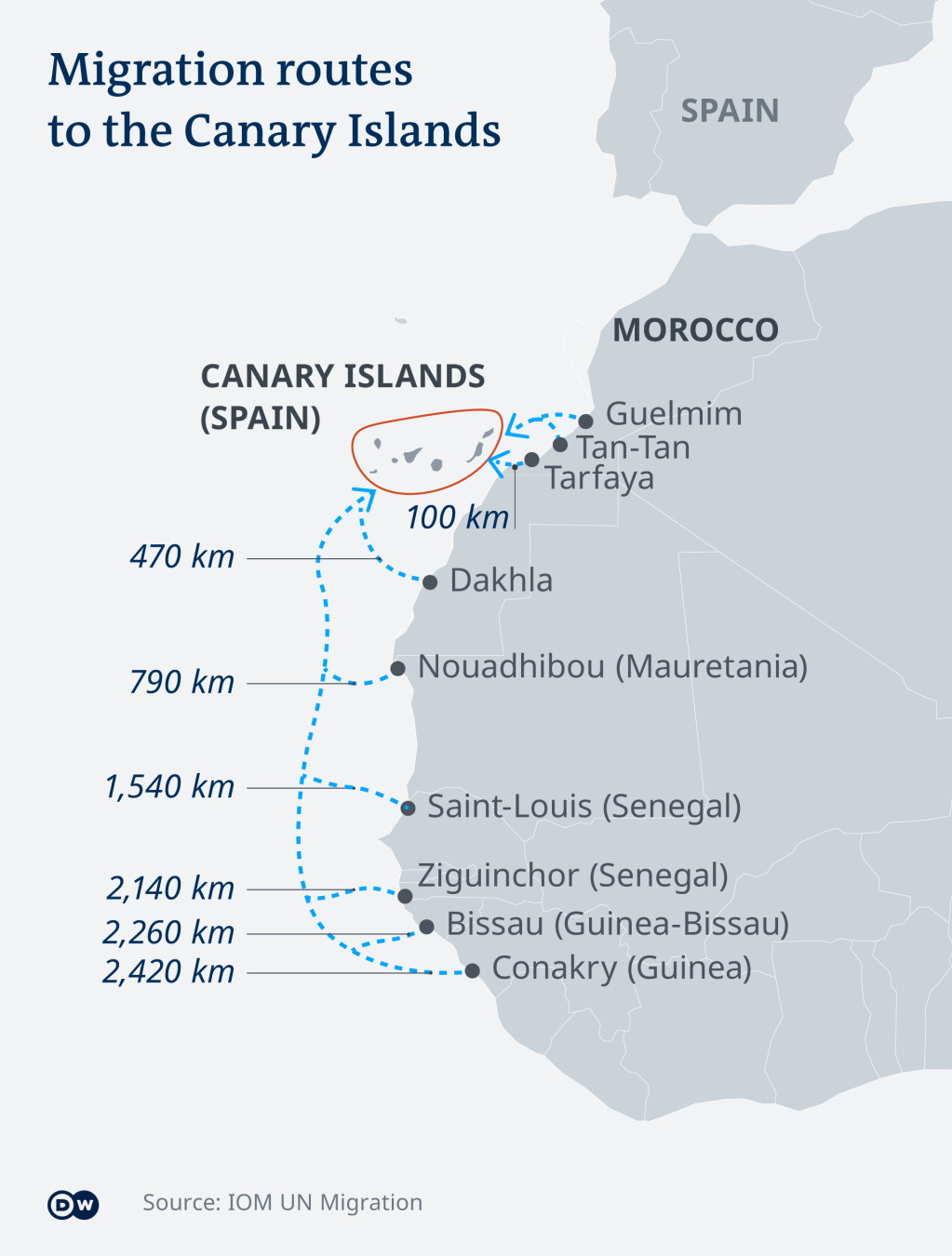
Fewer fatalities but riskier journeys
The Spanish archipelago in the Atlantic Ocean has witnessed a large increase in irregular migration from West Africa in the past decade, with experts calling this the deadliest migration route in the world.
In 2025, however, the Spanish Ministry of the Interior recorded a 40 percent drop in the number of migrants successfully entering its territory irregularly, compared to the same period in the previous year.
Rights groups say that this is due to the fact that states like Mauritania and Morocco have significantly increased their sea patrols and interceptions of migrants en route to the Canary Islands — with the help of international partners like the Spanish government.
As a result, however, people seem to be willing to undertake increasingly longer and riskier journeys across the Atlantic Ocean to reach the island group, which is part of the European Union: some migrant boats are known to attempt journeys from as far south on the African continent as Guinea, located more than 2,400 kilometers away.
Caminando Fronteras welcomes the drop in fatalities but also stresses that "the main cause of mortality [on migration routes to Spain] is the influence of migration control policies on the use of search and rescue operations."
The charity also stressed that a large number of migrants trying to reach the Canaries tend to be unaccompanied minors from West Africa, which implies that many of the casualties at sea will also likely involve young migrants.

Pope visits Canaries to boost morale and support
The report was published in time for the visit of Pope Leo XIV to the Canary Islands, which is intended to draw attention to the plight of migrants and refugees. The pontiff has described migration as an issue that challenges "the ethical foundation of the international order."
Like his predecessor, Francis I, Leo has made migration a key focus of his papacy.
Pope Leo's visit to Spain started last weekend, coinciding with the Christian holiday of the Feast of Corpus Christi, which commemorates the suffering of homeless, displaced and persecuted people.
Read AlsoInside Spain's extraordinary regularization drive
His trip comes roughly a year before general elections are due to be held in Spain, and is widely regarded as a sign of support of recent mass migrant regularization measures enacted by the current government of Prime Minister Pedro Sanchez.
Over 500,000 migrants with official status are expected to be regularized across Spain as part of the initiative, giving them full temporary access to the job market, education and healthcare.
However, the initiative has come under attack from the opposition, especially the far-right Vox party.
Read AlsoMigrant regularization in Spain: Sanchez' decree faces sharp criticism
with Reuters