
Changes to the EU's Common European Asylum System (CEAS) will begin to take effect on June 12 under the new Pact on Migration and Asylum. Who will be affected? Who benefits? What are the reactions? InfoMigrants looks at some of the most common questions.
What is CEAS? What is the EU Pact on Migration and Asylum?
CEAS is the abbreviation for "Common European Asylum System." This framework has been in place for well over two decades but is now subject to a series of reforms being implemented to the existing EU-wide system. These reforms are also collectively known as the new EU Pact on Migration and Asylum.
The main objectives of the reforms are to introduce uniform procedures across EU member states to streamline and speed up asylum matters, as well as the introduction of a solidarity mechanism designed to alleviate some of the burden of countries at the forefront of receiving people presenting for asylum, such as Greece, Italy and Spain.
According to the European Union Agency for Asylum (EUAA), the CEAS reforms are based on "an understanding that the EU, an area of open borders and freedom of movement where countries share the same fundamental values, needs to have a common approach to implement transparent, effective and equitable procedures" for people seeking international protection.
Read AlsoGermany and other EU countries need to catch up on asylum reform, report finds
What is the timeline for the rollout of the changes?
The reforms were originally adopted in May 2024 with a two-year plan aiming towards a full roll-out on June 12. However, several EU member states are yet to fully incorporate the requirements of the changes into their respective national legal frameworks.
There are also numerous outstanding IT issues for establishing a digital registration system that operates across the bloc, with many more months of work expected to take place to bring all member states up to speed.
The EU's Home Affairs and Migration Commissioner Magnus Brunner said that June 12 was not a deadline but rather "the beginning" of a laborious process to implement the New EU Pact on Migration and Asylum, adding that some of the more contentious issues that may arise during the implementation phases may still have to be addressed in court.
Read AlsoEU Council gives final greenlight to new EU asylum measures
How will the reforms impact the number of asylum seekers coming to Europe?
Among other things, one of the stated goals of the CEAS reforms is to lower the number of asylum applications lodged across the bloc. To this end, the new laws will also focus on further combating human trafficking and people smuggling at the source as well as close cooperation with major countries of origin and transit.
Asylum numbers have already been declining across the bloc for years, with the number of unauthorized border crossings into the EU falling below 180,000 in 2025 -- the lowest rate in five years.
Migration Commissioner Magnus Brunner says that the new laws under CEAS aim to promote other forms of migration that benefit labor markets.
Read AlsoWhat the new EU migrant 'return hubs' deal means in practice
What changes can people seeking refuge in the EU expect?
In the coming years, more and more of the EU's asylum procedures are expected to be handled at the EU's external borders as per the reforms -- that is, even before people hoping to reach Europe have managed to enter the bloc.
This means that people who come from a country whose citizens have little chance of receiving asylum will undergo an expedited procedure at these external border points and can expect to be deported soon. For now, these countries will reportedly be identified as those that have an overall asylum recognition rate of 20 percent or lower.
Those with a higher chance of being granted asylum will be allowed to enter, after which a regular asylum procedure will be carried out -- typically in the first EU member state that enter. For the duration of this procedure, they will be expected to remain in that country. In some cases, asylum applicants may be moved to another country under the solidarity scheme.
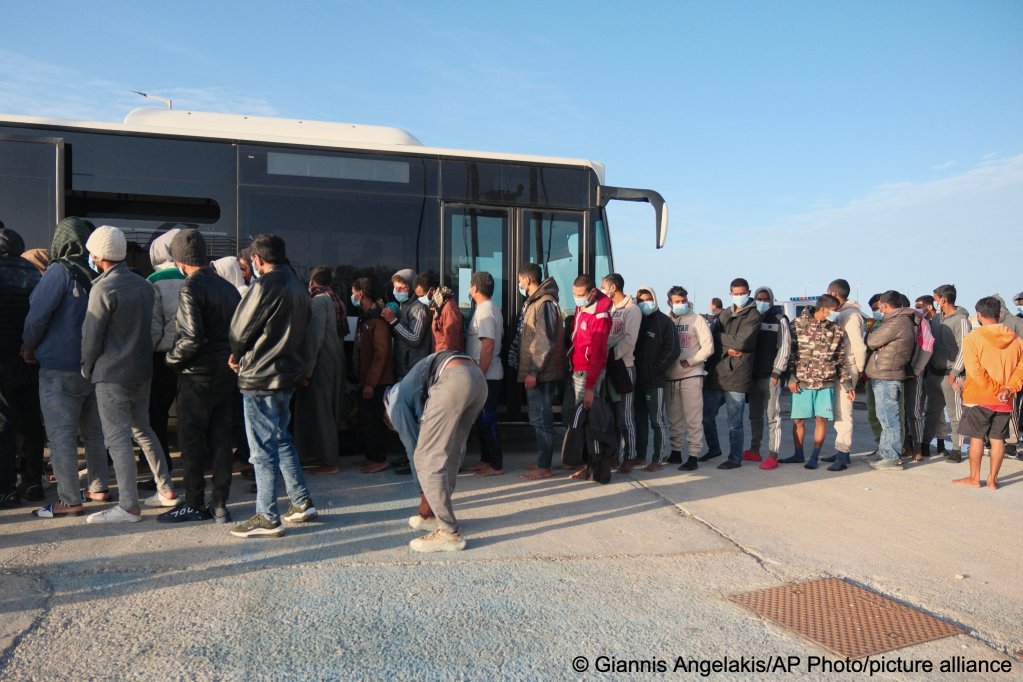
To establish who can and who cannot enter the bloc, there will also be new mandatory preliminary screening procedures, which will record data points such as fingerprints, country of origin, health status, and potential security risks in a centralized system.
Read AlsoFingerprints, facial recognition and databases: EU prepares to launch its EES border control system
While these checks are underway, people will be housed locally in closed facilities at communal facilities in these facilities, and will not be considered to have entered the EU until a positive decision is issued; these procedures are meant to last up to a maximum of three months, though they can be extended to up to six months.
Anyone who is deemed to pose a security risk as a result of these checks will also in future be sent back to their country of origin. Notably, in cases where there is no deportation agreement with such countries of origin, these migrants may be sent back to other countries under a set of further plans, whereby some EU countries are hoping to build accommodation centers in third countries.
These facilities, which are yet to be built, have broadly been referred to as migrant 'return hubs.'
Read AlsoIrregular migrants, asylum applicants to the EU to routinely be screened for security checks
Going forward, will asylum seekers be distributed more fairly across the EU?
The new solidarity mechanism of CEAS is intended to ensure a greater sense of shared responsibility for asylum seekers across the EU. In the past, Mediterranean countries such as Greece, Italy, and Spain have had to bear the brunt of arrival numbers, feeling overwhelmed with reception and registration procedures.
The European Commission will decide on the basis of migration developments which countries deserve the support of the solidarity mechanism under which other countries will have to take in a certain quota of fresh asylum seekers (according to population numbers).

However, the solidarity mechanism includes an opt-out clause under which individual member states will be able to excuse themselves from this regimen. In exchange, they will have to provide financial compensation for each case. The European Commission will be responsible for ensuring compliance with the law across the bloc.
Some EU nations, such as Poland and Hungary, have however fundamentally rejected these new asylum rules and say they will refuse to pay financial compensation instead. Other countries like Portugal have announced that they will rather pay these fines instead of being part of the solidarity pact.
Germany, meanwhile, is exempted from the solidarity pact for the time being, since it has already welcomed large volumes of asylum applicants in recent years.
Read AlsoGerman Parliament agrees to implement Common European Asylum Policy, tightening rules still further
Which countries stand to benefit the most from the CEAS reforms?
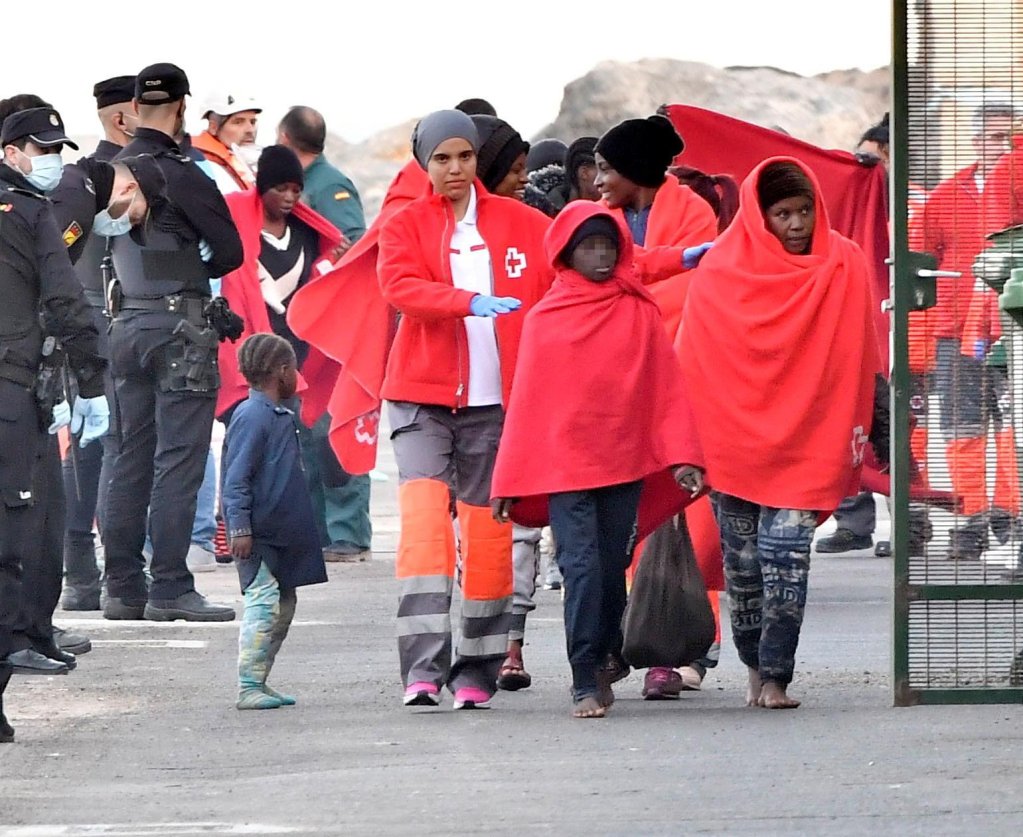
The reforms mainly affect countries on the EU's external borders -- in particular those with high numbers of irregular migrant arrivals such as Greece, Italy and Spain. The changes are meant to alleviate some of the burden on them, although many of the infrastructures needed to implement these changes are yet to be built.
The centralized nature of the pact, especially the shared database across the bloc, could however result in negative developments for those countries as well: Under the EU's Dublin Regulation, asylum seekers can be sent back to another country if they applied for asylum elsewhere first.
This could be true for many applicants who lodge their papers in central European countries but have actually entered the bloc through its Mediterranean member states. The centralized, digital processing system can mean that more such cases will be flagged earlier on.
Most Dublin cases, however, are limited to a time window of six initial months, after which the secondary country of application is obliged to take over the processing. The New EU Pact on Migration and Asylum has no changes to the existing Dublin rules.
What are some of the main criticisms against the CEAS reforms?
Many rights groups have expressed concerns about potential restrictions on fundamental freedoms under EU law. From the right to asylum to the right of not being held without just cause, advocacy groups regard the changes as a threat to common European ideals.
Some groups, such as the German migrant rights organization Pro Asyl, warn that the goal of accelerating asylum procedures could result in fewer legal protections for asylum seekers. Church organizations have also voiced similar criticisms.
Human Rights Watch has criticized the fact that "[s]peedy reviews can compromise the integrity of the process if decision-makers rush to conclusions based on partial information, especially if asylum seekers do not have the opportunity to gather all the evidence they need."
Questions also remain about family reunification in cases where neither asylum is granted nor deportation is possible. It is also unclear how the new laws will affect unaccompanied minors, who have so far benefited from automatic protection regardless of their country of origin.
Read AlsoAmnesty: Digital tech in migration management risks violating human rights
with KNA