
The Greek parliament has signed off new legislation designed to speed up the deportation of failed asylum seekers to so-called "return hubs" located outside the European Union, which are yet to be built. Despite increasingly restrictive asylum and immigration policies, hundreds of irregular migrants continue to reach Greece on an ongoing basis.
The Greek parliamentary vote comes after EU lawmakers signed off last week on the legal framework governing the establishment of migrant return hubs in third countries.
Under the new law, individual EU nations will be allowed to operate return hubs outside the bloc, though the EU itself said it would not actively be part of the creation of these centers.
Greek Migration Minister Thanos Plevris said that Greece and other EU states want to sign their first agreements with third countries before the end of the year in order to establish fully operational return hubs in 2027.
"The Greek government has already been in consultations with two African countries," Plevris told the Athens News Agency without naming the specific countries that have been approached.
The new law is set to take effect in Greece on June 12.

Read AlsoEU reaches deal on 'return hubs' for rejected asylum-seekers
Greece approaches EU partners for return hubs
Greece has lately also been in talks with the governments of the Netherlands, Denmark, Germany and Austria to set up joint migrant return hubs, having launched direct talks with certain countries even before the EU legislation had been signed off.
For the time being, Greece has put its bilateral talks on hold, expressing its preference for a solution that includes working closely together with other EU actors.
The move to allow return hubs to open has drawn criticism from migrant rights groups, who say that the new system could be abused to deny genuine asylum seekers their right to a fair hearing and full asylum procedure.
Read AlsoEU reported to be considering 12 possible countries to site migrant 'return hubs'
Increasingly restrictive policies
Over the past decade, Greece has experienced some of the highest volumes of migrant arrivals, prompting emergency measures in the country and across the EU.
The Mediterranean nation was at the forefront of the so-called "refugee crisis" of 2015 and 2016, when over a million people made their way to Europe, coming mainly from the Middle East and Africa.
While those chaotic scenes have long ebbed down across the country, the Southern Greek island of Crete and its smaller sister island of Gavdos continue to witness steep arrival numbers of migrants reaching the region mainly from the shores of Libya.
Read AlsoCrete and Gavdos among Greek Islands with highest migrant sea arrivals
Fresh arrivals on Crete
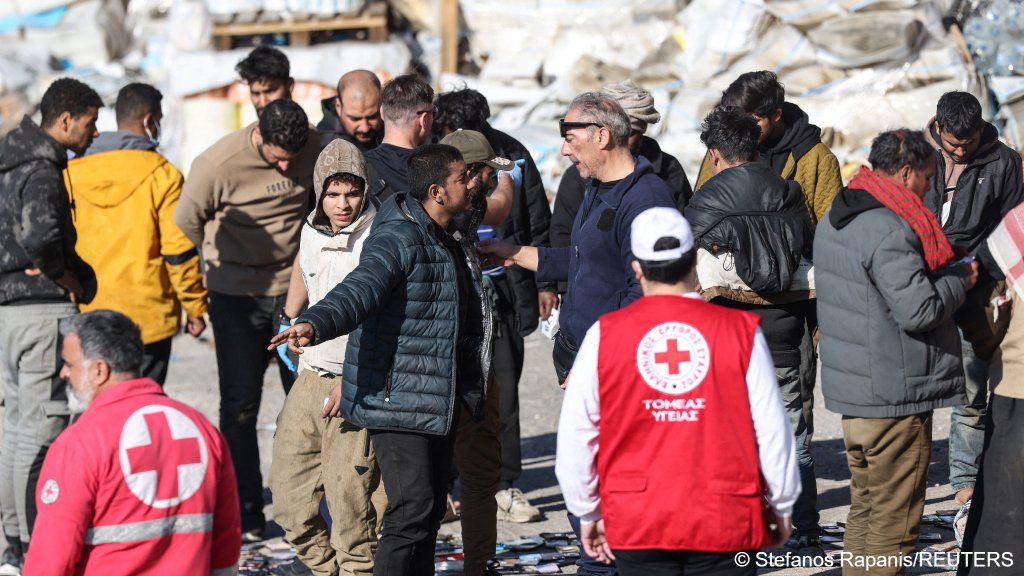
Most recently, at least 550 migrants managed to reach Crete on Tuesday (June 9) on four boats, according to the Greek coast guard, including at least 42 minors.
These developments bring the total number of irregular arrivals across Greece in 2026 to roughly 15,000; about 6,000 of those migrants arrived in Crete alone.
Despite the relatively low number of new arrivals compared to previous years, Greek authorities caution that migration remains a key issue for the EU: Migration Minister Plevris stated last week that more than half a million migrants currently in Libya were allegedly waiting in Libya for an opportunity to reach Europe. According to the IOM, around 936,000 migrants are in Libya, most of them in irregular situations, with 84 percent lacking residency or work permits.
Read AlsoGreece: Hundreds of migrants arrive in Crete
According to Greek maritime authorities, there's been an uptick in boats still departing from the Libyan coast towards Crete, with most of the recent arrivals being nationals of Bangladesh, Egypt and Pakistan, whom Greece classifies as economic migrants rather than refugees escaping war and persecution.
The dangerous sea journey from the North African coast to Crete measures roughly 300 kilometers and has become the preferred route used by smugglers, who often charge upwards of 3,000 euros for the perilous journey.
Read AlsoTobruk-to-Crete migrant crossings intensify as Greece enforces strict sea patrols
with Reuters, dpa