
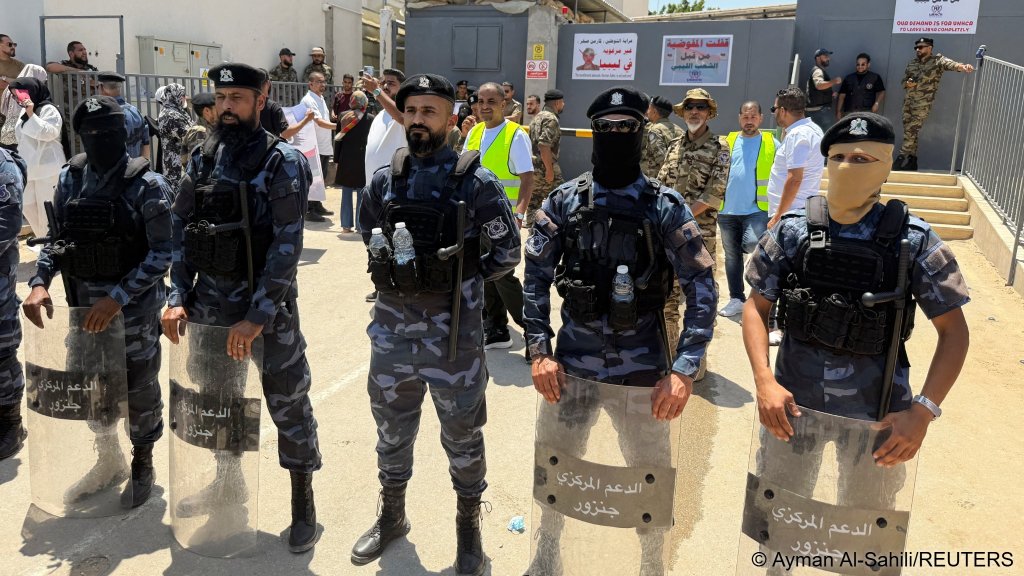
Hundreds of people gathered outside the UN refugee agency (UNHCR) headquarters in the Libyan capital Tripoli on Thursday, protesting irregular migrants and refugees in the country. Many expressed that they want the facility to close, following rumors alleging that migrants would be settled permanently in Libya.
An unspecified number of people believed to be in the hundreds marched on the headquarters of the UNHCR in Tripoli, Libya, on June 4, chanting "Libya belongs to Libyans" while calling for its closure.
They accused the UN agency of working towards settling irregular migrants in the North African country amid a rise in rumors about its work in Libya.
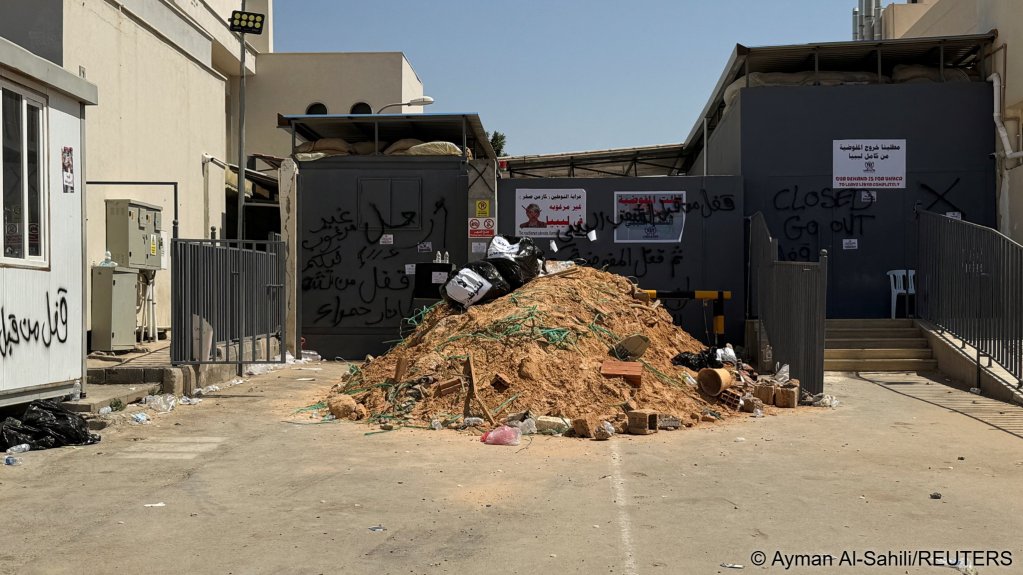
Photos taken at the scene show demonstrators erecting tents and even barricading the entrance to the building complex with sand.
UN condemns protests
The United Nations Support Mission in Libya (UNSMIL) has since issued a statement, saying it "refutes allegations of migrant resettlement to Libya."
"The UN in Libya reiterates that none of its agencies, including UNHCR, implement any resettlement programmes to Libya," it added, stressing that the mission was "concerned about the spread of misinformation, disinformation and hate speech regarding the work of the UN."
The statement also stressed that UNHCR is "working to find solutions outside Libya for people fleeing wars, conflicts and persecution, including evacuation to third countries, and voluntary return to their countries when circumstances allow," condemning acts of vandalism and attacks on its personnel and property.
Taher al-Baour, acting foreign minister of Libya's internationally recognized government in Tripoli, meanwhile also said in a TV interview that there were no plans "to settle migrants in Libya."
"Libya is not capable of handling these numbers," he stressed, adding that Libyans should not blame foreigners for security issues in their country.
Read AlsoIn eastern Libya, 'the financial profits generated by migrant trafficking are very significant'
Nearly a million migrants known to be in Libya
Since the overthrow of longterm strongman Muammar Gaddafi in a NATO-led uprising in 2011, Libya has become the main departure point for irregular migrants seeking to reach Europe from the African continent.
Many of them are fleeing conflict and poverty in their home countries, with the majority coming from sub-Saharan Africa.
However, many migrants end up stuck in the North African nation -- either because they run out of money to fund their onward journey or because they get intercepted at sea by Libyan forces, who return them to detention camps in the country.
According to the most recent numbers from late 2025, the International Organization for Migration (IOM) estimates around 940,000 migrants and refugees to be living in Libya, though the unofficial number is thought to be significantly higher.
Many of the more recent arrivals in Libya are Sudanese refugees fleeing war in their home country.
Read AlsoIOM counts greatest number of migrants in Libya to date
Libya increasingly becoming migrant destination
Migrants who end up stranded in Libya in the long term often find irregular work performing menial tasks in sectors like cleaning and construction.
This has resulted in a gradual rise in the number of people who eventually decide to treat Libya as a destination country rather than a transit country.
Read AlsoLibyan forces detain over 2,000 migrants amid large-scale demolitions and raids
While many Libyans are reluctant to fill the positions typically occupied by migrants, there is growing racism and xenophobia in the country, resulting in sporadic attacks against members of immigrant communities, whom many locals hold responsible for various social issues.
One of the protestors on Thursday, identified as Ahmad al-Ghasa, told the Reuters news agency that he blamed migrants for burglaries and assaults.
"These phenomena were not present in Libyan society before," he said.
With a total population of 7 million people -- the vast majority of whom now live in cities along the Libyan coast -- the proportion of irregular migrants in the North African nation is notable but not among the highest rates in the world.
with AFP, Reuters