
The European Commission has said that there isn't sufficient justification for a blanket extension of German border controls. Since mid-2024, Germany has beefed up checks and controls along its borders, citing extraordinary security concerns. However, such measures defy the EU principle of free movement of people and goods as applied within the Schengen Area, which Germany is part of.
In an official statement, the European Commission noted that Germany had not provided sufficient information to justify another extension of the current controls at all borders. In particular, it stressed that Germany had failed to explain why the level of security threat cited by the Federal Ministry of the Interior as justification for the policy is identical at every single border section, regardless of which country Germany borders. Germany shares borders with nine countries: Denmark, Poland, Czech Republic, Austria, Switzerland, France, Luxembourg, Belgium, and the Netherlands.
The European Commission said however that it recognized that serious concern regarding the national security of member states might nevertheless persist, highlighting also that it understood that Germany has been facing a complex migration situation amid a large number of asylum applications.
Furthermore, the statement said that there is no justification for a repeated extension by six months with each application, saying that a shorter period would be more appropriate as the durations cited for any such extension.
In total, the controls along Germany's border have already been extended three times -- most recently by another six months, lasting now until mid-September 2026.
The European Commission added in its statement that it had received numerous complaints from citizens and businesses about these additional measures along German borders.
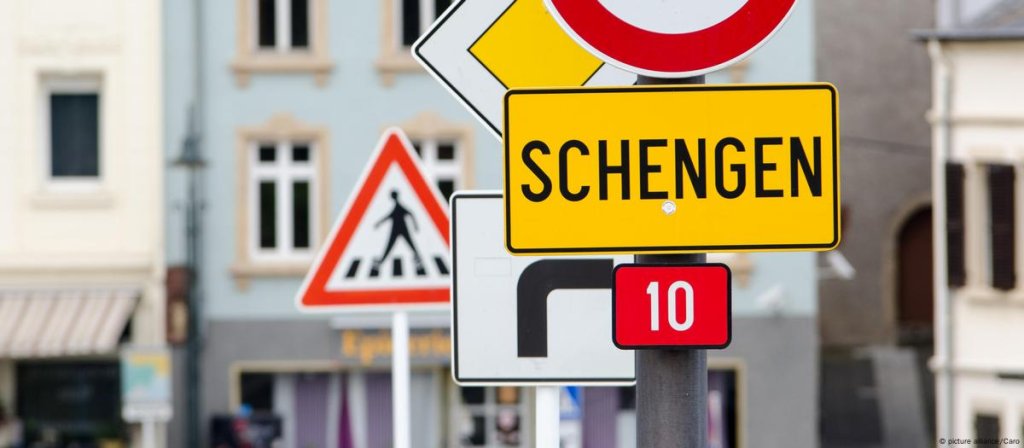
Germany keen to hold onto border checks
German Interior Minister Alexander Dobrindt has repeatedly defended the introduction of border checks, saying that their primary purpose was to signal a shift in Germany's migration policy and that these measures had dealt a significant blow to criminal smuggling rings operating across the EU.
The statement by the European Commission however noted that the information provided by German authorities for the application did not explain how this was related to the overall global security situation cited in Germany's extension request.
It added that, based on the information provided by Germany in its application for an extension, it was not clarified how the reintroduction of border controls was actually going to curb any security threats.
There has also been legal opposition against the extraordinary measure within Germany: Last month, the Administrative Court of Koblenz ruled that border controls were a violation of the Schengen Borders Code; in April, a similar case in Bavaria resulted in a similar decision.
The Federal government has announced that it would appeal these rulings.
Read AlsoGermany: Border controls and tougher migration policies to stay, vows interior minister
EU recommends more 'efficient' tech solutions
The European Commission further noted that Germany -- and other EU members with sustained border checks -- should look for alternative solutions and work "toward the gradual phasing out and lifting of internal border controls," within the Schengen Area. However, it did not specify a timeline for this goal.
In addition to Germany, the Netherlands, Austria, Denmark, France, Italy, Norway, Slovenia, and Sweden have also reintroduced checks and controls at their internal European borders.
In its statement, the commission highlighted that there were more efficient options, such as more selective police checks or the introduction of technical solutions for biometric identification and vehicle tracking.
Meanwhile, EU Migration Commissioner Magnus Brunner highlighted that the upcoming reform of the European asylum system along with the modernization of border controls at the EU's external borders would also serve the purpose of mitigating the effects of mass migration.
He also pointed to the decline in irregular immigration across the bloc, as has been attested by the EU border agency Frontex.
Read AlsoGermany: What is the legal situation for asylum seekers under new border rejection policy?
Border controls test Schengen principles
According to EU law, member states in the Schengen Area have the right to introduce border controls only as an exceptional measure and on a temporary basis — as long as they face a serious threat to public order or internal security.
"Member states have made use of this option due to genuine and legitimate concerns regarding security threats," the European Commission explained in its statement.
For example, at the height of the COVID-19 pandemic, borders were shut across the bloc to contain the spread of the deadly virus. When the situation began to ease, these changes were eventually reversed.
The European Commission stressed that such measures must always remain a temporary exception, and that they cannot be employed as longterm solutions.
Read AlsoFingerprints, facial recognition and databases: EU prepares to launch its EES border control system
with dpa