
For undocumented migrants in Spain, the extraordinary regularization offers a route to legal work and stability, but court challenges, bureaucracy and political tension are putting it under strain. Five weeks into the application phase, InfoMigrants spoke with migrants and others involved in the process in Madrid and Barcelona about their experiences.
InfoMigrants has been on the ground in Spain covering the extraordinary regularization process, the seventh such measure since the 1980s, as the country again opens a route to legal status for hundreds of thousands of people already living there before December 2025.
As of late May, more than 550,000 applications have already been submitted -- some four weeks after the start of the application phase on April 16. With the application deadline set for June 30, 2026, the process offers a route to legal status and a temporary work permit, but it also exposes the strain of tight timelines, political tension and administrative pressure.
The initiative allows successful applicants to obtain a one-year temporary work permit and is aimed particularly at undocumented migrants already working in Spain, many of whom are in vulnerable situations. In practical terms, it gives people a legal bridge while they regularize their situation and, after that year, can seek renewal under Spain’s ordinary immigration rules.
Read AlsoHow Spain's 2026 regularization works
A decree under pressure
After years of campaigning by migrant rights groups, the regularization was introduced by royal decree, which means the government approved it directly rather than sending it through the full parliament process first. That matters because this kind of measure is easier to challenge in court.
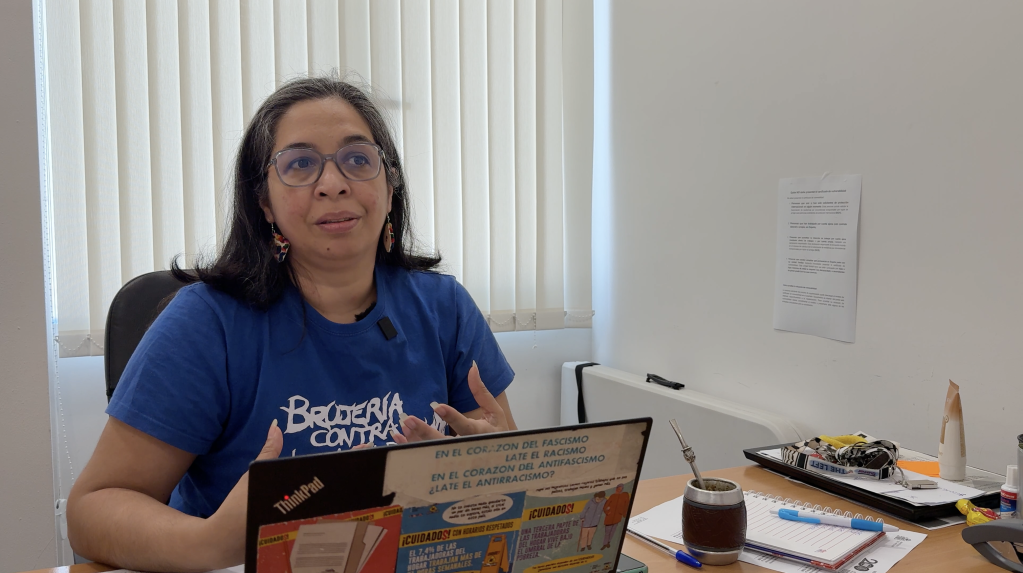
Edith Espinola, director of the Empowerment Center for Domestic and Care Workers (CETHYC) and a founder of the Regularización Ya (Regularization Now) movement, said the regularization is not just an administrative measure but a political choice about whether undocumented people will be given rights. She said the fight over the decree reflects deeper hostility toward migrants, describing it as rooted in "hate", "racism," and "xenophobia," and arguing that the process is a form of social justice for people who work, live and study in Spain.
The measure is also under legal pressure, with right-wing and far-right groups challenging it in the Supreme Court, although the process remains in force for now. An initial request to urgently suspend the scheme was rejected. Earlier in the year, reports of long queues and delays in Madrid raised fears that the administrative system could struggle to handle the volume of applications before the June 30 deadline.
Read AlsoSpain grants record number of citizenships amid labor shortages and declining birth-rates
A way forward for migrants, many of whom are from Bangladesh
Among those most likely to benefit are Latin American migrants and other groups, including Bangladeshis, many of whom are women and children. Spanish research foundation Funcas estimates that Spain had around 840,000 foreigners in irregular administrative status as of 1 January 2025. The largest share was from the Americas, with 760,000 people, led by Colombians, Peruvians and Hondurans. Africans accounted for 50,000, while Asians numbered 15,000 in total, including 5,457 Bangladeshis.
Interviews suggest the process has been uneven, but is becoming more accessible. "I love Spain because the weather is wonderful, the people are wonderful, they are very helpful," said Ruma, a doctor from Bangladesh who is currently living in Madrid with her children. She said she has been in Spain for seven months and is already going through the regularization process. "It is a bit difficult to arrange all the documents, because you need a lot of paperwork," she added, noting that she completed the process online through a lawyer and hopes to work in the healthcare sector once she receives the permit.
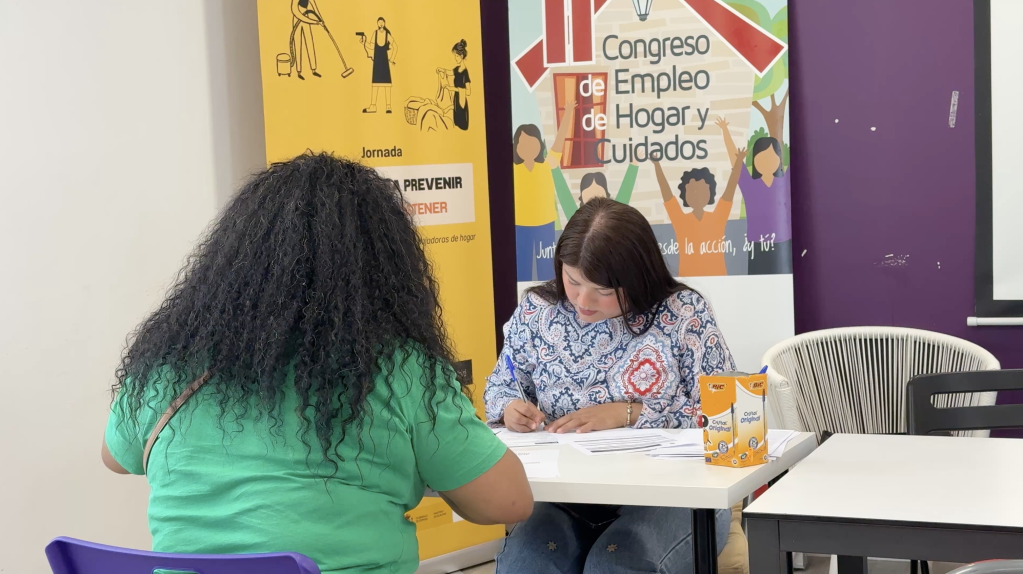
A Paraguayan migrant who has been in Spain for three years working in the domestic care sector said the process is "speeding up a bit now," after a complicated start. She said regularization would mean "more dignified wages," more rights and less exploitation.
Miriam, a 23-year-old Peruvian migrant, said the procedure became harder when vulnerability paperwork was requested, but is now more relaxed. "For me, regularization is very good because it will help me have economic solvency,” she said, adding that legal status would help her study, find stable work and build a better future.
Read AlsoSpain: Regularization drive to be supported by job matching initiative
Legal bottleneck
Teresa Gómez, an immigration lawyer with nearly 30 years of experience, described the process as simple on paper but tight in practice. "This regularization procedure will have a determined time, it’s rather a short time, and therefore people are a bit nervous," she said. "In principle, we were able to start submitting regularization files on April 20 of this year, and the foreseen timeline runs until June 30, 2026."
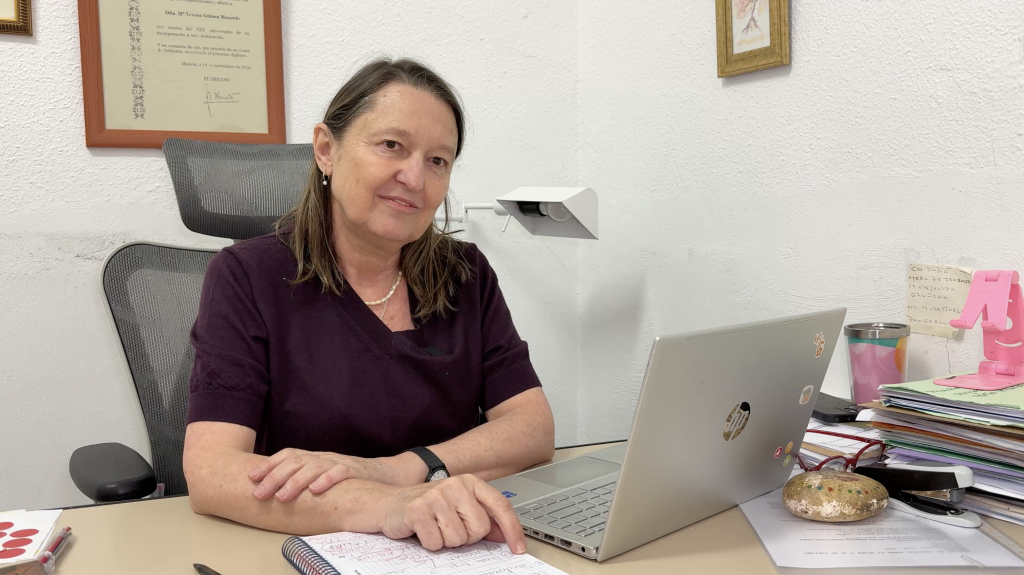
She warned that the speed of the process has created a sense of improvisation and uncertainty over whether the administration can process so many files in time. At the same time, she pointed to one major innovation: once applicants receive a file number and a tax identification number -- an NIE, they can work provisionally while their case is being resolved. "This is new compared to all previous regularizations and in general the Spanish immigration system," she said. "I understand this is good so that all these people will be able to contribute to Social Security."
Read AlsoSpain: Migrant workers in greenhouses hope regularization campaign brings improved conditions
A matter of rights
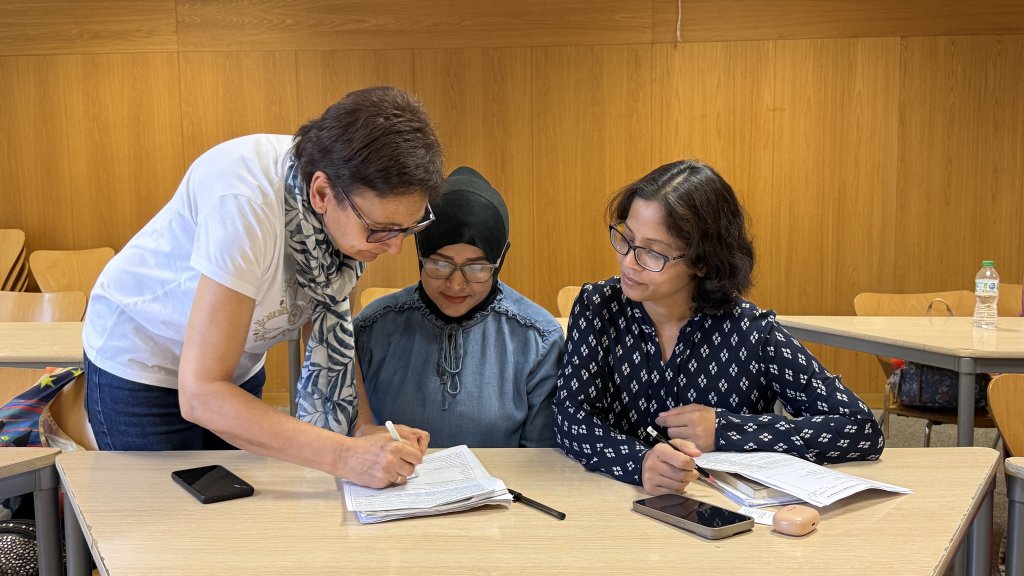
Ángeles, a Spanish teacher working with migrant women, said she strongly supports the policy. "I am completely in favor of the regularization of immigrants," she said. She described the current political climate in Spain as tense, shaped in part by hostility from the right and far right, but said there is also broad support for the measure in her own community.
"Regularization is essential," Ángeles said. It allows people to "lead a normal life here in Spain, where they live, to find a job, to have access to housing, for everything. It is essential that they are regularized, because otherwise they are in a very difficult situation."
Espinola framed the process as a matter of rights and dignity. She described the vulnerability report required in some cases as “an obstacle course” and said regularization should be understood as "social justice," particularly for families and workers who are already part of Spanish society.
She also argued that undocumented migrants should be seen as neighbors rather than threats. "People understand that the undocumented migrant person living next to their house is a neighbor not an invader," she said.
Read AlsoSpain: Children and dependent adults with disabilities can obtain residency alongside their parents
Divided opinion
However, public opinion remains divided. José María, a resident of Madrid, said he is not against immigration, but believes the government should better organize the process so people can work and live without fear. At the same time, he said the country is under pressure and that there are currently "too many" immigrants.
InfoMigrants spoke to residents in neighborhoods such as Lavapiés in Madrid, where Bangladeshi-owned shops are part of everyday street life, underscoring how visible migration has become in the capital.
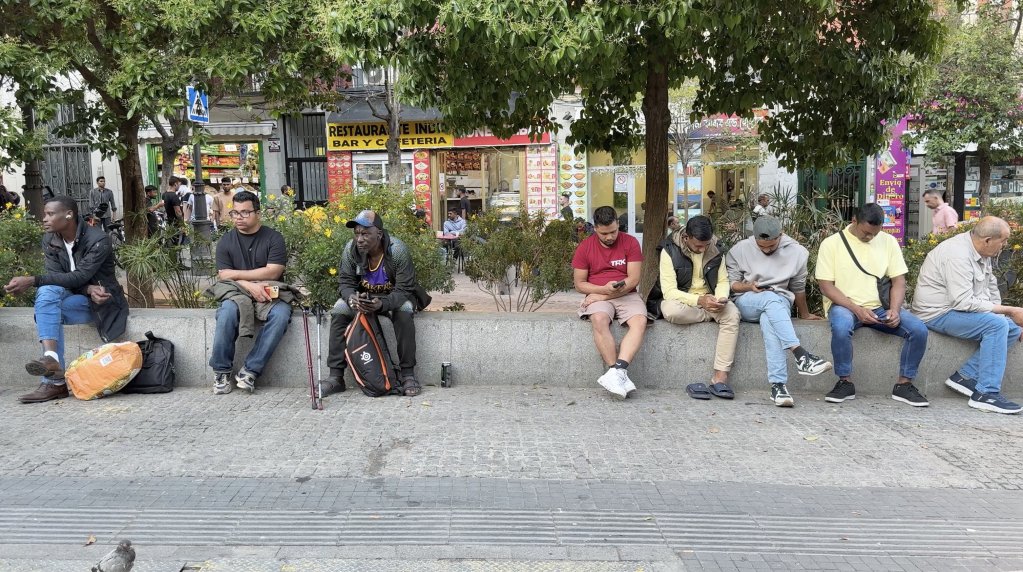
Subrata, a Bangladeshi migrant who has lived legally in Spain for 10 years, was also skeptical. He said the government needs to think about housing and jobs alongside regularization, noting that Madrid is currently facing a major housing and cost of living crisis. "If you allow a huge number of people to work in market as well and you have to create job first, then those people has to have some houses," he said.
Read AlsoSpain: Unions highlight pay inequalities between migrants and residents
What is at stake
Spain’s extraordinary regularization is more than an immigration procedure. It is a test of whether the state can turn a political promise into a workable system, and whether a society under pressure can still frame migration as a question of rights, work and belonging rather than only control and suspicion.
As the June 30 deadline approaches, the process is becoming a race against time. For supporters, it is a long-awaited path to dignity and legal status -- for critics, it raises questions about housing, jobs and state capacity.
Read AlsoSpain's migrant regularization scheme: What it means for mobility across the EU
Correction: Spain’s regularization rounds are counted differently across sources. The article has been updated to refer to the process as the seventh extraordinary regularization, in line with the government’s count.