
The Greek coast guard and European border authorities said they picked up nearly 400 migrants who were in waters near Crete over a two-day period. Favorable weather and calmer waters between Libya and Crete, plus ongoing instability in Libya, are contributing to an increasing number of dangerous journeys toward Europe, authorities said.
Greek coast guard units, working alongside the European Union’s border agency Frontex, said they carried out multiple operations near the island of Crete over the past 48 hours, taking around 400 migrants from overcrowded boats in the eastern Mediterranean.
Greece’s southern maritime border is reporting increased pressure as more migrants attempt the hazardous sea route from Libya to Europe. Authorities say calm seas and mild weather conditions in the region have encouraged a surge in departures from the North African coast, with additional vessels believed to still be heading toward Greek waters.
Read AlsoCyprus immigration crackdown leaves three severely injured after plunging from buildings
Migrant sea crossings may see increase during warming months
Earlier this month, Greece’s right-wing migration minister, Thanos Plevris, argued that hundreds of thousands of migrants are currently gathered in Libya waiting for opportunities to cross the Mediterranean. Greek officials are saying that the number of attempted crossings could continue to climb during the summer months.
According to figures from the United Nations refugee agency (UNHCR), roughly 42,000 migrants arrived on Greek islands by sea last year. The same data recorded at least 107 deaths in the eastern Mediterranean during that period, though humanitarian organizations believe the true number of fatalities is likely significantly higher because many disappearances at sea go unreported.
The popular tourism island of Crete has increasingly become a destination for migrants departing Libya in recent months, raising opposing voices across Europe over migration management, as well as concerns about maritime safety.
Read AlsoItaly hosts Libyan, Turkish and Qatari delegations to discuss migration management
Crete emerges as a major Mediterranean migration route
Crete has developed into one of Europe’s busiest migration entry points, with arrivals to the island increasing over the past year even as overall irregular migration into Europe declined. Frontex data indicates that approximately 20,000 migrants reached Crete last year, shifting attention toward the eastern Mediterranean corridor between Libya and Greece.
The route is considered among the most dangerous in the Mediterranean due to its long distance and exposure to open sea conditions. Unlike the shorter crossings from Turkey to nearby Greek islands, the Libya-to-Crete journey requires larger vessels capable of traveling for days across rough waters. Many of the boats used by smuggling networks are overcrowded and poorly equipped, raising the likelihood of fatal accidents.
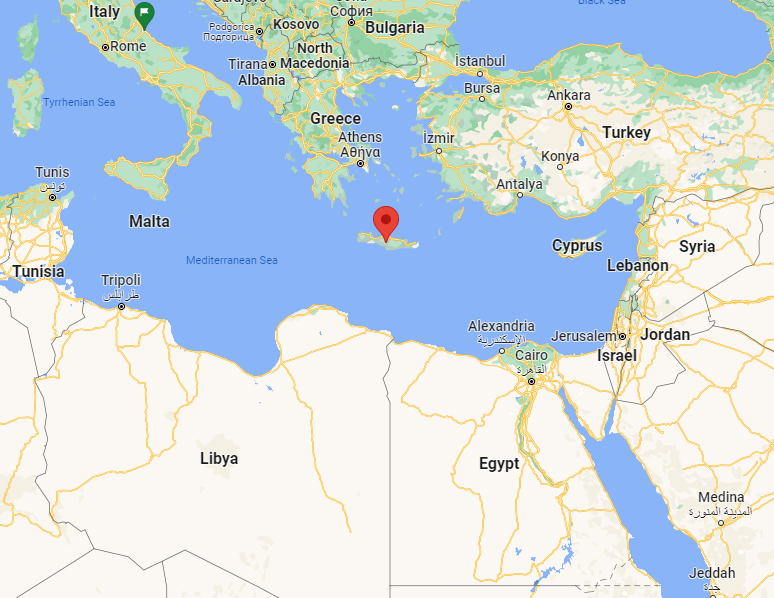
Greek and European authorities have expanded surveillance and patrol operations around Crete in response to the growing traffic. Frontex has increased the use of aerial monitoring, including long-range drones operating from the island, to detect migrant vessels earlier and coordinate operations across the Libyan Sea.
Recent sea tragedies have highlighted the dangers tied to the crossing. Greek rescue crews recently recovered several bodies and rescued survivors from a distressed vessel south of Crete, while other passengers were feared missing. A 2023 fishing trawler disaster in the Mediterranean, which left hundreds of migrants dead, exposed the serious risks tied to the crossing.
Read AlsoEastern Libyan authorities recover 120 migrants from 'trafficking dens'
What is contributing to rising sea departures from Libya?
Armed conflicts, political and economic insecurity, as well as climate change across parts of Africa, are driving displacement and fueling demand for smuggling routes into Europe. Researchers tracking global conflict trends recorded a historically high number of active conflicts in 2024, contributing to increased migration pressure across Mediterranean corridors.
Simultaneously, European governments are adopting stricter migration policies. Greece has tightened asylum regulations linked to arrivals from Libya, while the European Union is preparing broader enforcement measures aimed at stronger border screening procedures and faster deportations. Frontex is also expected to significantly expand staffing levels as officials anticipate continued pressure along southern European borders.
With dpa and AP