
A large-scale survey conducted over two years with 27,000 people, "representative of the diversity of the populations of metropolitan France," dismantles some of the preconceived ideas about immigration in the country, including about irregular entry, education level, and integration.
The National Institute for Demographic Studies (INED) and the National Institute of Statistics and Economic Studies (INSEE) published a 600-page study on May 21, called "Trajectories and Origins 2" (TeO2), which analyzes the paths of immigrants and their descendants in France.
This large-scale survey was conducted in 2019 and 2020 among 27,000 people aged 18 to 59, "representative of the diversity of the population of metropolitan France": 32 percent are from North Africa, 28 percent from Europe, 19 percent from sub-Saharan Africa, 16 percent from Asia, and 5 percent from the rest of the world.
The last survey of this type dates back to 2008–2009.
Read AlsoFrance: Migrants detained longer but fewer deported
One in 3 French people has a direct link to immigration.
The results of this new study "help to deflate some of the myths," sociodemographer Patrick Simon, one of the 35 researchers involved in the study, told news website 20Minutes.
And first and foremost, the study challenges the perception of "communitarianism" by the immigrant population, that is, the perception that migrants keep among themselves. The report highlights that "39 percent of immigrants have a spouse of a different origin, 29 percent of whom have no immigrant ancestry." For the second generation, this rate rises to 59 percent, with 45 percent having no immigrant ancestry. "It's diversity that prevails, not insular communities," Patrick Simon told Le Monde.
This diversity is also reflected in friendships, unlike among native-born French. "More than half of individuals in the majority population report that almost all members of their circle of friends share their origins, whereas this is the case for only 1 in 5 immigrants and 1 in 10 descendants of immigrants," the sociodemographer added. "Ultimately, those who appear most likely to be insular [are more likely] on the side of the majority population."
And according to this survey, 1 in 3 French people has "a direct link to immigration across three generations" (immigrant, child of immigrants, or grandchild of immigrants), notably through "mixed unions."
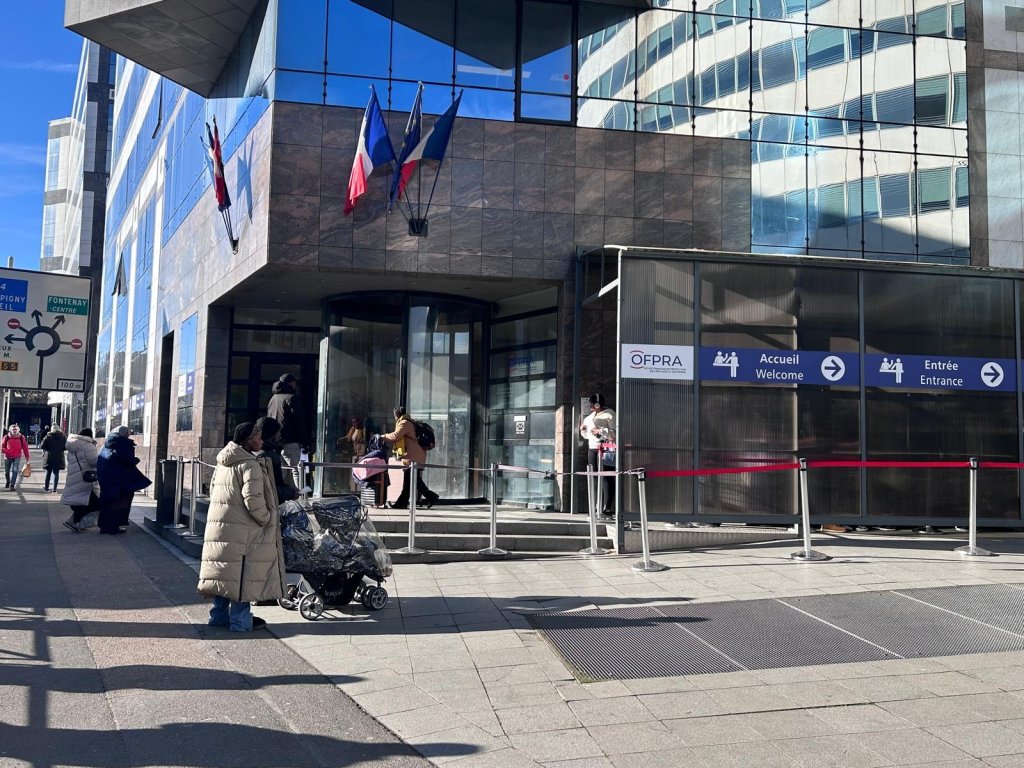
Only 9 percent of immigrants entered without a visa.
The study contradicts another misconception concerning the rise in irregular arrivals in France. According to the report, the proportion of undocumented immigrants in France "does not appear to have increased over time, contrary to what public discourse suggests."
Of the 27,000 people surveyed, 1 in 5 reported having been undocumented at the time of their arrival in France – a proportion that has remained stable over time. In half the cases, the transition to an irregular status occurs after the first six months in France, when the immigrants had already begun their settlement process with legal status and/or personal housing. Indeed, only 9 percent of immigrants entered France without a visa.
"Initially deemed ineligible for a visa or residence permit, a migrant may, a few years later, be considered eligible for a 10-year resident card or, even better, citizenship," the report noted.
According to the study's authors, these results demonstrate the evolution of the criteria used by the administration to assess "the legitimacy of an immigrant's presence on French soil."
This "deterioration" of administrative situations is not, however, permanent: nearly a quarter of those who were undocumented obtained a resident card, and the same number were naturalized as French citizens, Cris Beauchemin, one of the researchers at INED (the French National Institute for Demographic Studies), reported.
Furthermore, according to the study, immigrants most often arrive in France with diplomas. Since 2009, 53 percent of new arrivals had a degree, compared to 29 percent before 1989.
Read AlsoFrench court urges government to address malfunctions of ANEF residence‑permit system
Inequalities
The report also highlighted inequalities faced by immigrants. "Experiences of discrimination have increased since the previous survey," the authors noted. It "is very prevalent among racialized minorities, whose origin and skin color expose them to stigmatization and numerous disadvantages in social life."
"Immigrants and their descendants of North African and sub-Saharan African origin remain more exposed than other immigrant groups or the majority population to educational difficulties, as well as discrimination in access to employment, housing, and healthcare," according to the study.
The risk of losing residency rights has significant consequences, particularly regarding housing: approximately 5 percent of people who arrived after 2010 experienced homelessness. For those who arrived before 2000, the proportion was 2 percent. Housing conditions upon arrival are crucial for subsequent life trajectories.
While social housing allows the most disadvantaged immigrant populations to settle permanently, they nevertheless access the most marginalized segments of the social housing stock: 40 percent of those who have lived on the streets or in squats now reside in social housing located in a priority (poor) neighborhood.
"Certainly, immigrants have always been exposed to processes of segregation and relegation (...), but the housing crisis and the increase in real estate prices in recent decades further reduce their room for maneuver," the study reported.
"A particular effort" to improve the housing conditions "of the most vulnerable is essential to combat social inequalities linked to origin," the organization insisted.
Housing inequalities themselves "produce other inequalities, particularly economic and educational ones," the French National Institute for Demographic Studies (INED) pointed out.