
Every victim of human trafficking is connected by hope and desperation, said Barbie Latza Nadeau, the author of the book "Every Body Counts: Money, lies, and the hidden trade in human lives". She described how victims often end up paying the high price after being drawn into lucrative smuggling networks.
"Human trafficking" is a contemporary term, used since the 1990s. Yet the forced displacement of humans across borders, selling them and buying them is a crime as old as humanity, writes Barbie Latza Nadeau, author of the book "Every Body Counts: Money, lies, and the hidden trade in human lives".
What connects all victims of human trafficking is their hope and desperation, according to the US journalist based in Rome who has covered migration for decades. They hope for a better life, and they are desperate to leave their bad situation behind, whether it’s one of extreme poverty or domestic abuse.
Smugglers prey on those who dream of migration, promising to help them reach Europe or the United States. After falling into the trap and reaching their destination, victims find themselves forced to pay off thousands of euros of debt by selling sex, labor and sometimes even their own organs.
Latza Nadeau spoke to InfoMigrants about the dynamics at play between traffickers and their victims, as well as the need to identify trafficking victims on rescue vessels operating in the Mediterranean Sea.
IM: How did your family history serve as an impetus for this investigation?
BLN: My great-grandmother was taken as a child from her family in Afghanistan, even though her situation was probably very dire. She was taken against her will and just given to a family that the church thought would make everything better.
The fact that I found a connection in my safe little world to trafficking made me think that no one is protected. That served as a guide for me. The confusion about how everybody thinks trafficking just happens to "poor people", or migrants, or people who "don’t know better", made me realize that if we are all not somehow potentially connected to a victim, we are probably complicit on some level.
What is the difference between human smuggling and human trafficking?
Human smuggling is an umbrella term that many politicians use to cover anybody entering a country without the paperwork required by that country to immigrate. It’s a policy issue where governments focus on smugglers. Yet, smuggling is a transaction. Smuggling requires a smuggler to make money – that’s why they do it. They charge someone to move them across borders illegally– even though I hate the word illegal.
Traffickers rely on smugglers. They are the ones who pay for someone to be smuggled into Italy, Spain, France, or the United States (US). Trafficking is a different kind of crime than smuggling; it’s a crime against the victims, whereas smuggling is more along the lines of organized crime.
Migrants may well have the money to pay to be smuggled into the country. So that's a consensual transaction – it's a business deal. Trafficking is entirely different: it’s all about coercion, power, and exploitation. But trafficking really doesn’t work without smugglers.
Here in Italy, I see that when it comes to irregular immigration, the objective of a lot of the policies is to go against the smugglers. People often use smuggling and trafficking interchangeably, but society as a whole needs to understand that they are two very different criminal enterprises.
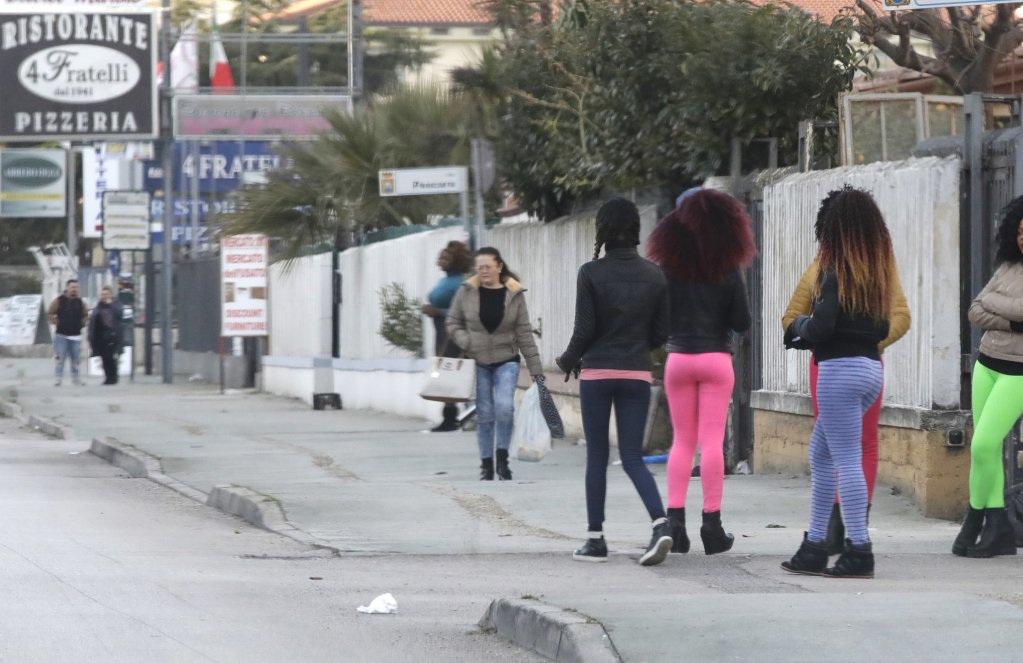
Your previous book "Roadmap to Hell" was important in leading up to "Every Body Counts" because it traces the path of Nigerian women forced to become prostitutes in Europe. How did they fall into this trap and why is it so difficult for them to leave?
The thing that connects all victims of trafficking is hope and desperation. Once the traffickers identify people who have both hope for a better life and desperation to get that life, it’s easy to become a victim.
I met so many Nigerian women in Castel Volturno who truly believed they were coming to Italy to become a babysitter, hairdresser, or caretaker. Even though they had heard stories about other women getting trafficked. Even if they knew that something was a little bit wrong with the whole situation because they didn’t have to pay their passage (they would pay when they got here), they were so hopeful and so desperate that they were willing to think that they would be the exception.
Read AlsoNetherlands prosecute one of the largest human smuggling networks
That’s what drives the traffickers: it’s easy to find women. Many of them have the same story. Maybe they were in a church in Nigeria, and someone came up to them and said, "You seem so smart"; "You seem like you want more", tapping into that dream to have a better life.
The traffickers know very well how that works. You find someone who just looks like she (or he in some cases) is hopeful and wants more. The minute they start these conversations, these recruiters are very quick to convince these women that there is something more for them. That their dream is not a long shot.
These stories of sexual exploitation only represent a tip of the iceberg. What are the main categories of human trafficking?
Everyone always assumes that trafficking is always sex trafficking and that sex trafficking is always women. The exploitation of children, young boys and even men for sex trafficking is often ignored.
Labor trafficking, in the agricultural sector in Italy, results in many people from India ending up in slave-like conditions. They may have come here legally, with a visa or a study visa, and they end up falling into these traps. They are trafficked into the big farms where they are picking tomatoes for a euro a day.
Read AlsoItaly's flows decree 'used for labor exploitation'
There is also labor trafficking in the high-fashion sector. We become complicit as consumers. On every handbag we buy, we should understand what the supply chain looks like. So many people, especially from China, are trafficked into these textile industries to work in slave-like conditions.
There is also the area of domestic help, and this is where it gets very grey. There are several cases in the US and Europe, in diplomatic cities like Geneva and Brussels, where diplomats are basically trafficking their domestic help from their home countries, not paying them what they should be paid and not living within the rules of the country where they are stationed.
Another area that is so disturbing is organ trafficking. Kidneys and corneas are the two biggest organs that can be trafficked, without it being lethal, but people are also trafficked for vital organs. This means they are trafficked to places so that they give up a liver or even a heart. That is just so misunderstood and there is the complicity of major hospitals.
Like the infamous sex offender Jeffrey Epstein, all traffickers create an ecosystem that enables their actions. Can you describe the hierarchy of trafficking networks?
Whether you look at Epstein, who was convicted of sex trafficking or whether you are talking about a young Nigerian woman on a backroad in Italy – it’s basically the same. The guy at the top is financing a lot of this for a return. This is someone who never deals with the human tragedy of trafficking.
Then, there are the brokers who work kind of within the grey area. They are the ones between the moneyman and smugglers. They are dealmakers and they get a big cut of that. Often, they are the ones who are caught when governments go after traffickers or smugglers.
It never quite gets all the way to the top. The case of Epstein, if we are to understand it the way it is portrayed to us, is that he would have been at the top rung. Many people were working under him, like Ghislaine Maxwell. Those people would have been more on the broker level; they are the ones doing a lot of the dirty work. In the migrant world, smugglers are basically contracted by the brokers. But the trafficker himself, the big guy at the top, generally is untouchable.
Even to this day, many people don’t realize how similar the Epstein case is to the trafficking of Nigerian women or even Eastern European girls. It’s basically the same hierarchy and at the end of the day, the victims are the ones who often end up paying the price. When a Nigerian woman is trafficked for sex and tries to get someone to help her off the street, most likely she is going to be stopped and deported because she entered the country illegally. The victims become victims again of a judicial system that doesn’t want to see them as victims.
What strategies do traffickers use to convince migrants to accept their services?
They are looking at people who are vulnerable. In those conversations where the trap is set, it’s probably easy to see the level of someone’s desperation.
People just want to get out of their situation, and they believe the next situation, the one being sold to them, is great. People who are trafficked generally come from places where the conditions, economy and government are bad. The disparity between the rich and the poor is bad, and they are on the poorer side of it. Poverty and all those things are often intertwined with the victims of trafficking.
They want to get out and they don’t have the money to pay the smuggler themselves. The smuggler offers the opportunity, and they believe it because they want so badly to change their situation. That’s the trap, over and over again. Desperation is a powerful driver.
Why is it so difficult for victims of trafficking to get help from anyone who can assist them once they are in the US or Europe?
Their trafficker has convinced them that if they go get help from someone, they will be arrested. They don’t have their documents anymore because the traffickers take them. They just can’t believe they are in the situation that they are in. There is a bit of denial, and they think it will get better or that they can escape on their own.
Read AlsoFata's story: 'I got out of prostitution to help my sisters get out of this cycle'
In some cases, the authorities aren’t open to helping them. In Italy, I met a woman who was forced out into the street. Every time someone picked her up, she would say, “Please take me to the police station. Please help me.” The men would end up raping her. In a few cases, they took her to the police station. She went to the police station, but she didn’t speak Italian. The police told her they only had an English speaker on Tuesdays and that she had to come back then.
There are all these obstacles in the way of getting help, but a lot of it is that the trafficker has convinced these victims that no one will believe them and that they will be arrested if they ask for help. And there are cases in which that obviously happens.
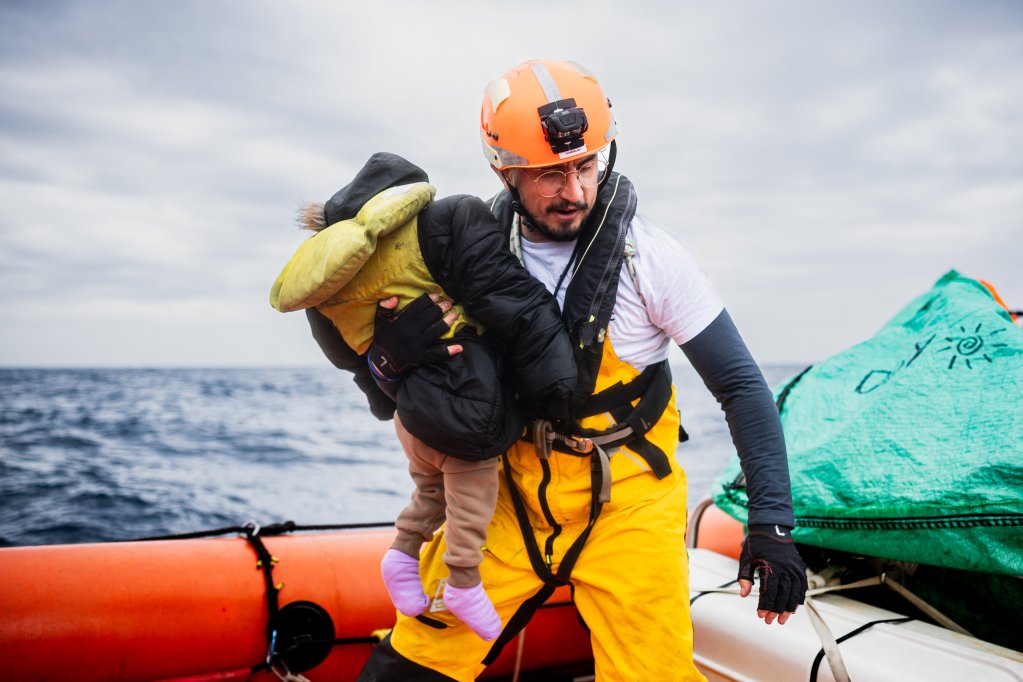
While describing the work of humanitarian ships operating in the Mediterranean, you wrote that they could have personnel onboard to identify victims of trafficking. Yet even if they were spotted, there is little to no infrastructure onshore to welcome these victims.
There is nothing on the shores of Italy, Spain, and Greece. There is no system in place in which someone on a rescue boat can flag a potential victim of trafficking. I don’t want to say there is no reason to do it on a boat, but it would be for nothing. Even if you say, “I’m sure these twenty girls traveling with this Nigerian woman are being trafficked,” and they get to Italy and are arrested for irregular immigration and deported.
You would need a change of policy in the receiving countries of migration. In the bathrooms in rescued boats, there is always a piece of paper in lots of different languages that says: “if you think you are a victim of trafficking call this number”. They don’t have a phone, a pen or paper. It’s challenging because it is a whole different world on these ships, and a fine line between life and death every minute. Once a migrant boat is identified, the rescuers do their job. They rescue the migrants and just make sure that their physical needs are being met, that: their dehydration is being dealt with, the babies are fed, the clothes soaked with gasoline are changed and the injuries are treated.
All those things come first. Interviewing people who might be victims of trafficking feels like it would be a natural next step. But if there is no one to flag those victims once the boat arrives, it leaves a huge gap. So, then you have all these rescue boats coming into shores knowing they are bringing trafficked people to shore. I would never say they are complicit in trafficking. Yet on some level, if you think there are trafficked people that you are delivering to the country, there is soul searching to do on that.
What is stopping the rescue boats from getting involved on this level?
One of the obstacles is probably that law enforcement in Italy would love for every rescue boat to vet people for their religious beliefs or ideology. That would make them part of law enforcement, so they don’t do it. Since rescue vessels don’t get involved in law enforcement issues and the concerns that countries like Italy have about who is on the boat, they can’t easily do it for victims of trafficking either.
It’s frustrating, having been out there. I’m looking at groups of Nigerian women thinking "these are all victims of trafficking", but there is no mechanism in place to save them. They have already saved them on the most basic level but there should be more. I say that with all the respect in the world for what rescuers do.
This interview has been edited for clarity.