
UN High Commissioner for Human Rights Volker Turk has spoken out against the forced return of Afghan refugees and migrants to their home country. However, European countries want to see more people sent back to the Central Asian nation.
High Commissioner Turk said that the deportation of children, women, and men facing the threat of serious human rights violations in Afghanistan was a breach of the principle of non-refoulement under international law, referring to the prohibition of returning asylum seekers to a country where they could be in likely danger of persecution, torture, or other serious human rights abuses.
The High Commissioner urged host countries of Afghan nationals to fulfill their obligations under international law and protect Afghans, who have fled the rule of the Taliban regime in their country.
According to Turk, many Afghans will face reprisals and mistreatment if they are sent back to their country; these include former government officials, journalists, civil society representatives, and members of sexual minorities.
Read AlsoGermany: Interior Minister wants more deportations, especially of criminals
Nearly 1.5 million Afghans returned since 2025
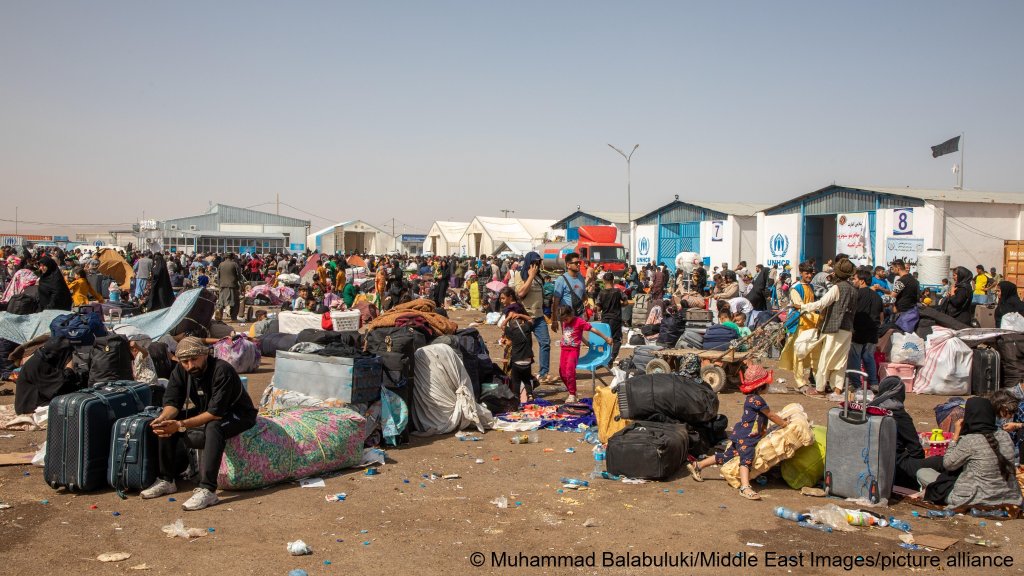
According to the UN Refugee Agency (UNHCR), nearly 270,000 Afghan nationals have been deported to their home country since the beginning of 2026, with the majority being sent back from the neighboring nations of Iran and Pakistan, which claim that their resources are stretched too thin to care for Afghan refugees.
Last year, 1.2 million Afghans were reportedly deported from Iran, and 150,000 from Pakistan.
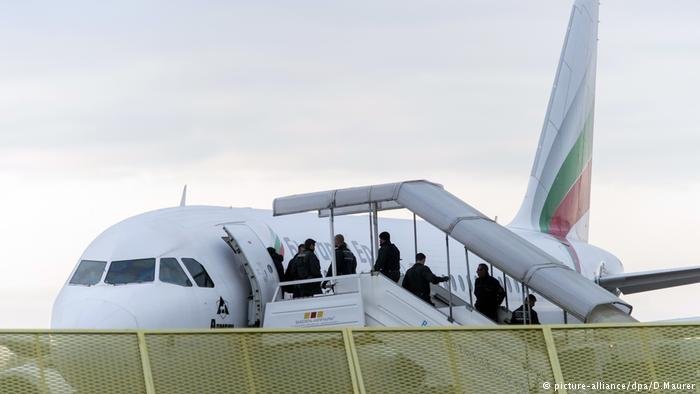
European nations meanwhile engage in far fewer such deportations, and typically reserve the return of Afghan nationals for cases of proven criminal activity. Most recently, 25 criminal Afghans were sent back from Germany at the end of April.
Read AlsoGermany: More deportations to Afghanistan raise criticism over collaboration with Taliban
Germany, for example, which has a large Afghan population, has chartered multiple return flights to Afghanistan over the years to send back Afghans who might pose a threat to national security.
Germany, as well as other EU states, is now exploring ways to have more leeway to be able to deport Afghans.
Germany has already accepted envoys from Afghanistan to work at Afghan consular services in Germany to help with such deportations, and has sent a delegation to the Afghan capital Kabul to hold "technical talks" on the issue of returns.
Other EU nations have also started exploring their options, as has the European Commission, which stated that it has established contact with the Taliban to discuss the issue of deportations.
Read AlsoWill Europe's bid to deport Afghans legitimize the Taliban?
Taliban: One of the most opposite regimes in the world
The Islamist Taliban group has been ruling Afghanistan for almost five years now, following a hasty and chaotic withdrawal of US-led forces in the country in August 2021.
Their rule has been characterised by brutal oppression, in particular of the Central Asian nation's female population. Under the Taliban, women are forced to cover up and can only pursue a primary school-level education.
According to the United Nations, Afghanistan is facing a dire humanitarian situation and widespread violence.
According to Turk, the last quarter of 2025 saw the highest number of civilian casualties in Afghanistan since the Taliban took power in 2021, mainly as a result of the conflict between Pakistan and Afghanistan.
with epd