
The precarious security situation in Mali continues to displace thousands of people, pushing many to cross the border to neighboring Mauritania. Many carry deep scars from the traumatic experiences they witnessed in their home country. Uncertainty and the prospect of renewed violence cast a long shadow over their future.
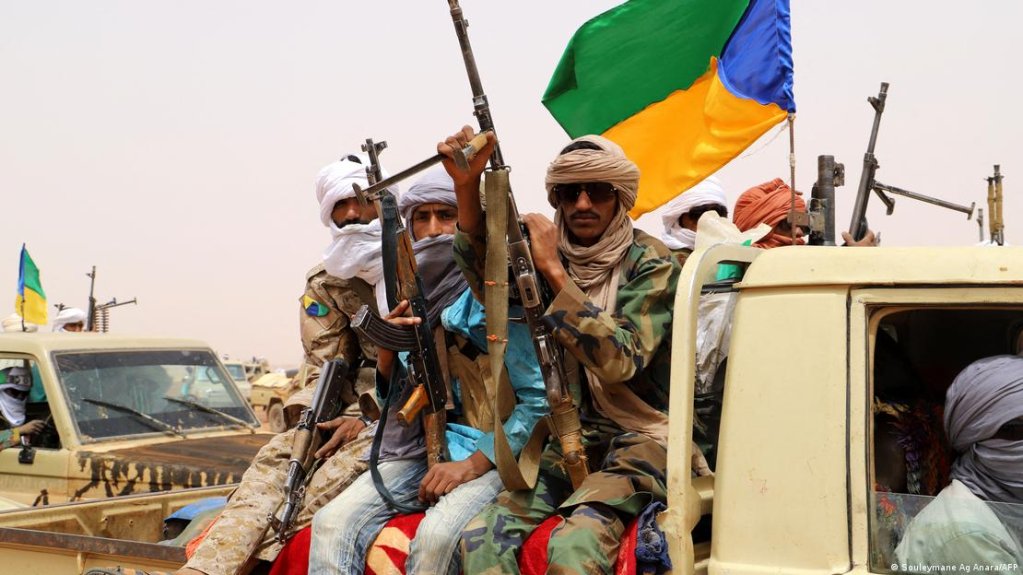
Last month, according to the ACLED (Armed Conflict Location & Event Data) -- an independent, impartial global monitor that collects, analyzes, and maps data on conflict and protest -- the Jihadist armed groups Jama'at Nusrat al-Islam wal-Muslimin (JNIM) and the Azawad Liberation Front (FLA) "launched an unprecedented, coordinated nationwide offensive [in Mali,] targeting Bamako, Kati, Kidal, Gao, Sevare, and Mopti."
This latest round of attacks, in a conflict that has been raging since at least 2012, has triggered displacement and meant that a possibility for some who already fled of returning home is looking unlikely for the moment. And the unstability doesn't just stop at Malian borders, but rages to a greater or lesser extent across much of the Sahel region.
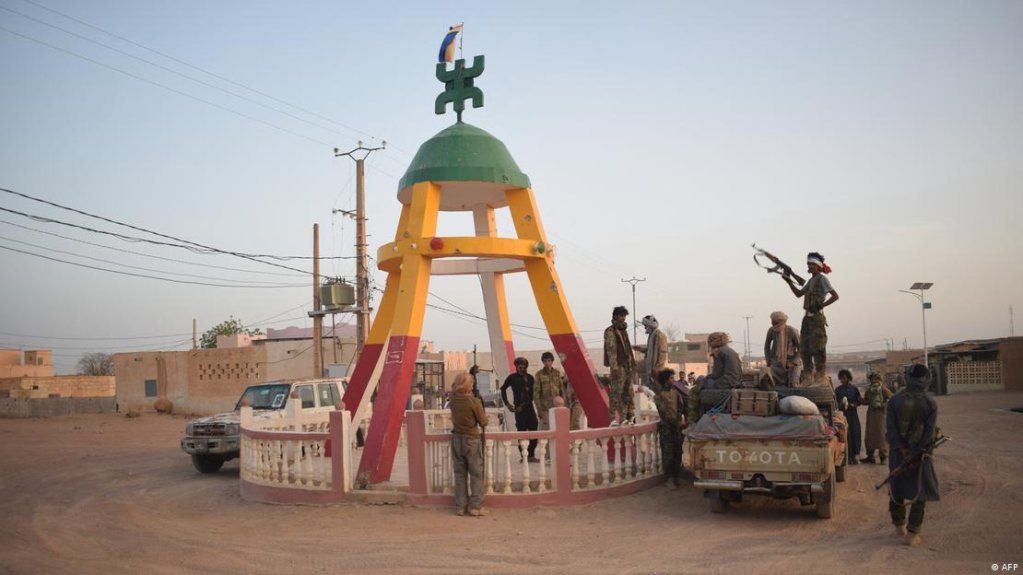
"During the offensive," stated analysts for ACLED's Africa roundup published this May 2026, "the JNIM and FLA alliance recaptured Kidal from the Africa Corps and the Malian military. This loss represents a major strategic and symbolic setback for the regime and its Russian partners, especially since the military and Wagner Group’s [a Russian-backed mercenary force] recapture of Kidal in November 2023 was the centerpiece of the regime’s narrative of reclaiming lost territory."
Nomadic people particularly affected
The nomadic Fulani and Tuareg people of Mali are particularly affected by the ongoing crisis in the country. For years, the country's democratically elected government tried to fight growing jihadist movements, making security a top priority in the impoverished Sahel nation.
Since a 2020 coup d'etat, Mali's ruling junta has been pursuing an even more uncompromising military campaign against suspected jihadists in the country, leaving much of the Sahel nation in a state of martial law. Recent developments hinting at a potential rebel advancement and takeover of government have only entrenched the ideological lines between jihadists and the military government further.
Members of the Fulani and Tuareg communities suffer particularly, saying they are often falsely accused by the military of harboring sympathies and links to violent Islamist separatists.
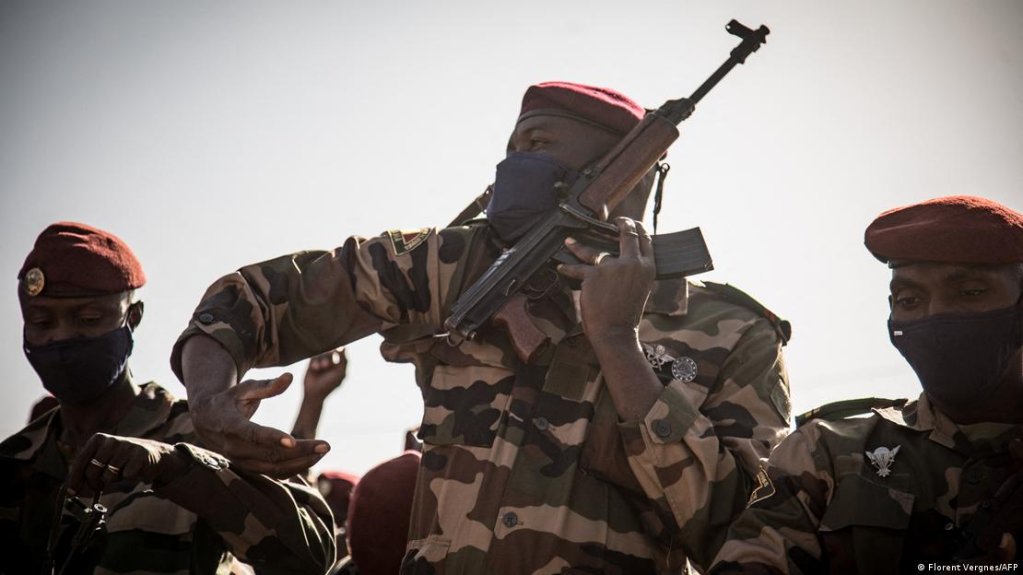
According to ACLED analysis, thousands of people have been killed in the last few years, with half of them believed to be innocent civilians. In fact, in 2025, ACLED found that the Malian military, along with the Wagner group and the Africa Corps were responsible for as many as 918 civilian deaths, with JNIM and ISSP (Islamic State - Sahel Province), two of the main Islamist groups operating on the territory, are estimated to have killed around 232 civilians in the same time period. This violence has led to further and further displacement in the course of the past six years, as well as to deep resentment against those who are responsible for the deaths.
Around 300,000 people are believed to have fled from Mali to eastern Mauritania in total, settling mostly in the Hodh Chargui desert region.
Mali in cahoots with Russia
What is unique to the situation in Mali is the fact that the Malian military are not alone in their fight against the Islamist security threat; they rely heavily on help from their key ally, Russia, which has been sending mercenary soldiers to the region for years.
This alliance between the two nations has however repeatedly been criticized by rights groups; according to ACLED, the rate of collateral killings of civilians jumps up to 90 percent when Russian mercenaries act on their own in the region.
Russia hopes to gain influence in the area, and has been sending mercenaries to various parts of the Sahel region for years — with mixed results.
Many Malian refugees in Mauritania feel they have been chased out of their own country not even by the Malian military and its prejudices against the Fulani and Tuareg peoples, but directly by the involvement of Russian mercenaries on the ground.
And more and more are beginning to want them out, even in some cases causing them to turn to support the Jihadist groups who are fighting the military.
Read AlsoScant humanitarian assistance for Malians fleeing violence
Beheaded on a whim
Across the border in Mauritania, stories about Russian mercenaries mistreating Malians continue to make the rounds at the makeshift tent camps, where most Malian refugees live.
The Agence France Presse (AFP) news agency recently highlighted a number of cruel fates suffered by such Malian refugees in a new report; to protect the identities of those who partook in the interviews, AFP changed all names.
One of those stories details the tale of a woman they named Cherifa.
This Malian refugee woman says she lost her son when a group of Malian soldiers and Russian paramilitaries from the so-called Africa Corps randomly killed the young man last year as part of the ongoing war against Islamism throughout the region.
"His death is my greatest pain," Cherifa told AFP from her shelter before recounting what eyewitnesses later told her had happened to her son:
A year ago, her son had left to sell goods in neighboring Mali — but did not get far once he had crossed the border. Just a few kilometers into Mali, he ran into a joint patrol of Malian troops and Russian paramilitaries.
"They tied them up and cut off their heads ... they set fire to the goods they were carrying," Cherifa shared, adding that no one would come to retrieve the bodies for a whole day, fearing that the soldiers might be waiting to ambush anyone who might approach them.
Cherifa thinks the Malian army and the Russian fighters are "pouring their hatred on innocent, defenseless people" while trying to fight against jihadists.
Read AlsoThe hidden trauma of Malian refugee women and girls
Extreme torture and violence
Another horrific story shared by AFP is that of a Tuareg herder referred to as Nedoune.
The 50-something-year-old man recounts how he was beaten and tied up two years ago while out fetching water. Russian soldiers came and killed his animals and burned his fields while beating him, he told the news agency.
Later, he says he was taken to a camp located in central Mali, where he was tortured and interrogated for four days.
"They pour water on your body, then put wires in your ears and send an electric current until you pass out," he told AFP. "They always asked about jihadists: Do you know them? Who are they? Where are they?"
Eventually, Nedoune was released from his torturous captivity by the Russian mercenaries — but only after paying a ransom fee equivalent to around 550 dollars (around 474 euros).
Others have not been as 'fortunate': Nedoune recalls seeing a man beaten "almost to death" before seeing how a soldier cut his throat and dumped his body from a vehicle.
'Before the Russians came, we lived in peace'
30-year-old Fatima meanwhile is grateful that she managed to escape her village in Mali, but thinks of the many people she had to leave behind, in particular women:
"Everything happened to them except death ... we know some were tortured," she told AFP before adding that "Before the Russians came, we lived in peace."
Fatima hopes to go back home one day, but with each passing day there's more violence and more refugees arriving in Mauritania, turning her hope into a mere pipe dream.
In recent months, increasing numbers of Malian refugees have arrived, with many of them explaining that Malian and Russian soldiers often gave them a 24-hour ultimatum to leave certain parts of the country — or face an almost certain death the next day.
Read Also
Mauritania: Migrants face round-ups, arrests and deportations
No justice in sight
At the border town of Fassala, medical teams from the charity Doctors Without Borders (MSF) try to help people who have suffered such severe trauma; they, too, hear similar accounts to what eyewitnesses told AFP.
"We have testimonies of torture, including people who say they were buried alive," said local MSF coordinator Mayoury Savant. "We also see sexual violence, affecting both women and men," she added.
As the situation in Mali continues to displace more people every day; various rights groups have filed a case against the crisis with the African Union, seeking justice for the long list of abuses that have allegedly been committed at the hands of Malian and Russian soldiers in recent years.
Diplomatic tensions have also broken out between the neighbors, because Mauritania has been accused of employing heavy-handed tactics to stop Malian refugees from trying to journey further to Europe.
Read AlsoMali criticizes Mauritania for ill treatment of irregular migrants
with AFP and Reuters