
European ministers adopted a new interpretation of the European Convention on Human Rights (ECHR) on May 15, which could make it easier for governments to deport migrants, including potentially transferring some people to so-called "return hubs" in third countries.
The declaration on the change of the interpretation of the ECHR was approved during the annual meeting of the Council of Europe's Committee of Ministers, held this year in Moldova.
It came after mounting concern expressed by some Council of Europe member states in recent years that rulings issued by the European Court of Human Rights have in fact hindered certain efforts to deport some foreign nationals — such as people convicted of crimes or asylum seekers whose applications were irrevocably rejected.
The updated interpretation focuses in particular on Articles 3 and 8 of the convention, which protect individuals from torture and inhuman or degrading treatment and safeguard the right to private and family life, respectively.
Under the wording of the declaration, cooperation with third countries on migration policies — including the establishment of "return hubs" — will be considered permissible, provided that those countries comply with the standards set out in the human rights convention.
While strongly reaffirming that the prohibition of torture and inhuman or degrading treatment remains absolute, the declaration notably states that the act of determining whether a certain kind of treatment reaches the threshold of severity to qualify as torture or degradation will henceforth depend on the specific circumstances of each case.
The so-called 'Chișinău declaration,' because of where it was agreed in the Moldovan capital, is not legally binding but critics believe it could put courts under significant pressure to apply the law more restrictively in asylum and immigration cases.
Read Also
Italy, other EU states urge rethink on European rights convention
UK government -- strong supporter of changes
The UK government was one of the countries pushing for the changes. On May 14, they released a press release stating that the declaration would help "support ambitious domestic effort to restore order and control, including cracking down on individuals exploiting the system to avoid deportation."
Britain's Foreign Secretary Yvette Cooper stated: "We have been working with neighbors across Europe to ensure that countries can take strong action against illegal migration, control borders, uphold the rule of law and respect international standards."

Cooper acknowledged that the ECHR has "protected democracy, human rights and the rule of law across Europe for 75 years," but added: "To ensure this continues, we need a common-sense approach that reflects the realities of today."
The Foreign secretary explained that Britain and the other countries who hoped for the changes: "want to ensure that immigration systems can’t be unfairly gamed to prevent foreign criminals or those accused of crimes abroad being lawfully returned. We need a strong, principled, international approach to tackling illegal immigration."
Cooper concluded ahead of the signing that, "the UK will continue to build the partnerships abroad that make us stronger at home."
Read AlsoEuropean nations join calls to alter ECHR to enable sweeping asylum restrictions -- but how?
Grave concern about watering-down of Article 3
Critics of the move argue that it risks weakening long-standing human rights protections, which have served Europe for a long time.
Veronika Fikfak, a professor of human rights and international law at University College London, cautiously criticized the change, describing the new wording of the declaration as a major shift in direction with regards to Article 3:
"The declaration says the prohibition is absolute, but then introduces balancing language and a relative interpretation," Fikfak told the Reuters news agency. "That is inconsistent with the core principle of Article 3, because an absolute right should not involve relativity or balancing."
The international human rights organization Amnesty International also condemned the change in advance of the announcement, stressing that Article 3 obligations "are absolute and non-derogable under international law."
"We call on CoE member states not to attempt to circumvent the Court's jurisprudence, which provides authoritative interpretation of the Convention's obligations," the human rights group said in an open letter.
UK charity criticizes UK for U-turn on torture
Anticipating the change in wording, another major human rights group, UK-based Freedom from Torture, said in a statement dated April 2026 that the "absolute prohibition on torture is a fundamental cornerstone of international law that recognizes the need to ban, without exception, the most egregious assault on human dignity."

"The forthcoming declaration could pave the way for a watering down of Article 3 protections. Preserving the absolute nature of the protection against torture, inhuman and degrading treatement goes to the heart of the endurance of the ECHR," the statement further read, singling out the UK as one of the main signatory countries pushing for the reinterpretation of Article 3:
"Any actions which weaken the protections afforded by Article 3 are a betrayal of the UK's historic leadership in the fight against torture and ill treatment. At a time when there are more conflicts taking place around the world than at any time since World War II, it has never been so important that the UK leads by example in defending the global torture ban."
Read AlsoUK and Danish leaders call for reinterpretation of ECHR
Changes to Article 8 could endanger protections of family life
The declaration on the rewording meanwhile also addresses Article 8 of the ECHR, stating that governments may expel foreign nationals despite their right to private and family life — but only if such action serves a legitimate objective, including national security.
It adds that the European Court of Human Rights should require "strong reasons" before overturning a state's decision in such cases, but does not provide any absolute guidelines for this.
The change could for example enable signatories to enact temporary bans on family reunifications in the name of national security, immigration management without having to resort to using emergency measures.
Read AlsoCouncil of Europe defends human rights court amid tensions over migrant returns
EU Commission welcomes new wording
Supporters of the motion meanwhile say the move will provide clarity for states facing intense migration pressures, freeing up its courts to deal with certain cases with greater sovereignty.
Council of Europe Secretary General Alain Berset meanwhile welcomed the signing of the agreement, saying it would help shape both the Council's future work and the approach taken by various national governments and their domestic courts in critical migration cases.
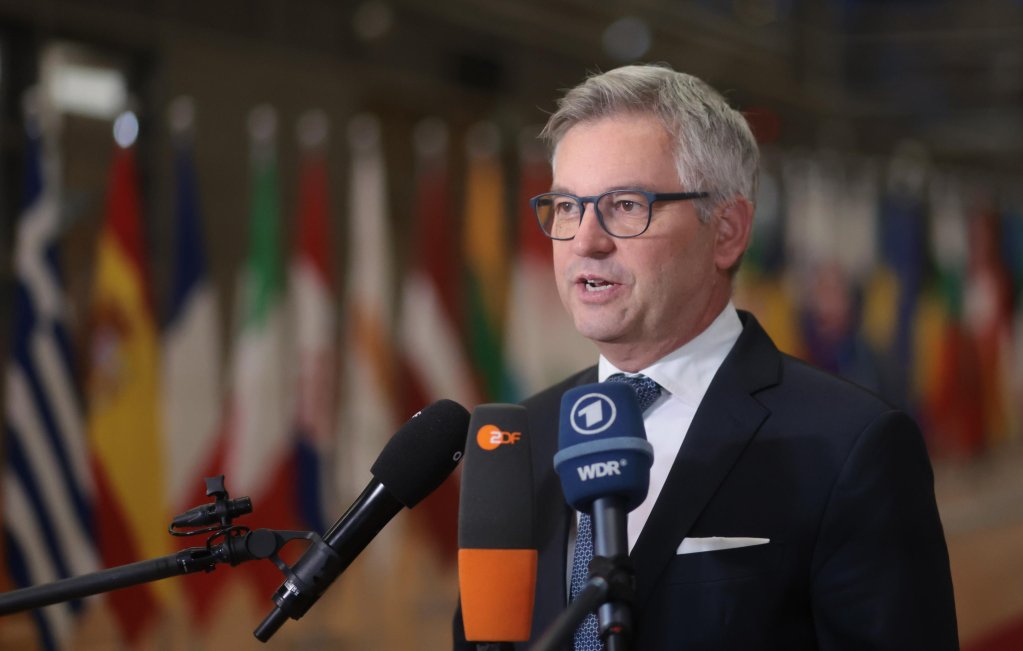
"We have been able to bring together countries across Europe, with different views and experiences, to agree a common position on how the system should work best, notably in the challenging context of migration," Berset told reporters.
The European Commission also welcomed the declaration, saying that it highlights "the importance of the European Convention on Human Rights and the values underpinning the Council of Europe, which are shared values in the EU."
"The declaration reiterates that the Convention is a living instrument, which needs to be interpreted in the light of present-day realities to remain applicable in response to novel challenges. This is in line with the Commission's efforts on new approaches to manage migration," the Brussels-based body said in a statement.
Magnus Brunner, EU Commissioner for Internal Affairs and Migration, commented that the "declaration strengthens our approach to a fair and firm migration policy in Europe."
with Reuters
Read Also