
Authorities in eastern Libya say they have found and deported 120 migrants held captive by human traffickers. They also reportedly recovered the bodies of three other migrants from Libya's Mediterranean shore.
Authorities in eastern Libya say they found the alleged victims of human traffickers south of Benghazi, the northern African country's second-most populous city located on the Mediterranean shore.
An Egyptian migrant had escaped and was found lost and exhausted in the coastal town of Bishr, located about 120 kilometers southwest of Ajdabiya, according to news agency Reuters citing a statement by the security directorate in the city of Ajdabiya south of Benghazi. The migrant had then reportedly led security services to the other migrants' locations.
The man had been held with fellow Egyptians and migrants of other nationalities "inside a den used to torture migrants and blackmail their families", Reuters reported citing the authorities' statement, which was released late on Monday (May 11).
The operation to free the captive migrants lasted almost two weeks, the Ajdabiya security directorate said according to Reuters.
Read AlsoMediterranean: Migrant rescue vessel 'attacked' in international waters
Whippings and beatings
In captivity, the migrants had been "forced to plead for help under whippings and beatings, while their suffering is documented in videos sent to their families to extort money from them," the statement read.
On its Facebook page, the directorate also posted pictures that appear to show migrants sitting on the floor after they had been freed. Other pictures show passports, boat engines, blue plastic water containers and wooden boats, some fully assembled and others still under construction.
A small boat plant was also seized and arrest warrants were issued for "fugitive" human traffickers, Reuters reported. The migrants found were deported, the directorate said, without providing more information.
At the beginning of the year, Libyan authorities freed over 220 migrants from what appeared to be a secret underground prison in the southeast of the country. The people were reportedly held in gravely inhuman conditions.
Human trafficking, according to the UN Office on Drugs and Crime (UNODC), refers to the "recruitment, transportation, transfer, harboring or receipt of people through force, fraud or deception, with the aim of exploiting them for profit".
The main goal of migrant smuggling, on the other hand, is the facilitation of irregular entry into a country for "financial or other material gain".
Read AlsoLibyan forces detain over 2,000 migrants amid large-scale demolitions and raids
Two Bangladeshis, one Egyptian dead
Of the three recovered bodies, the Ajdabiya security directorate stated that they belong to two Bangladeshi migrants and one Egyptian. They were reportedly discovered on the shore in Bishr. A boat was also found on the shore.
The Central Mediterranean route from Libya and Tunisia to Europe remains one of the deadliest migration corridors in the world. Two weeks ago, at least 17 people reportedly died after their boat broke down off Tobruk in eastern Libya.
According to the UN, at least 822 migrants have died or gone missing so far this year on the Central Mediterranean route, up from 457 during the same period last year.
Read AlsoBangladesh-Libya-Italy migration route: 'An adaptive and organized route to Europe'
Trapped in a cycle of abuse and exploitation
Libya was plunged into turmoil following a 2011 NATO-backed uprising against longtime dictator Muammar Gaddafi. Since 2014, the country has been split between western and eastern factions, with rival administrations governing from Tripoli and from Benghazi, each backed by militias and foreign powers. As a result of the political chaos, human traffickers have been thriving for years in the fragmented power vacuum.
The country has become a key transit route for hundreds of thousands of migrants fleeing conflict, poverty and insecurity across Africa, parts of the Middle East and other areas and countries including Bangladesh. Some arrive in Libya to work, but many arrive hoping to cross the Mediterranean to Europe.
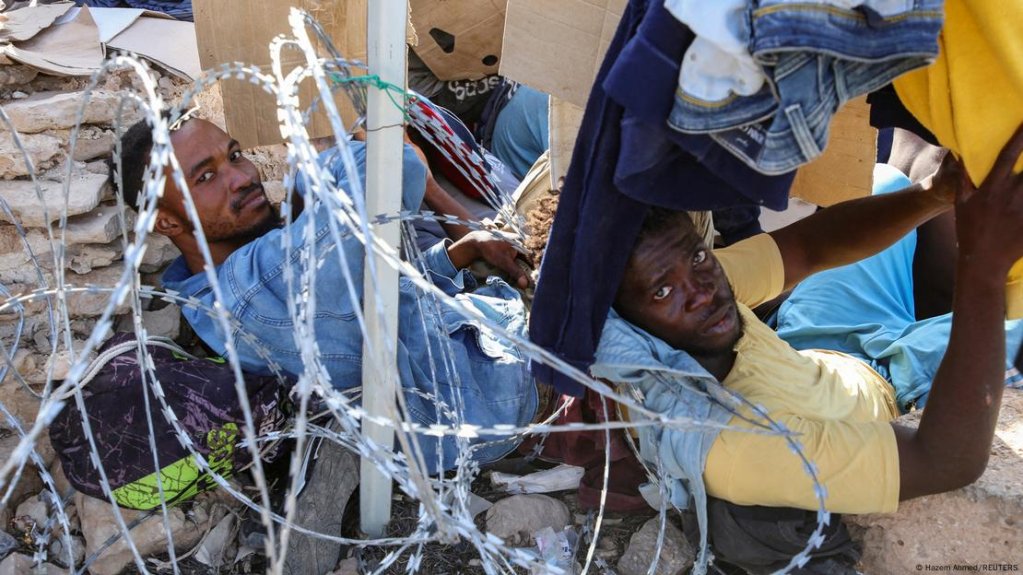
Although authorities in Libya have recently bolstered efforts to dismantle human trafficking and smuggling networks amid growing international concern over irregular migration flows across the Mediterranean, trafficking and smuggling networks adapt and instability endures.
With poor security throughout the country, many migrants in Libya remain trapped in a cycle of abuse and exploitation on land as well as life-threatening journeys at sea.
Those intercepted and returned by the so-called Libyan coast guard are often placed in detention centers, some of which are run by smuggling gangs and other criminal organizations. The situation at these facilities is reportedly far worse than at official facilities, with sexual assault, slavery, extortion, torture and murder recorded across the board.
with Reuters