
A month before the reform of the Common European Asylum System (CEAS) takes effect, Germany and other EU member states are lagging behind in preparing for its implementation. The European Commission expects the implementation to be an ongoing process.
The legislative reform of the Common European Asylum System (CEAS) will take effect on June 12, but Germany and a number of other EU member states still have a long list of tasks to complete.
This is according to a report published last Friday (May 8) by the Brussels authority responsible for the implementation of the reform package known as the EU Pact on Migration and Asylum.
In the report, the European Commission urges the German government and other member states to, among other things, "urgently" build capacity for asylum border procedures, such as at airports, news agency dpa reported.
Fifteen other EU member states have reportedly already taken the necessary measures in this area.
The Common European Asylum System (CEAS) is the European Union's legal framework to create uniform, fair and efficient standards for processing asylum applications.
The aim is to distribute asylum seekers more equitably among member states and to expedite asylum procedures. Implementing the new rules, however, requires new procedures and new infrastructure -- especially at the EU's external borders.
The system's reform, agreed in 2024, will become legally binding in Germany and throughout the EU on June 12. Member states had a two-year implementation period during which the new rules -- including stricter border procedures -- were transposed into national law.
Read AlsoGermany moves to implement EU asylum reform
Many gaps remain
The report highlights that Germany still lacks the resources for initial asylum seeker screenings, including required health checks. Three other member states are reportedly in a similar position.
According to the report, Germany must also resolve issues with the Eurodac system by June 12. The system requires asylum seekers to have their fingerprints and other biometric data recorded.
On the plus side, Germany is one of the few member states that has already completed the necessary reforms to its national legislation to address the backlog in processing asylum applications, according to the report.
Read AlsoGerman Parliament agrees to implement Common European Asylum Policy, tightening rules still further
Greece, Italy and Bulgaria also have catching up to do
The planned border procedures are considered a crucial component of asylum reform to prevent so-called secondary migration -- that is, the movement of asylum seekers between EU countries.
The idea is that migrants' asylum applications should be processed where they first reach an EU external border. Those with little prospect of asylum should be detained and, if necessary, deported from there.
In return, countries with EU external borders and particularly high numbers of arrivals of asylum seekers are to receive support from other member states.
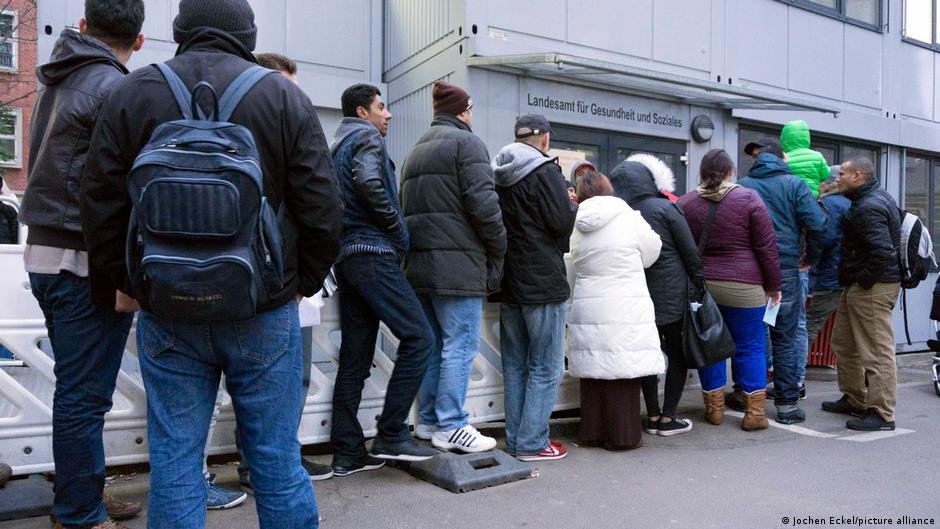
However, according to said EU report, member states that are crucial to this new system do not presently appear to have the necessary capacity for the border procedures.
Countries with EU external borders such as Bulgaria, Greece and Italy also lack capacity, according to the report. They are among the countries that register the highest number of irregular border crossings, according to figures from the EU border agency Frontex.
Only 12 member states have hitherto made their implementation plans public, according to Susan Fratzke, senior policy analyst at the Migration Policy Institute (MPI). "In other words: we don't have full transparency or visibility into the different strategies," Fratzke said during a recent press briefing by the Migration Media Service.
Member states' approaches to implementation also vary, and differ both in terms of challenges they face and try to solve for, Fratzke added.
Read AlsoEU asylum policy: What changes for refugees in Germany?
At the same press briefing, Aydan Iyigüngör of the European Agency for Fundamental Rights (FRA) lamented that only a dozen member states have thus far identified a competent authority to carry out independent monitoring for asylum procedures. According to Iyigüngör, this so-called Screening Regulation of CEAS includes a security check, a health and vulnerability assessment, and the verification of identity.
Iyigüngör also highlighted the need for EU member states to make provision for investigations into human rights violations: "There are numerous reports from human rights organizations as well as Frontex's Fundamental Rights Officer regarding cases of mistreatment of refugees or deaths related to border procedures," the FRA project manager said. "Lawyers are also being hindered from collecting evidence, such as border surveillance recordings."
Sustained efforts and new infrastructure required
Despite the non-readiness of some EU countries to implement the European asylum reform, the European Commission doesn't appear to be alarmed.
"Almost all member states have already adapted their systems to the European asylum and migration reform," EU Migration Commissioner Magnus Brunner stated.

While he admitted that not everything will work right away next month, significant progress has already been made, according to the Austrian politician.
Still, implementing the asylum reform will require sustained efforts even beyond June, a Commission spokesperson added.
MPI policy analyst Fratzke expects the old and new systems to coexist for some time. "New infrastructure must be put in place, particularly for border procedures, including detention facilities and technology for collecting biometric data," she said at the press briefing, adding that this costly and time-consuming work "could prevent many member states from implementing the new measures."
Hungary stands out negatively
According to the aforementioned report, Hungary is nowhere near having made the necessary preparations.
On the contrary: Hungary is the only member state that has not yet submitted an emergency plan to the EU asylum agency EUAA. Hungary also apparently lacks capacity-building or systems that have not yet been integrated.

Regarding the so-called solidarity mechanism, which is intended to regulate the distribution of asylum seekers and the sharing of financial burdens among EU member states, Hungary has thus far refused to participate in any way.
Only days after having been sworn in, it is unclear whether Viktor Orbán's successor, Peter Magyar, will give up Hungary's obstructionist stance.
How will the implementation play out?
Fratzke sees three possible scenarios for how the implementation will play out. Under scenario one, the pact works largely as intended, with the solidarity mechanism allowing asylum seekers to be transferred from countries at the external border to other member states in order to reduce the pressure on the reception systems of the border states.
Under scenario two, while the new procedures work, smugglers and migrants adapt to them, choose new routes and increasingly circumvent the controls. The third scenario would bring only minor improvements, with more and more "gaps in the implementation". This could "completely undermine the function of the solidarity mechanism," according to Fratzke, resulting in a return to the status quo.
with dpa