
In a bid to deport more Afghan migrants back to Afghanistan, the European Union is planning to invite officials from the Taliban government to Brussels for their first known official visit – despite numerous ethical and other concerns.
The EU plans to invite representatives of Afghanistan's Islamist Taliban authorities to Brussels for talks on deportations to the Central Asian country. A "technical-level meeting with the de facto authorities in Afghanistan" is currently being prepared, an EU Commission spokesperson told the AFP news agency on Monday (May 11).
Although no specific date has yet been set for the visit, the talks are to take place in the near future, according to AFP. To arrange a date for the meeting in the Belgian capital, AFP reported, citing sources close to the matter, a letter is to be sent "imminently" to Kabul. InfoMigrants first covered the planned meeting last month.
An EU spokesperson told Reuters that several member states requested the Brussels meeting. The talks do not imply official recognition of the Taliban, the spokesperson added.
While not yet confirmed, the meeting would appear to be the first public visit by Taliban officials to the EU capital. It would moreover follow two trips by European representatives to Afghanistan earlier this year for exploratory talks on possible deportations of Afghan men and women from the EU to their home country.
As part of a push to tighten immigration policies, about 20 of the bloc's 27 countries are looking into how to send Afghan migrants back home, especially those with criminal records. Several countries pressured the EU to find practical ways to address this issue in an October letter.
The EU and other Western countries do not officially recognize the Taliban authorities.
Read AlsoGermany: More deportations to Afghanistan raise criticism over collaboration with Taliban
Humanitarian concerns
Since overthrowing a US- and NATO-backed government and reclaiming power in 2021, as well as subsequently enforcing a strict interpretation of Islam with draconian laws, the Taliban have remained sidelined by the international community.
For Taliban officials to visit Brussels, according to AFP, Belgium would likely need to grant them special visas as the host of EU institutions. The EU country is reportedly in principle willing to do so.
"If the European Commission were to invite a delegation from the Taliban regime, that could indeed be the case," Audrey Jacquiez, spokeswoman for Belgian Foreign Minister Maxime Prevot, told AFP.
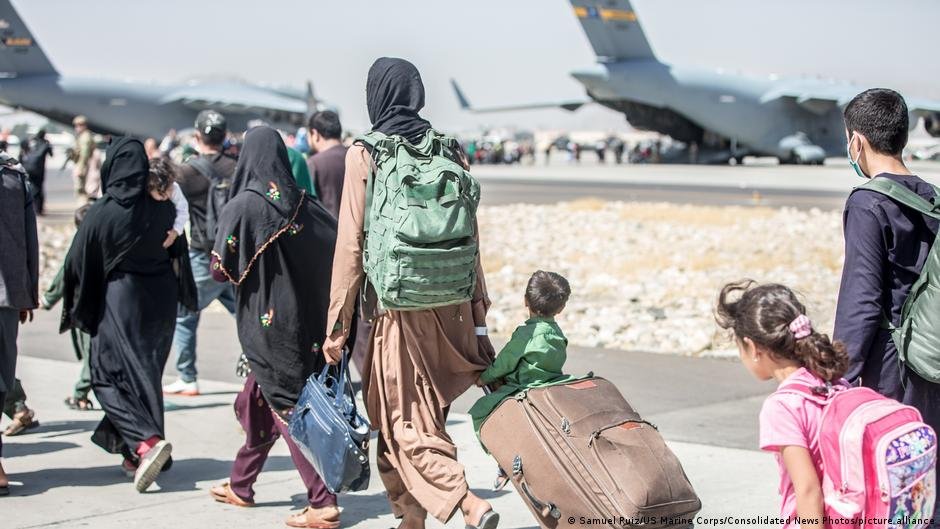
The EU is pushing for returns while Afghanistan faces a major humanitarian crisis exacerbated by drought and drastic cuts in foreign aid. Since 2023, more than five million Afghans have reportedly returned from neighboring Iran and Pakistan, often forcibly.
International organizations report that most face severe poverty, lacking steady jobs or homes.
From 2013 to 2024, Afghans filed roughly one million asylum applications in the EU, with about half reportedly being accepted. According to Reuters, hundreds of thousands have sought asylum in Europe following the Taliban takeover alone. By 2025, Afghans reportedly remained the largest group of asylum seekers.
But as the public mood has soured on migration, Europe has looked to scale back its welcome and started discussing how to send Afghan migrants back home.
Read AlsoGermany: Young Afghan men rarely granted protection status
Germany leads deportation charge
Since 2024, Germany has deported over 100 Afghan criminals with the help of Qatar, which acted as a logistical intermediary. Public opinion in Germany has soured following several high-profile attacks by Afghan nationals, such as a car-ramming in Munich last year that left 36 people injured.
The current German government under Chancellor Friedrich Merz, which came into power a year ago, first called for direct talks with the Taliban to deport Afghan criminals last July. Since then, several groups of Afghan men have been deported directly to Afghanistan. Investigations show that in April, Afghan citizens slated for deportation were presented to Taliban representatives on German government (BAMF) premises in preparation for the issuance of their deportation documents.
Austria is also taking action, having reportedly hosted a Taliban delegation last September. Other countries like Belgium and Sweden are considering similar moves, supported by those favoring stricter migration policies.
According to Reuters, a EU spokesperson said Sweden was helping to coordinate the planned Brussels meeting. The Swedish government did not immediately reply to a request for comment.
Read AlsoSweden calls for EU-wide action on returning failed Afghan asylum seekers
'A decision that could cost lives'?
Efforts to deport Afghans to their home country, however, face strong pushback from human rights groups and the political left.
"Deporting Afghans back to a country where almost half of the population cannot feed themselves is not a migration policy; it is a decision that could cost lives," Lisa Owen, the International Rescue Committee's country director for Afghanistan, told AFP.
Green EU lawmaker Melissa Camara called inviting Taliban officials to discuss Afghan returns would mean "abandoning the values and rights on which the European Union is founded", urging the European Commission "not to cross this red line".
Rights groups moreover worry the visit could help the Taliban identify people they want back, risking their safety. However, diplomatic sources say the meeting is mainly for practical reasons, like figuring out how to issue passports since many Afghan embassies in Europe aren't recognized by the Taliban.
On said previous trips, European officials in Kabul also checked technical details like the airport's capacity, AFP reported, citing sources close to the talks.
with AFP, Reuters