
On Monday, officials from the EU met with Syrian officials, including the interim Syrian foreign minister, Assad Hassan al-Sahaibani, to talk about economic support for Syria as a preliminary step toward increasing returns.
At a press conference in Brussels on Monday (May 11) afternoon, the European Commissioner for the Mediterranean Dubravka Suica and Syrian Foreign Minister Assad Hassan al-Shaibani announced the restoration of fuller trade ties with Syria.
In a statement released by the EU Council on Monday, the EU confirmed it would resume the "full application of the Cooperation Agreement" which had been partially suspended in 2011 and extended in 2012, when civil war ravaged the country.
The council said that the move marked an important step towards strengthening relations between the European Union and Syria. The move is widely understood to be a preliminary step much needed before Syrian migrants will feel able to leave Europe and return home.
Syria calls for 'bold action' from the bloc
The suspension of the Cooperation Agreement was supposed to target serious human rights violations carried out by Bashar al-Assad, and blocked the import of certain Syrian products, including oil, petroleum products, gold, precious metals and diamonds.
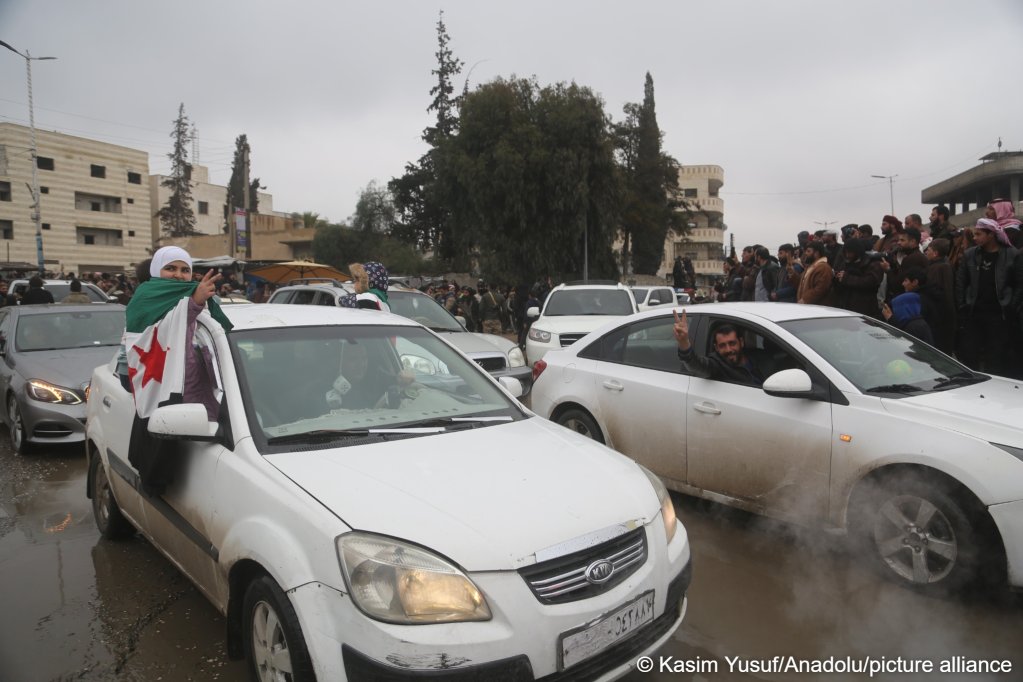
Assad and his regime fell in December 2024, and the EU lifted EU economic sanctions on Syria in May 2025, except those based on security grounds. Now, it believes that the "conditions that justified the suspension are no longer present."
The EU hopes that the fuller trade ties will be consistent with the EU’s “broader policy of supporting a peaceful and inclusive transition in Syria and facilitating the country’s socio-economic recovery.
On arrival in Brussels, al-Shaibani called for bold action by the bloc, reported the French news agency Agence France-Presse (AFP). "What is required today is a political will," he said. "A readiness to move from caution to full participation into the reconstruction of Syria."
Read AlsoGermany hosts Syria's Al-Sharaa despite human rights issues
Hope is to improve conditions for Syrians to return
Many countries in the EU bloc, in particular Germany, who hosted around a million Syrians during the war, are keen to support a peaceful transition and economic recovery in Syria. This is partly for geopolitical regions, in the hope of reintroducing stability in the Middle East, but also to facilitate the potential return of many Syrians who fled during the course of the war.
EU foreign ministers also spoke to al-Shaibaini during two days of meetings which involved EU foreign and defense ministers and is due to cover a wide range of subjects, including the Ukraine war, Middle East instability and other pressing issues.
Prior to the partial suspension of the deal, as reported by the Qatar-based broadcaster Al Jazeera, Syria-EU trade reached a peak in 2010 with around seven billion euros of exchange between the bloc and the Middle Eastern country. By 2023, EU imports from Syria had reportedly diminished to 103 million euros. EU exports to Syria stood at 265 million euros.
Read AlsoGermany urges EU to do more to boost Syria's economic recovery
Syrians in Germany
When Syria’s interim President al-Sharaa visited Germany last month, Germany’s Chancellor Friedrich Merz was widely reported to be pushing for increased numbers of Syrians to leave Germany and return home.
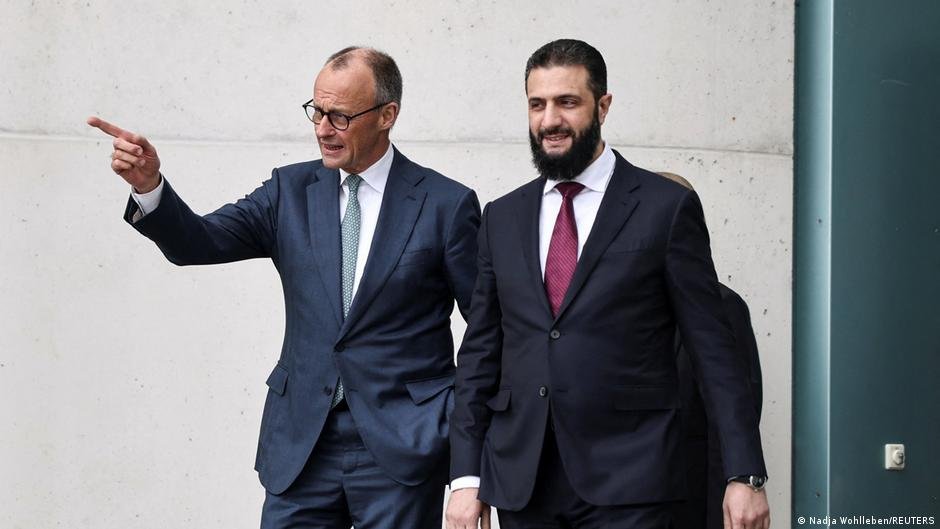
The aim of returning 80 percent of Syrians residing in Germany over the next three years quickly became a headline, with both Merz and al-Sharaa claiming the other one had first suggested it. The figure caused controversy, not least because it is unrealistic and would be difficult to achieve.
Many of the nearly one million Syrians in Germany have full protection status, or even German citizenship, by now. Although a few have expressed interest in returning home, many more fear that things are not stable enough at the moment to envisage a quick return.
Ahead of the talks in Brussels, one unnamed EU official confirmed that the situation in Syria on the ground "is still appalling," reported AFP. Around 13 million Syrians, nearly half the population, still depend on food assistance.
Read AlsoGermany moves to return more Syrians, but Damascus says the country is not yet ready
Development aid
The EU has already pledged 620 million euros in aid for this year and next. With the renewal of the agreements between the EU and Syria, officials at the EU are reportedly hoping that the association agreement will develop along the lines of similar ones with Egypt, Israel and Lebanon.
Commissioner Suica from the EU underlined that the development aid would be dependent on "key reforms" required from the transitional government. Some of those conditions include "making sure all Syrians contribute to decisions on the future of the country," as well as ensuring transparency in economic governance and a "solid commitment to the rule of law and transitional justice."

"These are crucial steps towards trust," Suica told AFP. "They are essential reforms to build long-term resilience and prosperity." In the meantime, the EU said it would "continue exploring" ways to facilitate access to financing for Syrians. They announced a 14 million euro tranche of funding to rehabilitate a major hospital in the western region of Homs.
On the subject of returns, although individual countries are keen for Syrians hosted by them to eventually return, the EU Commissioner underlined that these returns would be on a voluntary basis. "We are not pushing anyone to return," Suica told reporters. "If it is safe, if it is voluntary, and if it is dignified, they can go home."
When questioned on the same subject, al-Shaibani replied, "if Syrians living abroad consider that the conditions are in place for them to return, then they will be able to return. We don’t want this to turn into a burden for the European countries."
With AFP, dpa and Reuters
Read AlsoGerman government pushes Syrians to return to their homeland