
The French capital’s new mayor Emmanuel Grégoire has paid a visit to a migrant camp which has taken up residence under the line two metro. At the moment, the camp is estimated to house about 800 migrants and is growing. The mayor has promised Paris residents to build a new center to try and house some of those currently on the streets.
This week, the new mayor of Paris, Emmanuel Grégoire, visited a migrant camp near the center of the city, not far from one of the main train stations, Gare du Nord. The camp under the line two metro between the Barbes-Rochechouart, Stalingrad and La Chapelle metro stops has been reportedly growing.
According to reports in French and British newspapers, including The Times and France Infos, the camp currently houses more than 800 migrants, mostly from countries on the continent of Africa.
The residents come from a number of countries, including Eritrea, Senegal, Mali, Gambia, Sudan, Morocco, and Tunisia, some migrants interviewed by the right-wing channel Frontières said in a report posted on YouTube this week. Some interviewed said they relied on food donations from various associations that visit the camps to eat. Another person interviewed said that residents would light fires at night to "keep warm," but this sometimes led to smoke intoxication and problems for residents in the tents closest to the fire.
Read AlsoFrance: Migrants bear the brunt of the deadly heatwave
A solution?
The camps themselves are not new, and spring up regularly around Paris despite frequent clearances by the police and authorities. The organization Utopia 56 estimates that there are as many as 5,000 people currently sleeping on the streets of Paris in various locations.
But the mayor is new. Grégoire was elected at the end of March this year. The Socialist Party politician took over from fellow Socialist Party politician Anne Hidalgo, who held the office of mayor from 2014 to 2026.
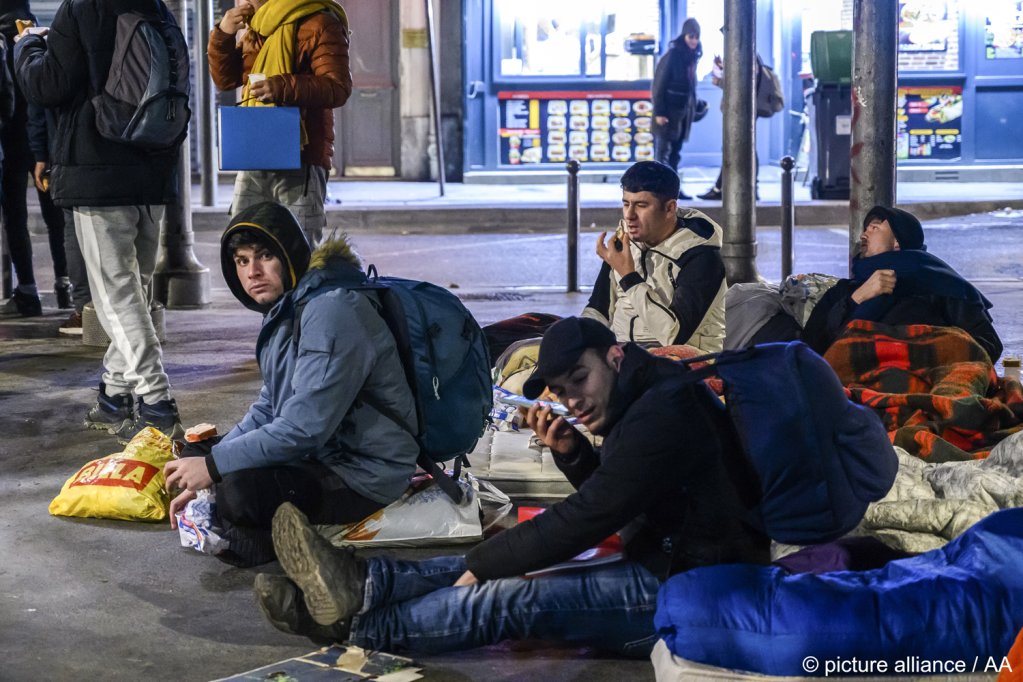
Now, Grégoire is promising to try and find solutions to the migrants sleeping on the streets. When he attended the camp, he promised locals that the Paris authorities would set up a new accommodation center to move the migrants off the streets. "I am ready to create some large shelters," stated Grégoire, according to France 3. The mayor added that he would be "pragmatic" in his approach.
Fatoumata Koné, one of his deputies responsible for the fight against inequality and exclusion, told France 3 that part of the problem was the approach. In the past, when camps like these have been cleared, the French authorities used to bus people out of Paris to other regions with fewer migrants and more assistance capacity. However, the people want to be in Paris and quickly return.
Read AlsoA place of belonging for unaccompanied minors in Paris
'Odor of urine is pervasive'
Vincent Beaugrand from the organization France Terre d’Asile, which works with migrants, told the Times that many of those in Paris want to travel eventually to Calais in the hope of crossing the Channel towards the UK.
The problems in the camp are myriad, say residents and organizations who work within them, trying to offer support and aid to the migrants who live there. There is no running water, a lack of hygiene and the "odor of urine is pervasive," reports the French state broadcaster France 3.
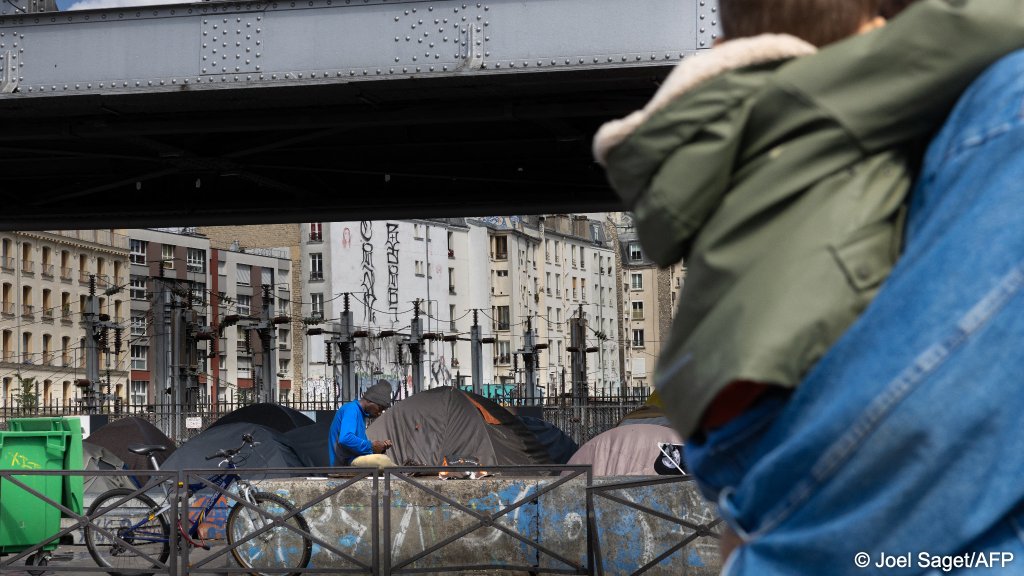
The camps are surrounded by rubbish and parts of them also have people with serious drug and alcohol problems, including reportedly crack addicts who sometimes turn violent.
Although the mayor has promised a new center, organizations like Utopia 56 fear that this will not help solve the problem. Nathan Lequeux, the coordinator in this area for Utopia 56, told France 3, "there are more and more people being pushed onto the streets. State services are closing. There are fewer and fewer places available at the 115 emergency hotline, which offers emergency shelter. The shelters that do exist are overcrowded, and shelters dedicated to single men are closing one after another." (Most of the camp’s residents fall into this category of single men.)
Lequeux added that Paris' largest shelter, which offered beds to about 400 people is about to close, so he fears "400 more people are going to find themselves on the street."
Read AlsoA space of one's own: Reimagining refugee camps to make them more hospitable
'Violence is a problem'
Some passers-by and Paris residents who live in the area of these camps, which stretch for hundreds of meters under the railway lines have told journalists about the social problems the camps are incubating.
"Violence is a problem," said a Canadian graduate trainee at Unesco, Naomi Trick, in the Times. According to that newspaper, Trick shares an apartment with two other women just opposite the camp. "In the nine months since we moved in, we’ve had three or four incidents. We’ve been chased with a bat and we’ve had water thrown on us."
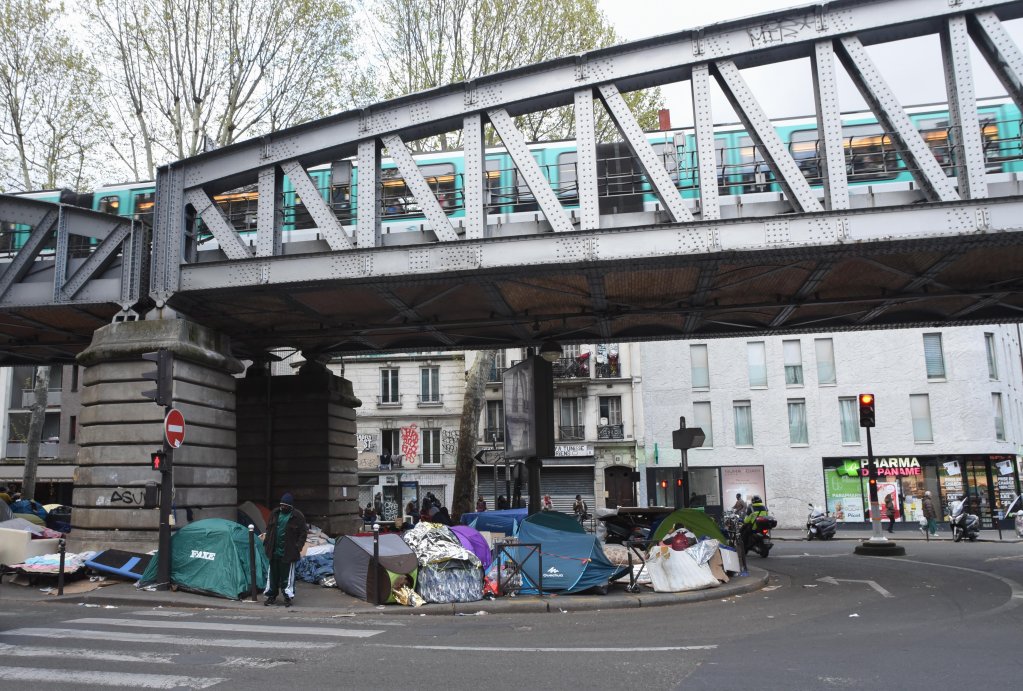
Although the council has recently installed urinals, the smell of urine was still prevalent, reported the Times this week. Trick added that not everyone who lives at the camp is a migrant and that the problem was more coming from drug addicts and those who visit the camp to buy drugs.
One of Trick’s flatmates, named as Gabriel Leiva by the Times, told the newspaper that some of the migrants have actually set up their own security patrols at night and if they see anyone taking drugs, they ask them to leave.
Read AlsoParis 2024 Olympics criticized for 'social cleansing' and lack of support for marginalized groups
Some call for deportation of rejected asylum seekers
A French shopkeeper, who only wanted to give her first name, complained that the camp has led to a drop in property values in the area. She told the Times that addicts were openly smoking crack and that sometimes she had found people sleeping in the entrance hall to the building where she owns a flat.
"I don’t know what the solution is, but I think the authorities should be more active in deporting those whose asylum applications are rejected," stated Christelle. The Times added that around a fifth of the estimated 140,000 migrants ordered to leave France last year were actually deported.
Another local resident, named as Mila Kemache told The Times that she hoped the authorities could find the camp’s residents more decent living conditions, "if only to stop the spread of diseases like scabies, which there’s a lot of here."
Kemache’s parents emigrated from Algeria. She added that many local residents in the area also have immigrant backgrounds and some help the migrants by bringing food and clothing to those in the camp, especially on Fridays.
New project to address needs
In mid-April, the Parisian authorities unveiled a new project to combat rough sleeping and promised to make sure that no children were sleeping on the street anywhere in the capital. According to a press release, the French state provides around 46,000 places each night for rough sleepers. The city of Paris supplements this by making available 92 shelters offering social support.
But despite this joined-up provision, the press release admits that they still don’t have enough capacity to respond to everyone’s needs. In January this year, during an annual "night of solidarity" the Paris authorities found 3,857 people on the streets, representing a 10 percent increase on the same night in January 2025. It had also reached its highest peak since the night of solidarity initiatives started in 2018. The Parisian authorities admit that the actual numbers could be even higher, because if a tent is closed but clearly occupied, they are counted as "one person" even though there may be several people sleeping inside.
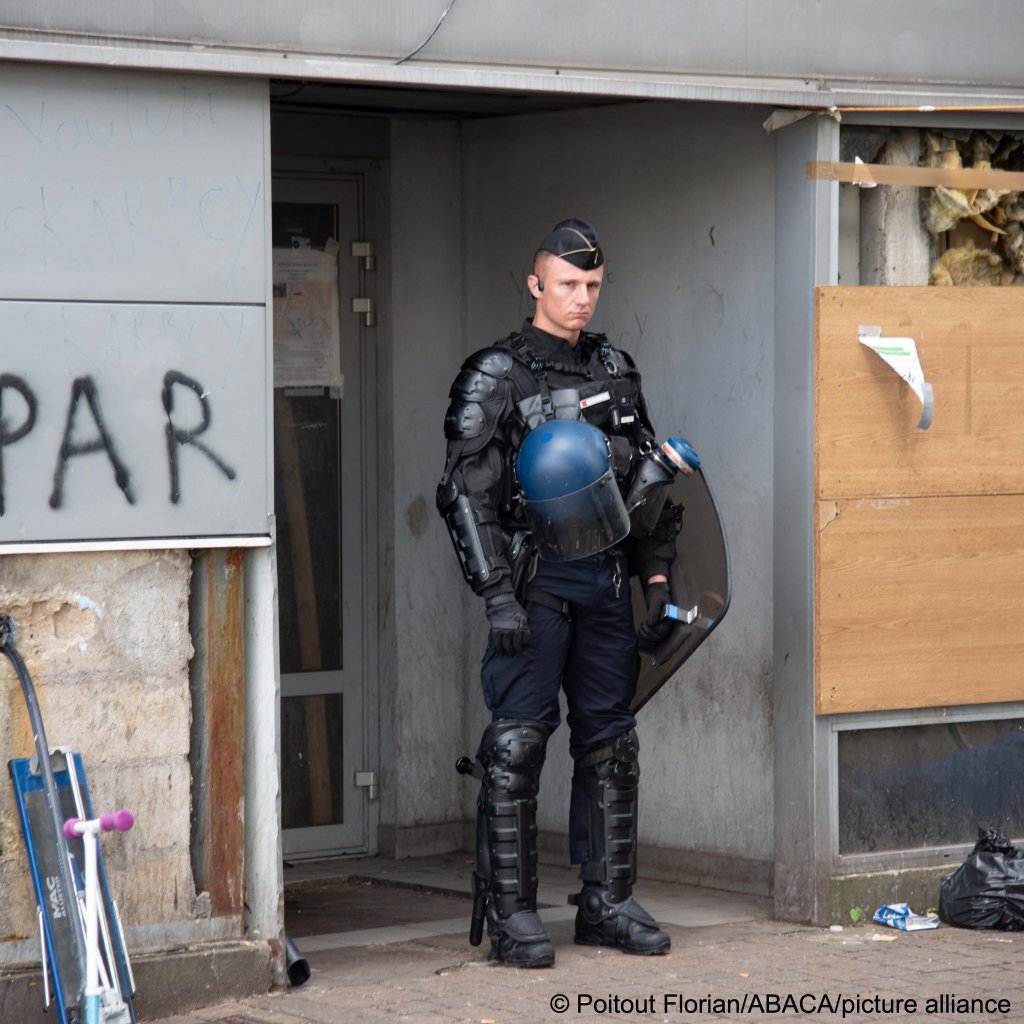
Since 2023, the Paris mayoral office says it has created 1,000 more places for people to sleep and that in January, they were sheltering 1,800 people in their own structures. This is in addition to the French state places.
There are also six sites for families. In January this year, the mayoral office said it was sheltering 1,400 families, of which 700 were children. They were also sheltering 400 young people in five different shelters, comprising two hotels, two former gym spaces and a special shelter set up in a former educational building.
Read AlsoFrench authorities accused of ‘social cleansing’ of migrants and homeless before Paris Olympics
More new shelters to be opened
In February, two new centers were opened up in the 5th and 15th Arrondissements to shelter families with children and young people.
The Parisian authorities are now aiming to create 4,000 additional spaces, bringing the total number of spaces offered to about 7,000 eventually, they stated in a press release in mid-April.
The city authorities underline that they are not just trying to hide or move people who are sleeping rough, or hide their poverty, but to try and manage it, offering shelter and information so that those who are eligible can access welfare and help. Their aim is to make sure everyone has a place that is respectful and offers a dignified standard of living.
The Parisian authorities, working alongside NGOs, have asked the state if a new shelter offering 500 places could be reopened, similar to ones they had in place between 2016 and 2020. In addition, they want to create several smaller shelters too. They are looking for buildings no longer in use, for instance, former schools, creches and educational establishments that can be put to new uses.
The offer of accommodation should also be accompanied by social welfare help and a joined-up strategy, notes the mayor’s office.
Read AlsoParis: Migrants removed from City Hall camp by police