
The German authorities cited the persistent threat to civilian shipping as the reason for the raised security alert. The raised security level 2 covers a heightened risk, while the highest level 3 represents an imminent threat. NGOs say the warning comes far too late.
The German government has raised the maritime security alert level for vessels bearing the German flag in and around Libya's territorial waters, citing ongoing threats to civilian shipping, the Ministry of Interior announced on Monday (May 4).
Under the decision made in consultation with the Ministry of Transport, Security Level 2 of the international SOLAS maritime security framework will apply to all German-flagged ships operating in Libya’s territorial waters, including Libyan seaports, until further notice.
German authorities cited the "persistent threat to civilian shipping" across and beyond Libya’s territorial sea. Officials said Libya's maritime environment remains ''highly volatile'' because large parts of the country lack effective state control, including oversight of coastal and offshore waters.
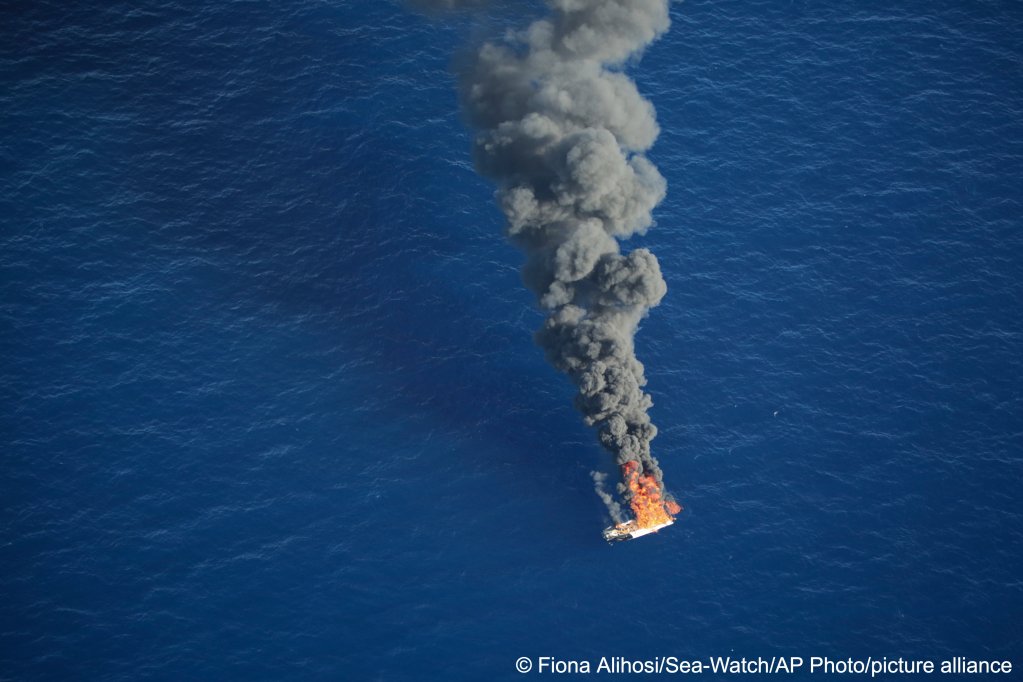
The raised alert level covers Libya’s territorial sea, Exclusive Economic Zone (EEZ), and Search and Rescue (SAR) zone, all of which German authorities describe as security-sensitive areas vulnerable to violent conflict.
Raised alert level
Under maritime security protocols, the SOLAS security level is a three-tiered scale to identify and manage risks to ships and port facilities. Ships must always operate at the level set by the port or government.
- Level 1: normal operation
- Level 2: heightened risk requiring additional protective measures
- Level 3: imminent threat
Authorities emphasized that humanitarian and NGO-operated rescue vessels entering Libya’s SAR zone face particularly elevated risks.
'Far too late'
Humanitarian organizations operating rescue ships in the Central Mediterranean have sharply criticized Germany’s heightened maritime security measures, saying that authorities have ignored years of documented violence by the Libyan Coast Guard.
Berlin-based rescue groups SOS Humanity and Sea-Watch slammed the government's warning as a delayed recognition of dangers that aid groups have repeatedly warned about since search and rescue operations began in the Mediterranean Sea in 2015.
"The German Federal Ministry of the Interior’s acknowledgement of the violence perpetrated by Libyan actors at sea comes very late," Marie Michel, political expert at SOS Humanity, said in a statement. Michel highlighted the shooting at the rescue ship Ocean Viking in August 2025 as evidence that threats to civilian vessels had already escalated months earlier.
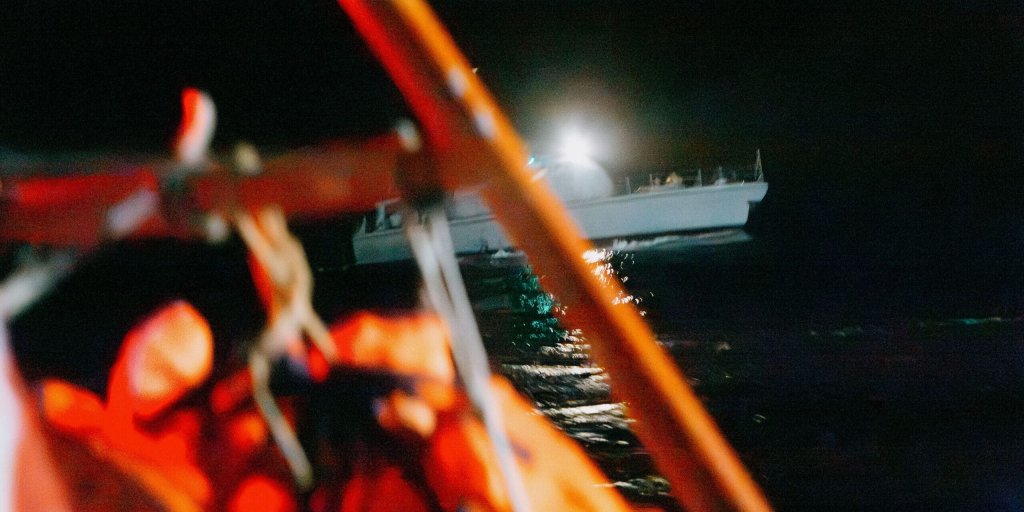
The groups also criticized the European Union for continuing to finance and cooperate with Libyan maritime authorities despite acknowledging the risks they pose.
"The German federal government is confirming a fundamental contradiction in its own policy," said Marie Naaß, Head of Political Communications at Sea-Watch. "It acknowledges the real danger posed by the so-called Libyan Coast Guard whilst simultaneously supporting it."
According to the NGOs, Germany backed the extension of the EU naval mission EUNAVFOR MED Irini last year and reopened the possibility of German military personnel training Libyan coast guard units.
The organizations also accused European governments of helping establish and equip Libyan rescue coordination centers and coast guard operations used to intercept and forcibly return migrants to Libya — practices that humanitarian groups and legal experts have long condemned as violations of international law.
Since 2017, the European Commission has supported an Italian-led initiative to cooperate with the Libyan coast guard, allocating roughly 59 million euros (about 69.5 million US dollars).
SOS Humanity and Sea-Watch are now calling on Berlin to halt all support and training for Libyan coast guard units, push the EU to end funding for Libyan maritime operations, and provide stronger protection for humanitarian rescue missions in the Central Mediterranean.
Read AlsoIOM chief visits Libya hoping to prevent loss of life on Central Mediterranean route
25 rescued from rubber boat
The announcement comes on the heels of a rescue operation where 25 people on a distressed inflatable boat in the central Mediterranean were rescued during the night of May 1–2, SOS Méditerranée said in a statement.
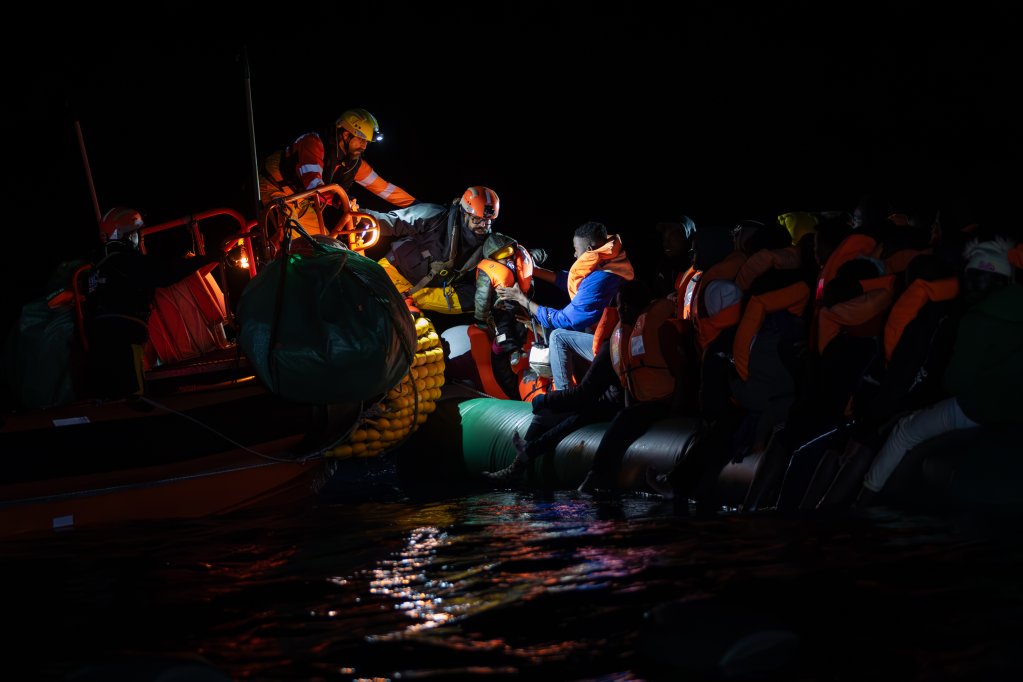
The overcrowded rubber boat had begun taking on water after one of its air chambers started deflating. Rescue crews carried out the operation in rough seas with waves reaching about one meter high. All 25 people on board were safely transferred to the Ocean Viking, including two women, one of whom was pregnant, and 13 minors.
Italian authorities assigned the ship the port of Ancona in northern Italy as a port of disembarkation. The survivors reportedly arrived there on May 6 after the rescue vessel travelled around 1,500 kilometers over four days.
SOS Méditerranée criticized Italy’s continued practice of assigning distant ports to humanitarian rescue ships, calling it a deliberate political strategy that weakens civilian search-and-rescue operations in the Mediterranean.